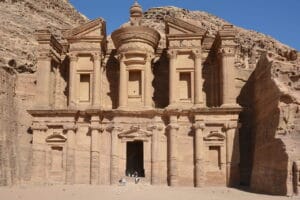
Jordan packs an almost absurd concentration of world-class attractions into a country the size of Indiana. Petra alone would justify a visit — a Nabataean city carved into rose-red sandstone cliffs two thousand years ago — but add the vast desert moonscape of Wadi Rum, the weightless float of the Dead Sea, Roman ruins at Jerash that rival Pompeii, and some of the warmest hospitality in the Middle East, and you have a destination that consistently exceeds expectations. The country is safe, easy to navigate, and the combination of ancient history, desert adventure, and Arabic cuisine makes it one of the most rewarding trips in the region.
- Walk Through the Siq to Petra’s Treasury
- Sleep Under the Stars in Wadi Rum
- Float in the Dead Sea
- Explore the Roman Ruins of Jerash
- Hike the Dana Nature Reserve
- Snorkel the Coral Reefs of Aqaba
- Visit the Amman Citadel and Roman Theatre
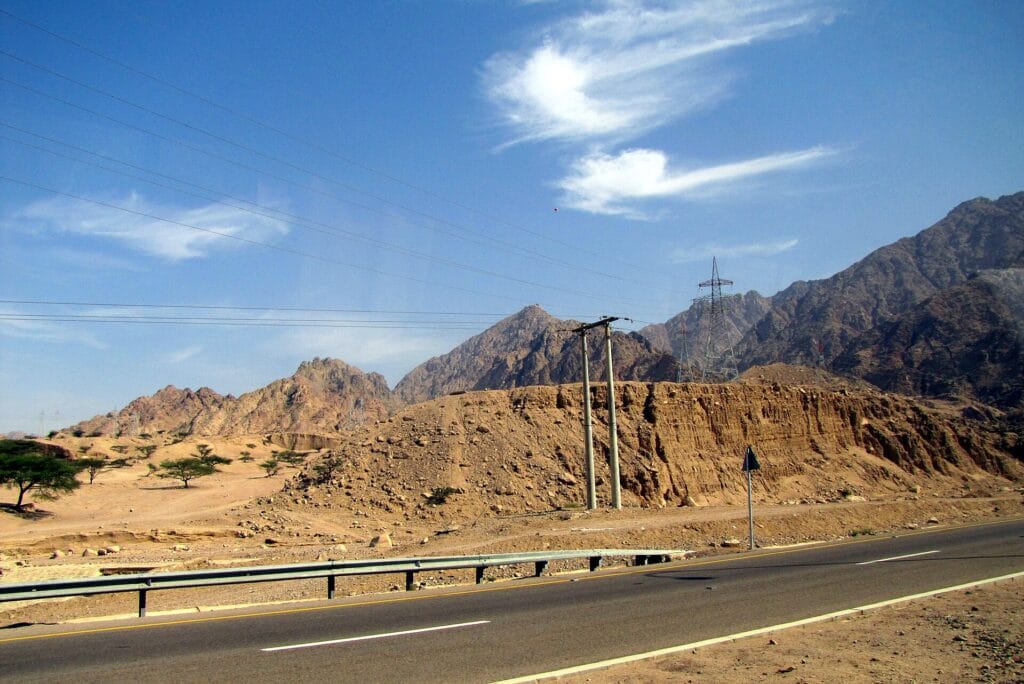
- Drive the King’s Highway
- Trek the Wadi Mujib Siq Trail
- Eat Mansaf at a Local Restaurant
- Visit the Mosaics of Madaba
- Camp and Stargaze at the Little Petra Viewpoint
1. Walk Through the Siq to Petra’s Treasury
The narrow, 1.2-kilometre slot canyon called the Siq leads to one of the world’s most dramatic reveals — the rose-pink facade of the Treasury (Al-Khazneh) suddenly appearing between towering cliff walls. Entry to Petra is 50 JOD for a one-day pass or 55 JOD for two days. A guide costs 50-75 JOD and is worth it for context. Start early — the Treasury is in shade until 9 AM and crowds build by 10 AM. Beyond the Treasury, the Royal Tombs, Monastery, and High Place of Sacrifice require a full day to explore.
2. Sleep Under the Stars in Wadi Rum
The desert valley of Wadi Rum — the backdrop for Lawrence of Arabia and The Martian — is a landscape of red sand, massive sandstone arches, and wind-carved pillars that belongs on Mars. Bedouin camps offer overnight stays in tented camps with zarb (underground-cooked lamb), campfire tea, and a night sky thick with stars. Camp stays cost 45-120 JOD including dinner, breakfast, and a jeep tour. The silence after the generator switches off is absolute. Book a camp away from the main cluster for the best experience.
3. Float in the Dead Sea
The lowest point on earth, 430 metres below sea level, is a surreal experience — the 34% salt concentration makes sinking physically impossible. Slather on the mineral-rich black mud for a natural spa treatment. Public beaches at Amman Beach cost 20 JOD entry with facilities. The luxury Dead Sea resorts (Kempinski, Movenpick) offer day passes from 35 JOD with pools and private beach. Avoid shaving the day before — the salt stings any cuts. The sunset over the Judean Hills from the shoreline is magnificent.
4. Explore the Roman Ruins of Jerash
One of the best-preserved Roman cities outside Italy, Jerash has a colonnaded main street, an oval plaza, two theatres, and the Temple of Artemis with columns that visibly sway in the wind. The site is 48 kilometres north of Amman and entry is 10 JOD. Allow three hours. The South Theatre still hosts performances and the acoustics are remarkable. A chariot race show runs daily in the hippodrome for 12 JOD. The spring wildflowers around the ruins in March and April add colour.
5. Hike the Dana Nature Reserve
Jordan’s largest nature reserve stretches from mountain ridges at 1,600 metres down to desert valleys at 50 metres below sea level, encompassing four different bio-zones in one dramatic landscape. The Wadi Dana trail descends from the cliffside village through red rock canyons to Feynan Ecolodge — one of National Geographic’s top 25 eco-lodges. Day hikes cost 12-20 JOD with a guide. The RSCN guesthouse in Dana village has canyon-edge rooms from 70 JOD. The reserve protects ibex, sand foxes, and raptors.
6. Snorkel the Coral Reefs of Aqaba
Jordan’s only coastal city on the Red Sea has some of the most accessible coral reefs in the world. The Japanese Garden reef is reachable from shore, with parrotfish, clownfish, and sea turtles in warm, clear water. The Cedar Pride shipwreck, deliberately sunk for divers, sits at 25 metres. A two-tank dive costs 55-70 JOD. Snorkel gear rental is 5 JOD at the South Beach. The Berenice Beach Club offers comfortable facilities for 15 JOD. Water temperatures stay above 20 degrees year-round.
7. Visit the Amman Citadel and Roman Theatre
The hilltop Citadel in downtown Amman holds the Temple of Hercules, Umayyad Palace, and the Jordan Archaeological Museum, spanning Bronze Age through Islamic periods. Below, the 6,000-seat Roman Theatre from the 2nd century AD now hosts the folklore museum. Citadel entry is 3 JOD. The view from the Citadel over the city’s seven hills of stacked white buildings is the definitive Amman panorama. Combine with a walk down Rainbow Street for cafes, galleries, and the best hummus at Hashem.
8. Drive the King’s Highway
The ancient trade route from Amman to Petra passes Crusader castles at Kerak and Shobak, the mosaics at Madaba, the viewpoint at Mount Nebo (where Moses allegedly saw the Promised Land), and the canyon of Wadi Mujib — Jordan’s Grand Canyon. Allow a full day to drive the 280 kilometres with stops. The road twists through dramatic gorges and highland villages. Kerak Castle entry is 3 JOD. The Madaba map — a 6th-century mosaic floor map of the Holy Land — is in St. George’s Church for 1 JOD.
9. Trek the Wadi Mujib Siq Trail
The Siq Trail follows a river through a narrow canyon with slot sections where you wade chest-deep through rushing water between towering sandstone walls. It is Jordan’s most exhilarating adventure hike — part canyoneering, part swimming, part scrambling over boulders. The trail ends at a 20-metre waterfall. Cost is 21 JOD including a guide and life jacket. Open April through October when water levels allow. Bring waterproof bags for electronics. The cool water on a hot day is glorious.
10. Eat Mansaf at a Local Restaurant
Jordan’s national dish — lamb cooked in fermented dried yogurt (jameed) and served over rice on a massive communal platter — is the centrepiece of every celebration. Traditionally eaten with the right hand by forming rice balls and popping them into your mouth. Tawaheen al-Hawa in Amman and Beit Khayrat Souf near Jerash serve outstanding versions for 8-15 JOD. The tangy, rich jameed sauce is an acquired taste that becomes addictive. Friday is the traditional mansaf day.
11. Visit the Mosaics of Madaba
The small town of Madaba 30 kilometres south of Amman is famous for the 6th-century Madaba Map — a Byzantine mosaic floor map of the Holy Land in St. George’s Church. The town has over a hundred more mosaics in churches, homes, and the Archaeological Park. Entry to the church is 1 JOD. The Madaba Mosaic School trains students in ancient mosaic techniques and welcomes visitors. Combine with a trip to Mount Nebo, 10 kilometres away, for panoramic views over the Dead Sea and Jordan Valley.
12. Camp and Stargaze at the Little Petra Viewpoint
Little Petra (Siq al-Barid), four kilometres north of Petra, is a miniature version of the main site — carved facades, dining rooms, and a painted Nabataean ceiling in a short, narrow canyon. Entry is free. The hilltop above, reached by scrambling up the rocks at the end of the siq, offers a stunning viewpoint over the desert valley and is one of Jordan’s best wild camping spots. The Milky Way visibility from the desert is extraordinary. Bring your own camping gear or join a guided overnight for 40-60 JOD.
Practical Tips for Jordan
Check our full Jordan travel guide for detailed tips on transport, safety, money, and the best time to visit. For food recommendations beyond this list, see our Jordan food guide.
Frequently Asked Questions
What are the top things to do in Jordan?
The must-do experiences include Walk Through the Siq to Petra’s Treasury, Sleep Under the Stars in Wadi Rum, and Hike the Dana Nature Reserve. Jordan also offers incredible food, vibrant culture, and unforgettable landscapes.
How many days do you need in Jordan?
We recommend at least 4 to 5 days to cover the highlights, though a week or more lets you explore at a relaxed pace and reach more remote areas.
Is Jordan safe for tourists?
Jordan is generally safe for tourists who take normal precautions. Stay aware of your surroundings in crowded areas and keep valuables secure.