
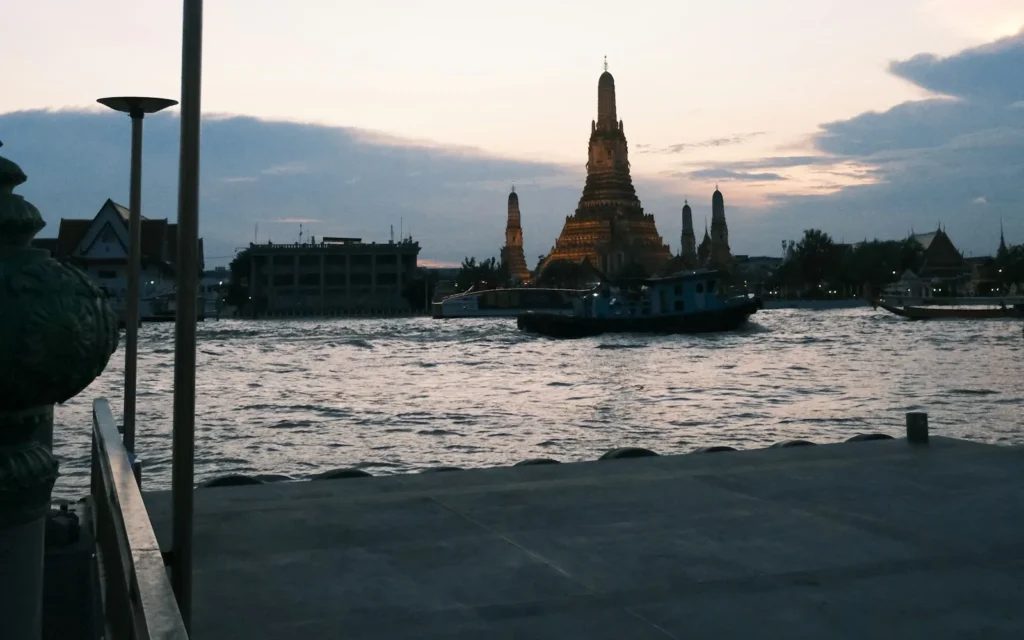
January is the best month to be in Bangkok and the most expensive. It is the heart of the cool season – about 32°C by day and 22°C at night with only around 24 mm of rain – which in Bangkok terms means the humidity drops enough to walk for hours rather than minutes. The trade-offs are peak-season prices and the start of the city’s serious air-quality season.
Why the cool season is worth paying for
Bangkok is hot all year; what changes is the humidity and the rain. In January the northeast monsoon brings drier air, the evenings are genuinely pleasant, and the things that are hard work in May – walking the Grand Palace complex, Chatuchak market, the Chinatown lanes – become straightforward.
It is also the driest stretch of the year, which matters for a city where an afternoon downpour can flood a street in twenty minutes.
Air quality: the thing nobody mentions
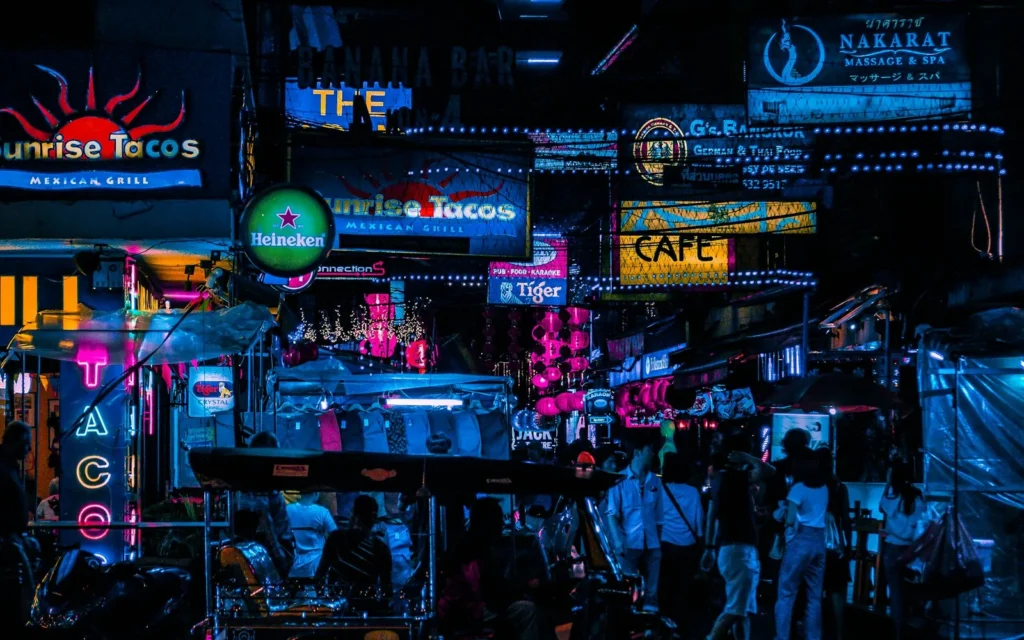
Bangkok has a genuine seasonal air-pollution problem, and January is when it starts to bite. The city’s PM2.5 season runs roughly November to April, and the worst stretch is January to March, driven by vehicle emissions, regional agricultural burning and temperature inversions that trap smoke near the ground on cool, still, rainless days – exactly the days that make January pleasant otherwise.
Practical steps:
- Check the AQI each morning rather than assuming. Thailand’s Pollution Control Department publishes readings, and several apps cover Bangkok well.
- Carry an N95-type mask if you have asthma, another respiratory condition, or are travelling with young children or older relatives. A cloth or surgical mask does not filter PM2.5.
- Move indoors on bad days – Bangkok has world-class malls, museums and covered markets, and this is what they are for.
- The rooftop bars are worse on hazy days, both for the view and the air.
Most visitors are unaffected beyond a hazy skyline. It is worth knowing about rather than discovering.
Weather
January averages about 32°C by day and 22°C at night, with roughly 24 mm of rain across the whole month. Nights in the low twenties are as cool as Bangkok gets, and Thais genuinely find it chilly.
What January is for
- The temples. The Grand Palace and Wat Phra Kaew, Wat Pho and Wat Arun are all outdoors and unshaded – this is the month to do them properly.
- Markets. Chatuchak at the weekend is enormous and only bearable in the cool season.
- The river. The Chao Phraya express boat is the best-value transport in the city and the nicest way to move between the old-town sights.
- Day trips – Ayutthaya, Amphawa and the floating markets, all easier without heat or rain.
The Grand Palace: dress code and the scam
Two things worth knowing before you go.
The dress code is strictly enforced. Shoulders and knees covered for everyone; no sleeveless tops, shorts, short skirts, ripped jeans or see-through fabric. Sarongs can be borrowed at the entrance but the queue for them is long. Wear the right clothes and skip it.
The “it’s closed today” scam is the oldest in Bangkok and still running. A friendly stranger near the entrance tells you the palace is shut for a ceremony or a holiday and offers a tuk-tuk tour to other temples instead – which ends at a gem or tailor shop. The Grand Palace is open daily. Walk past, check at the official ticket office, and ignore anyone who approaches you outside.
Prices and crowds
The annual peak. January is high season across Thailand, hotel rates in Bangkok are at their highest, and the first week still carries New Year pricing. It is the only month where booking well ahead genuinely matters here.
See the Bangkok travel budget.
What to pack
Light breathable clothing, plus something that covers shoulders and knees for temples – this is not optional. Add a light layer for aggressive air conditioning, sun protection, and a mask if air quality matters for you. Comfortable shoes you can slip off at temple entrances. See what to pack for Thailand.
The January 2027 calendar
- Friday 1 January – New Year’s Day, a public holiday; the city is quiet after a very late night.
- First week – New Year pricing continues; the peak of the peak.
- Through January – the driest and most comfortable month; peak season throughout.
- Through January – the PM2.5 season builds; check the AQI each morning.
- Mid January – Chinatown begins preparing for Chinese New Year.
- Saturday 16 January – Teachers’ Day; observed rather than a public holiday.
- Saturday 6 February – Chinese New Year; Yaowarat fills for it.
Read alongside
- Bangkok in February – Chinese New Year and the last cool weeks.
- Thailand in January – the country-level view.
- Best time to visit Bangkok – all twelve months compared.
- Tourist scams in Bangkok – including the closed-palace one.
- Bangkok travel budget – peak-season numbers.
- Things to do in Bangkok – the cool-season list.
- Getting around Bangkok – the river boats and the BTS.
Frequently asked
Is January the best time to visit Bangkok?
For weather, yes – it is the driest, least humid month and the only time long walks around the temples and markets are comfortable. It is also the most expensive, and the air-quality season is under way.
How hot is Bangkok in January?
About 32°C by day and 22°C at night, with only around 24 mm of rain for the month. The low humidity is what makes the difference rather than the temperature.
Is air pollution a problem in Bangkok?
Seasonally, yes. The PM2.5 season runs roughly November to April with the worst stretch from January to March. Check the AQI each morning, carry an N95-type mask if you have a respiratory condition, and use the malls and museums on bad days.
What is the Grand Palace dress code?
Shoulders and knees covered, for everyone. No sleeveless tops, shorts, short skirts, ripped jeans or see-through fabric. Sarongs can be borrowed but the queue is long, so wear the right clothes.
Is the Grand Palace ever closed?
It is open daily. If someone near the entrance tells you it is shut for a ceremony and offers a tuk-tuk tour instead, that is the city’s oldest scam – it ends at a gem or tailor shop. Check only at the official ticket office.
Is Bangkok expensive in January?
It is the annual peak, and the first week carries New Year pricing on top. It is the one month where booking accommodation well ahead genuinely matters.
What is the best way to get around?
The BTS Skytrain and MRT for anywhere they reach, and the Chao Phraya express boat for the old town – it is cheap, fast and far more pleasant than sitting in traffic.
Does it rain in Bangkok in January?
Barely. Around 24 mm across the whole month, which is the driest stretch of the year alongside December and February.
You Might Also Love


Written by
John Morrison is the founder and lead travel writer at Packzup. Over the past decade he has explored destinations across Africa, the Americas, Asia, Europe, the Middle East, and Oceania — always self-funded, never on a press trip.
