
Last updated September 8, 2026 · Editorial policy
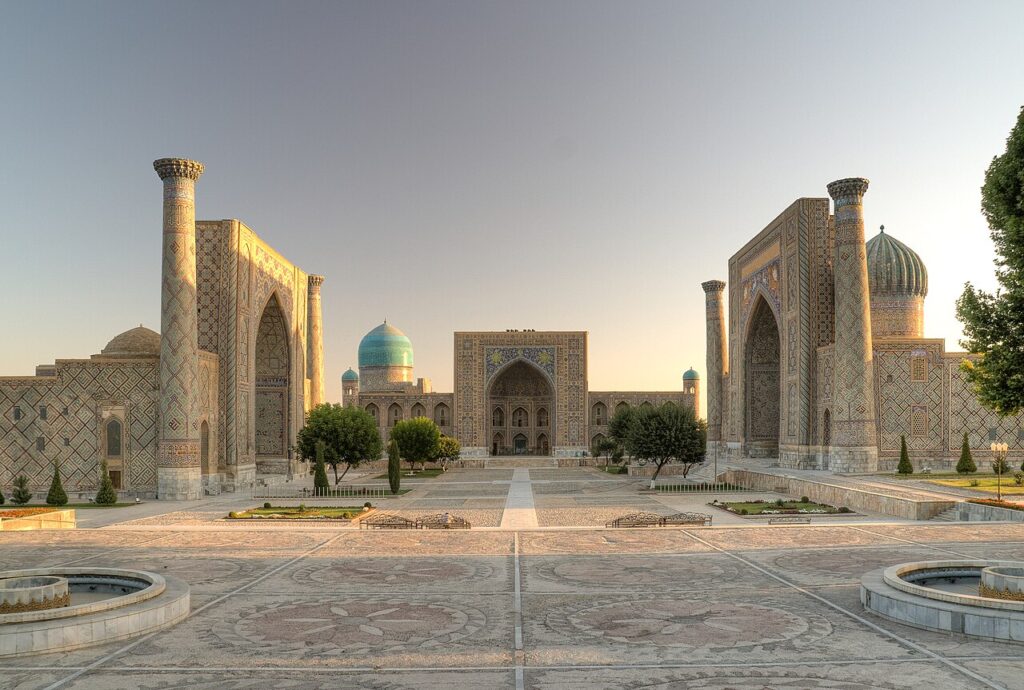
Samarkand is manageable on foot and by taxi — the main Silk Road monuments (Registan, Shah-i-Zinda, Bibi-Khanym Mosque) are all within a 20-minute walk of each other in the historic centre. The city is spread over a larger area than the monuments suggest, with Soviet-era wide boulevards connecting the old city to the modern district and the train station. Taxis are extremely cheap, and the new high-speed Afrosiyob train connects Samarkand to Tashkent and Bukhara efficiently. Within the historic centre, walking is the only way to properly appreciate the Timurid architecture.
Transport Options:
1. Walking the Historic Centre
The three major monument clusters — Registan Square, Bibi-Khanym Mosque, and Shah-i-Zinda necropolis — form a triangle walkable in 20-30 minutes. Siab Bazaar sits between them. The walk from Registan to Shah-i-Zinda via the bazaar is Samarkand’s essential stroll — through living streets where daily life surrounds centuries-old monuments. The historic centre is flat and safe for walking at all hours. Carry water in summer (40°C+). The boulevards are wide and tree-lined. Most hotels in the old city are within walking distance of everything.
2. Taxis
Extremely cheap and the primary transport beyond walking distance. A ride across the city costs 10,000-20,000 UZS (under 2 USD). To the train station: 15,000-25,000 UZS. Taxis do not use meters — agree on the price before getting in. Most taxi drivers speak only Uzbek or Russian. Show your destination on Google Maps. Shared taxis (multiple passengers) are even cheaper. Official taxis are white with a checkered stripe. Your hotel can call trusted drivers for longer trips. Yandex Go app works in Samarkand for ride-hailing.
3. Afrosiyob High-Speed Train
The Spanish-built high-speed train connects Samarkand to Tashkent (2 hours, 90,000-120,000 UZS) and Bukhara (1.5 hours, 55,000-80,000 UZS). Trains are modern, comfortable, and air-conditioned with reserved seats. 2-4 departures per day in each direction. Book at uzrailways.uz or at the train station. This is the best way to travel between Uzbekistan’s Silk Road cities. The Tashkent-Samarkand-Bukhara triangle by Afrosiyob is the most efficient tourist route. Buy tickets 2-3 days ahead in peak season.
4. Shared Taxis (Marshrutkas)
Shared vans run fixed routes within the city and to nearby towns. City routes cost 1,500-3,000 UZS. Routes are displayed on the windshield in Uzbek/Russian — confusing for tourists but locals will help. The main departure points are near the bazaar and bus station. For intercity travel, shared taxis to Bukhara (3 hours, 50,000-80,000 UZS) and Tashkent (4 hours, 60,000-100,000 UZS) depart from near the bus station when full. Cheaper than the train but less comfortable.
5. Intercity Buses
Regular buses run from Samarkand’s bus station to all major Uzbek cities. Bukhara: 4 hours, 30,000 UZS. Tashkent: 5 hours, 40,000 UZS. Buses are basic but functional. The bus station is 3 km north of the centre (15,000 UZS taxi). Not as comfortable or fast as the Afrosiyob train but significantly cheaper. Useful for reaching smaller towns (Shakhrisabz, Termez) not served by train. Departure times can be irregular — arrive early.
6. Cycling
Samarkand is flat and the wide Soviet-era boulevards have light traffic, making cycling feasible. Some hotels and guesthouses rent bicycles (20,000-40,000 UZS/day). The ride between monuments is pleasant — Registan to the Ulugbek Observatory is 15 minutes by bike through leafy streets. Not an established tourist cycling destination but practical for covering the spread-out city. Summer heat (40°C+) makes morning and evening the only comfortable riding times. Helmets are not readily available.
Transport Tips for Samarkand
Walk between the main monuments — they are close together and the streets in between are full of life. The Afrosiyob train is the best way to travel between Samarkand, Bukhara, and Tashkent — book 2-3 days ahead. Yandex Go works for ride-hailing. Carry small UZS notes for taxis — drivers rarely have change. The train station is 3 km from the centre (taxi 15,000-25,000 UZS). Summer is extremely hot — walk early morning and late afternoon, rest during midday. Most sites open 8 AM to 5 PM. Learn a few words of Uzbek — locals appreciate the effort. Download offline maps — cell data can be unreliable.
What is the best way to get around Samarkand?
The most practical options are Walking the Historic Centre and Taxis. The three major monument clusters — Registan Square, Bibi-Khanym Mosque, and Shah-i-Zinda necropolis…
Do I need a car in Samarkand?
No. Samarkand’s main sights cluster around the Registan and are walkable, and Yandex Go taxi rides cost a dollar or two. City buses and marshrutkas cover longer hops. Rent a car or hire a driver only for day trips to Shakhrisabz or the Nurata mountains.
Is public transport safe in Samarkand?
Yes. Samarkand’s buses and marshrutkas are safe, just crowded; pickpocketing is rare. The bigger risk is overpaying: street cabs have no meters, so book through Yandex Go or agree the fare before getting in.
Related Articles
- Things to Do in Samarkand: 12 Experiences You Can’t Miss
- Where to Stay in Samarkand: Best Neighborhoods and Hotels
- Best Time to Visit Samarkand: Month-by-Month Guide
- Samarkand Itinerary: A 4-Day Sample Plan and How to Build Your Trip
Frequently Asked Questions
You Might Also Love


Written by
John Morrison is the founder and lead travel writer at Packzup. Over the past decade he has explored destinations across Africa, the Americas, Asia, Europe, the Middle East, and Oceania — always self-funded, never on a press trip.
