
Last updated September 8, 2026 · Editorial policy
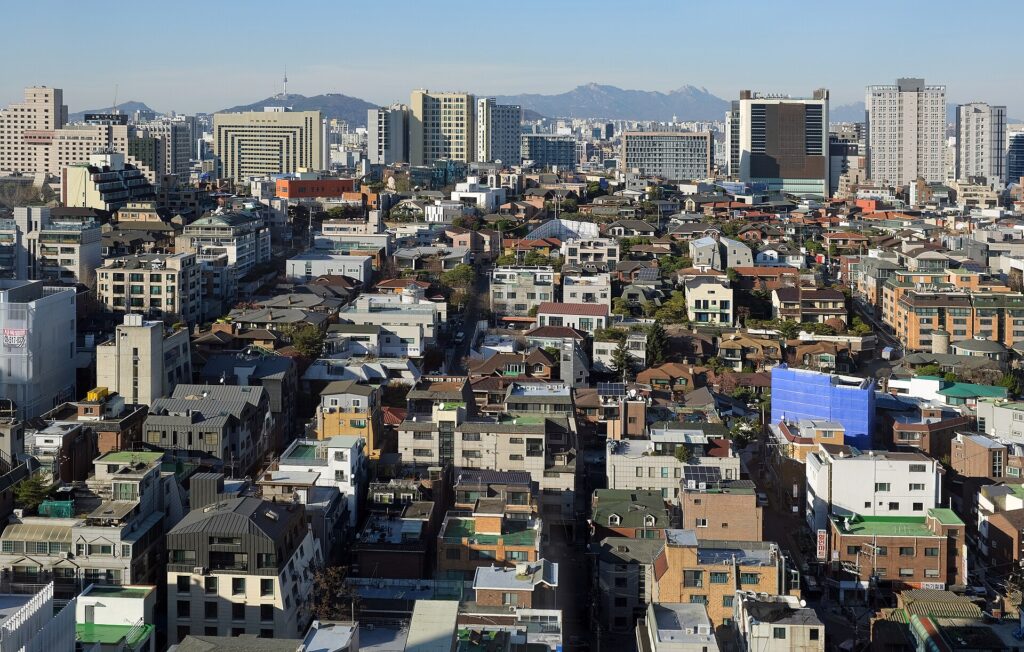
Seoul’s public transport is world-class — a vast Metro network, comprehensive bus system, and excellent integration through the T-money card make it one of the easiest large cities in Asia to navigate. The Metro has 23 lines and 700+ stations covering the metropolitan area, with signage in Korean, English, Chinese, and Japanese. Buses fill gaps between Metro stations. Taxis are abundant and honest. The Han River divides the city into Gangbuk (north, historic Seoul) and Gangnam (south, modern Seoul), and the Metro crosses easily between them. Seoul is also increasingly walkable, with stream-side paths, park networks, and pedestrianised districts.
1. Seoul Metro (Subway)
23 lines and 700+ stations make this one of the world’s most comprehensive metro systems. A single ride costs 1,400 KRW (about 1 USD) with T-money card. Trains run every 2-5 minutes from 5:30 AM to midnight. Key lines: Line 1 (Seoul Station, Jongno), Line 2 (Hongdae, Gangnam, circular), Line 3 (Gyeongbokgung, Anguk for Bukchon), Line 4 (Myeongdong, Seoul Station). English announcements, colour-coded maps, and free Wi-Fi. The Metro reaches virtually everything tourists want. Transfer between lines is free within 30 minutes.
2. Buses
600+ bus routes colour-coded by type: blue (main trunk routes), green (feeder routes), red (express suburban), and yellow (circular downtown). Same T-money fare — 1,200 KRW (bus) or free transfer from Metro within 30 minutes. Buses run from 4:30 AM to midnight, with night owl buses (N prefix) running 11:30 PM to 5 AM along major routes. The Naver Map app (more accurate than Google Maps in Korea) shows real-time bus locations. Buses reach areas between Metro stations and are excellent for Bukchon, Samcheong-dong, and Itaewon.
3. T-money Card
The essential travel tool — a rechargeable transit card that works on Metro, buses, taxis, convenience stores, and even vending machines. Buy at any convenience store (2,500 KRW for the card) and recharge at Metro stations or stores. Each ride is discounted vs cash (1,400 vs 1,500 KRW for Metro). Free transfers between Metro and bus within 30 minutes. Without T-money, you cannot use buses at all. Also works as a payment card at 7-Eleven, CU, and GS25. Get one immediately upon arrival.
4. Taxis
Abundant, clean, and metered — base fare 4,800 KRW (regular) or 7,000 KRW (jumbo/deluxe). A cross-city ride costs 10,000-20,000 KRW. Incheon Airport to Gangnam: about 65,000-80,000 KRW. Taxis are honest and safe. Late-night surcharge (20%) applies midnight to 4 AM. Kakao T app is the dominant ride-hailing (use Kakao Taxi tab) — more popular than Uber in Korea. Many drivers don’t speak English — show your destination on the phone screen. Tipping is not expected.
5. KTX High-Speed Train
For day trips from Seoul — KTX connects Seoul Station to Busan (2.5 hours), Gyeongju (2 hours), Jeonju (1.5 hours), and other cities. Fares: Seoul to Busan from 59,800 KRW. Trains are fast, comfortable, and punctual. Book at Korail website or the Korail Talk app. KTX is covered by the Korea Rail Pass (foreign visitors only, from 121,000 KRW for 2 days). Seoul Station and Yongsan Station are the main departure points. Day trips to Busan and Gyeongju are feasible.
6. Walking and Cycling
Seoul has invested heavily in walkability. Cheonggyecheon Stream (10.9 km restored urban stream) and the Seoul City Wall trail are excellent urban walks. Bukchon Hanok Village is pedestrian-friendly. The Han River bike paths (40+ km on each bank) are superb. Seoul Bike (따릉이) bike-share costs 1,000 KRW/hour via the app. The Gwanghwamun to Insadong to Bukchon walk covers Seoul’s historic heart in 2 hours. Myeongdong and Hongdae’s shopping streets are pedestrian zones in the evening.

Transport Tips for Seoul
Get a T-money card immediately — it is essential for all transport. Download Naver Map (more accurate than Google Maps for Korean addresses and transit). The Airport Railroad (AREX) connects Incheon Airport to Seoul Station in 43 minutes (9,500 KRW express, or 4,750 KRW all-stop with T-money). Seoul Metro is vast — don’t be intimidated, the colour-coded system and English signage make it easy. Late night: night owl buses (N prefix) run when the Metro stops. Myeongdong, Hongdae, and Gangnam are walkable shopping areas. Free Wi-Fi is available at all Metro stations and most public spaces.
What is the best way to get around Seoul?
The most practical options are Seoul Metro (Subway) and Buses. 23 lines and 700+ stations make this one of the world’s most comprehensive metro systems. A single r…
Do I need a car in Seoul?
No. Seoul’s subway and buses cover nearly everything with a T-money card, and Kakao T taxis are cheap. Google Maps barely works in Korea, so use Naver Map or Kakao Map. A rental only helps for countryside day trips like Gangwon; you need an IDP and city parking is painful.
Is public transport safe in Seoul?
Very safe, including for solo travelers at night. Petty crime on the subway and buses is rare. The real issues are rush-hour crush on Lines 2 and 9 and trains stopping around midnight; after that, use a metered Kakao T taxi.
Related Articles
- Things to Do in Seoul: 12 Experiences You Can’t Miss
- Where to Stay in Seoul: Best Neighbourhoods for Every Budget
- Best Time to Visit Seoul: Month-by-Month Guide
- Seoul Itinerary: A 5-Day Sample Plan and How to Build Your Trip
Frequently Asked Questions
You Might Also Love

Written by
John Morrison is the founder and lead travel writer at Packzup. Over the past decade he has explored destinations across Africa, the Americas, Asia, Europe, the Middle East, and Oceania — always self-funded, never on a press trip.
