
Last updated August 24, 2026 · Editorial policy
Quick answer: Pick bases by ecosystem, not hotels: La Fortuna for the volcano-and-waterfall north, Manuel Antonio for wildlife-meets-beach, Monteverde for cloud forest, and Santa Teresa or Nosara for surf-and-slow-living: with one practical San José airport night if your flights demand it.
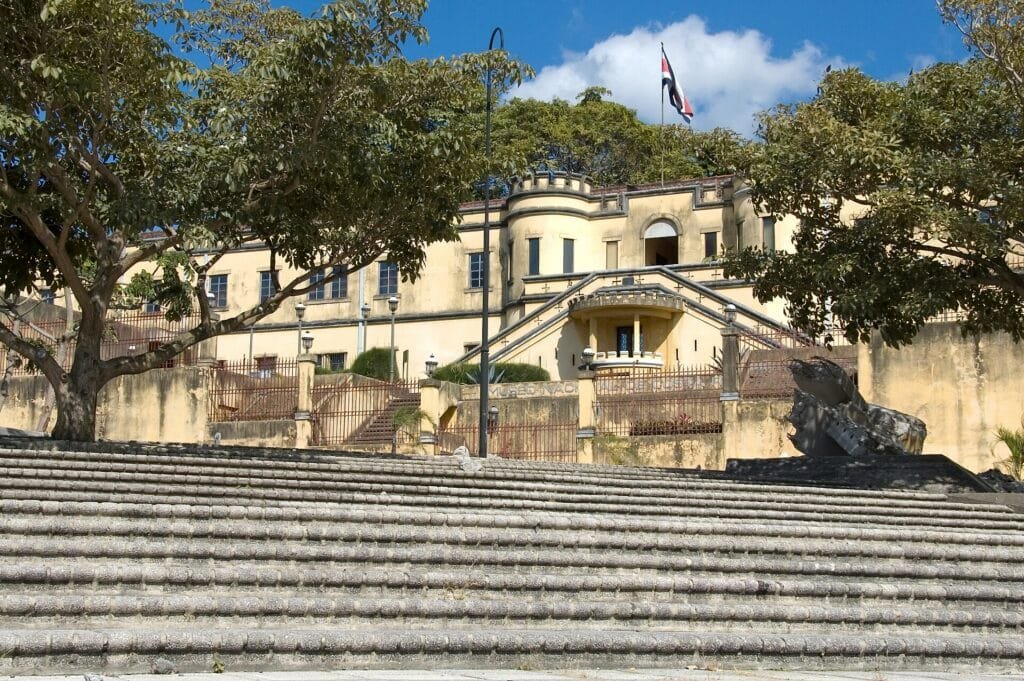
Where to stay in Costa Rica: best areas
| Area | Best for | The vibe |
|---|---|---|
| Arenal / La Fortuna | Volcano & hot springs | Adventure base |
| Monteverde | Cloud forest | Misty, nature |
| Manuel Antonio | Beach & wildlife | Popular, scenic |
| Guanacaste | Beaches & resorts | Dry, sunny |
La Fortuna / Arenal: the adventure hub
Hot springs, hanging bridges, waterfall swims and the volcano looming over town: La Fortuna concentrates Costa Rica’s greatest hits with lodging from hostels to spring-fed resorts (US$40–250). Three nights fits the area’s big four.
Manuel Antonio: wildlife + beach
Continue planning your Costa Rica trip
Sloths and capuchins over breakfast, the national park’s beaches by day. The hill between Quepos and the park is lined with stays at every level: book park-close lodges early in dry season. Two to three nights.
Monteverde: the cloud forest
Misty reserves, hummingbird gardens and night walks: Santa Elena village holds the guesthouses and is cool at altitude (pack a layer). The bumpy access roads are part of the charm: two nights.
Santa Teresa & Nosara: surf and slow
Pacific surf towns of yoga decks, smoothie bowls and golden sunsets: Santa Teresa is livelier and dustier: Nosara more polished and family-calm. Stays run US$60–300: surf-season (Dec–Apr) books out.
Quick picks by traveler type
First trip, ten days: La Fortuna + Manuel Antonio (+ Monteverde if roads do not scare you). Honeymoon: Nosara or the Osa Peninsula eco-lodges. Family: Manuel Antonio + La Fortuna. Surfers: Santa Teresa. Skip San José beyond a flight-night near the airport.
Two towns the guidebooks under-rate (and who they suit)
Everyone funnels into La Fortuna and Manuel Antonio, but two coasts deserve a serious look. Tamarindo, on the Guanacaste Pacific, is the easy-mode beach town: walkable, English widely spoken, reliable surf lessons, and a good first stop if you’re flying into Liberia. Budget cabinas run about $30–50 a night and mid-range beachfront places $80–150, so it flexes for most travellers. It’s the right pick for first-timers, surfers, and groups who want restaurants and nightlife within stumbling distance.
Then there’s Puerto Viejo de Talamanca on the Caribbean side, a slower, Afro-Caribbean-flavoured town that runs cheaper than the Pacific: budget cabinas from $20–35 and small lodges $50–90. It suits backpackers, couples wanting something less polished, and anyone chasing Cahuita’s wildlife or quieter beaches. If you’re staying a while, weekly apartment rentals in both towns land around $400–600, far better value than nightly rates.
- Budget-minded, longer stay: Puerto Viejo
- First trip, want it easy: Tamarindo
Skip both if cloud forest is your priority; Monteverde runs 25–40% pricier and serves a totally different itinerary.
FAQ
Do I need a 4×4 in Costa Rica?
When is dry season?
Is Costa Rica expensive?
How many bases in two weeks?
Best time to visit Costa Rica (real climate data)
Best months: January, February, March, April, December.
Costa Rica’s warmest month is April (avg 27°C / 80°F), the coolest is January (low 16°C / 60°F). The wettest is September (320 mm) and the driest is January.
Source: Open-Meteo / WMO climate normals (WMO 1991–2020, or ERA5 2019–2023 where unavailable). See the full month-by-month weather →
You Might Also Love



Written by
John Morrison is the founder and lead travel writer at Packzup. Over the past decade he has explored destinations across Africa, the Americas, Asia, Europe, the Middle East, and Oceania — always self-funded, never on a press trip.
Working out the money? Check whether your destination is a cash or card country, how much to bring, and how to dodge ATM fees and the DCC trap.
