
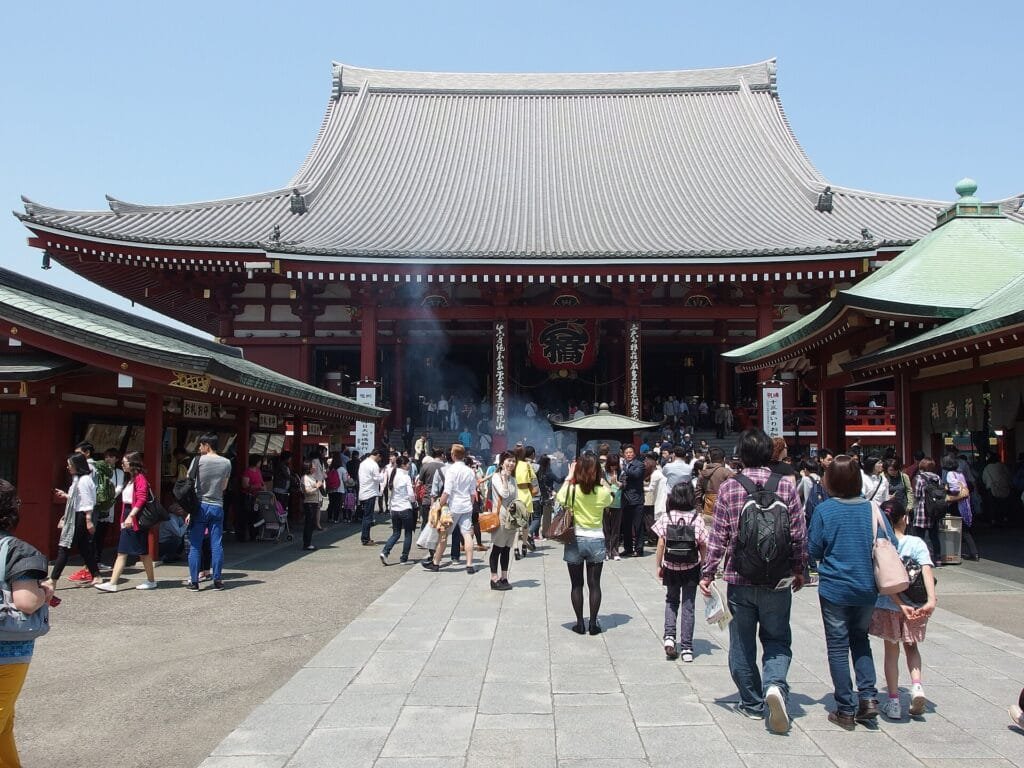
July is Japan’s festival month. The rainy season ends around the middle of it, the heat arrives properly at about 30°C in Tokyo, the Mount Fuji climbing season opens, and Kyoto spends the entire month staging Gion Matsuri – with its two great float parades on Saturday 17 and Saturday 24 July 2027. Fireworks season begins, and the whole country moves outdoors after dark.
Gion Matsuri: the shape of the month in Kyoto
Gion Matsuri runs across the whole of July, but the schedule is fixed and only a few dates matter:
- Yoiyama evenings, 14–16 July – downtown Kyoto closed to traffic, floats lit in the streets, food and drink stalls everywhere, roughly 18:00 to 23:00.
- Saturday 17 July – Saki Matsuri Yamaboko Junko, the first and larger float parade, from about 09:00.
- Yoiyama evenings again, 21–23 July, ahead of the second parade.
- Saturday 24 July – Ato Matsuri Yamaboko Junko, the second parade, from about 09:30.
Both parade dates fall on a Saturday in 2027, so expect heavier crowds than in years when they land midweek. Kyoto hotels for 14–17 and 21–24 July should be booked months ahead. Paid seating is sold for the parades; the route itself is free but you will need to arrive early and stand in serious heat.
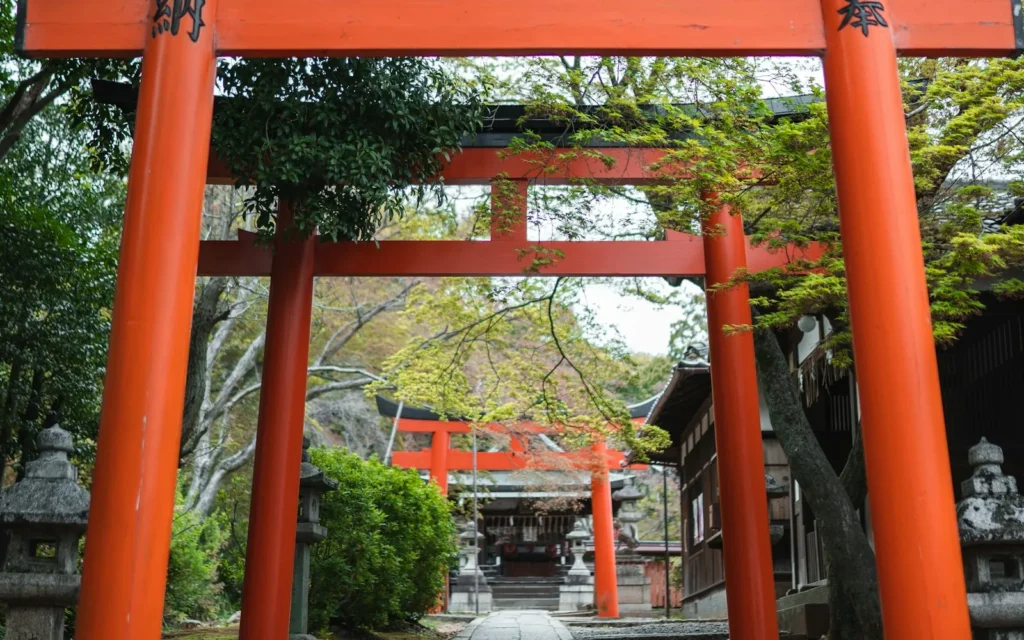
Weather: the rains end, the heat begins
- Tokyo – about 30°C by day and 22°C at night, with roughly 156 mm of rain across eleven days, most of it in the first half of the month.
- Kyoto and Osaka – the hardest cities in Japan in summer. Kyoto sits in a basin, holds the heat, and is both hotter and wetter than Tokyo at around 224 mm.
- Hokkaido – the obvious escape: cool, dry and green, with the Furano lavender at its peak in mid-July.
- Okinawa and the southern islands – out of their rainy season and at their best, with the caveat of typhoon risk.
- The Japan Alps – Kamikochi, Norikura and the Tateyama route are cool, walkable and the right answer for a hot July.
The rainy season typically lifts around 19 July on long-run averages, and the change is abrupt: grey and humid becomes blue, hot and very humid, often within a couple of days. Cicadas are the marker.
Mount Fuji: the season opens
The official climbing season runs from early July to early September, when the huts are staffed, the trails are patrolled and the mountain is open to ordinary walkers. Outside those dates it is a serious alpine undertaking.
Two things have changed in recent years and matter: all four trails now operate entry systems with fees and daily caps, and overnight hut reservations are effectively mandatory if you want to climb for sunrise. Check the official prefectural sites and book the hut before you book the flight.
Fireworks and festivals
Hanabi taikai – summer fireworks festivals – run from late July through August, and they are a genuinely different experience from Western fireworks: hours long, enormous, and watched in yukata from a riverbank with food stalls behind you.
- Sumidagawa Fireworks, Tokyo – Saturday 31 July 2027 (the last Saturday of July), over the river near Asakusa. Around a million spectators; arrive hours early or pick a further-out vantage point.
- Tenjin Matsuri, Osaka – 24 and 25 July, one of Japan’s three greatest festivals, with a river procession of boats and fireworks on the evening of the 25th.
- Tanabata, 7 July – the star festival, marked with bamboo and paper wishes nationwide; Sendai holds the largest version in August.
Prices, crowds and the heat
Japanese school holidays start around 20 July, and Marine Day falls on Monday 19 July 2027, creating a long weekend that starts the summer domestic season. Before that, mid-July is reasonably priced; after it, coastal and mountain destinations fill.
The heat is the real constraint. Japanese summers now regularly produce heatstroke warnings, and the sensible structure is early mornings, indoor middays and late evenings – which is also when the festivals happen.
See the best time to visit Japan for the full comparison.
What to pack
The lightest clothing you have, a hand towel (everyone carries one), a fan, sunscreen, and a refillable bottle – vending machines are everywhere and cheap. Add an umbrella for the first half of the month. See the Japan packing list.
The July 2027 calendar
- Early July – the official Mount Fuji climbing season opens; entry fees and daily caps apply on all trails.
- Wednesday 7 July – Tanabata, the star festival.
- 14–16 July – Gion Matsuri Yoiyama evenings in downtown Kyoto.
- Saturday 17 July – Saki Matsuri Yamaboko Junko, the first great float parade.
- Monday 19 July – Marine Day, a public holiday; the summer domestic season begins.
- About 19 July – the rainy season typically lifts.
- 21–23 July – the second run of Yoiyama evenings.
- 24–25 July – Tenjin Matsuri in Osaka, with boats and fireworks on the 25th.
- Saturday 24 July – Ato Matsuri Yamaboko Junko, the second float parade.
- Saturday 31 July – Sumidagawa Fireworks Festival in Tokyo.
Read alongside
- Japan in June – the rainy season, and the case for it.
- Japan in August – the hottest month, and Obon.
- Best time to visit Japan – all twelve months compared.
- Tokyo in July – the city-level version of this month.
- Things to do in Kyoto – and how to time them in the heat.
- Japan travel guide – regions, rail and how to combine them.
- Japan packing list – the summer version.
Frequently asked
When is Gion Matsuri in 2027?
Throughout July, with the key dates fixed: Yoiyama evenings on 14–16 and 21–23 July, and the two Yamaboko Junko float parades on Saturday 17 and Saturday 24 July 2027. Both parades fall on a Saturday, so crowds will be heavier than usual.
Is July a good time to visit Japan?
It is the best month for festivals and the hardest for heat. The rains lift around the 19th, Gion Matsuri and the fireworks season run all month, and Hokkaido and the Japan Alps offer a cool alternative to the cities.
How hot is Japan in July?
Tokyo averages about 30°C by day and 22°C at night with roughly 156 mm of rain, mostly early in the month. Kyoto and Osaka are hotter and more humid; Hokkaido is cool and dry.
When does the rainy season end in Japan?
Around 19 July on long-run averages for most of the country. The change is abrupt – grey and humid becomes hot and bright within a couple of days, and the cicadas start.
Can you climb Mount Fuji in July?
Yes – the official season opens in early July and runs to early September. All four trails now have entry systems with fees and daily caps, and an overnight hut reservation is effectively required for a sunrise climb, so book before you commit to dates.
When is the Sumidagawa Fireworks Festival?
The last Saturday of July, which is 31 July in 2027, over the river near Asakusa in Tokyo. Around a million people attend, so arrive hours ahead or watch from further out.
Is Japan crowded in July?
It builds. Japanese school holidays start around 20 July and Marine Day falls on Monday 19 July 2027, which together start the domestic summer season. The first half of the month is noticeably quieter and cheaper.
Where is cooler in Japan in July?
Hokkaido, which is cool and dry with the Furano lavender at its mid-July peak, and the Japan Alps – Kamikochi, Norikura and the Tateyama route – which are walkable when the cities are not.
You Might Also Love


Written by
John Morrison is the founder and lead travel writer at Packzup. Over the past decade he has explored destinations across Africa, the Americas, Asia, Europe, the Middle East, and Oceania — always self-funded, never on a press trip.
