
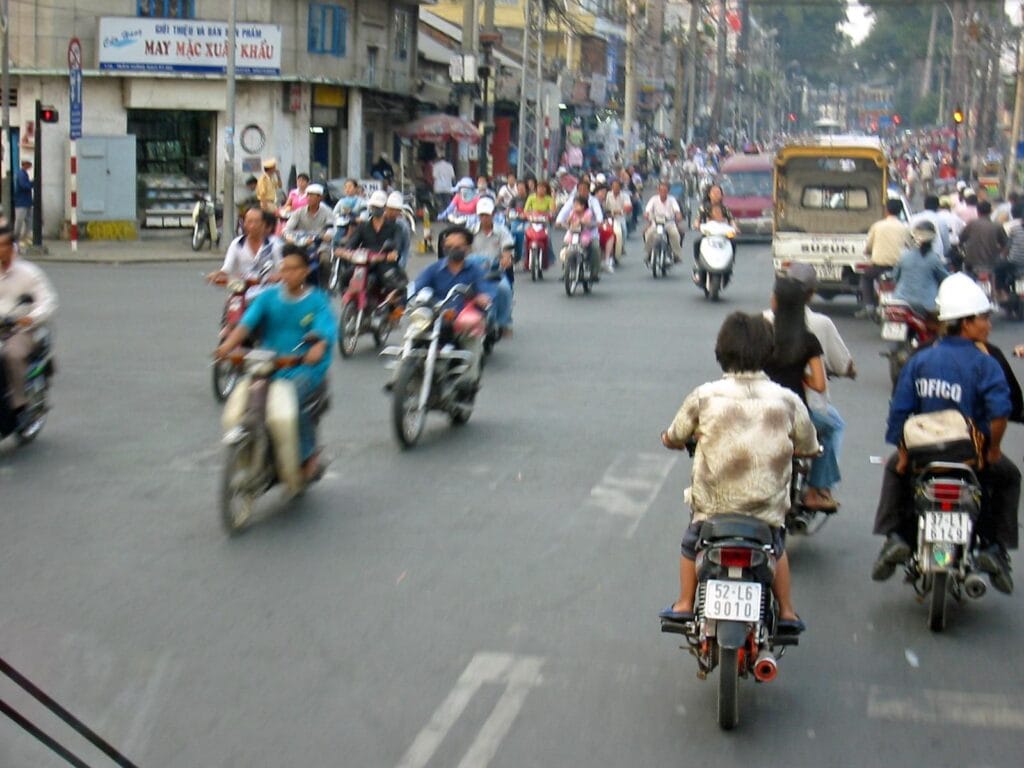
More visitors get hurt on a motorbike in Vietnam than in any other way, and almost none of them planned to take a risk. They rented a scooter for eleven dollars a day because everyone does, rode it in flip-flops because the roads looked slow, and discovered the hard way that a 40 km/h collision does the same thing to a knee in Hoi An as it does anywhere else.
That is not an argument against riding. Vietnam on two wheels is genuinely one of the great travel experiences, the countryside opens up in a way it never does from a bus window, and millions of people ride every day without incident. It is an argument for understanding two specific things before you take the keys: whether you are legally licensed, and whether your insurance will actually pay out. Those two questions decide whether a bad afternoon is an inconvenience or a financial catastrophe, and most travellers never ask either one.
This guide covers the legal position, the insurance trap, what to check on a rental before you ride away, how Vietnamese traffic actually works as a system, where a first-timer should and should not ride, and the alternatives that are frequently the better call. It pairs with our getting around Vietnam guide, which compares the non-motorbike options.
More: When to visit Vietnam · Vietnam travel guide
The thirty-second version
- Your home car licence does not cover a motorbike. Nor, on its own, does most home motorbike licences without the right international permit.
- Vietnam recognises International Driving Permits issued under the 1968 Vienna Convention — not the older 1949 Geneva Convention format. This distinction disqualifies a great many visitors who believe they are covered.
- If you are not legally licensed, your travel insurance will very likely refuse a crash claim. This is the real risk, and it is financial as well as physical.
- Helmets are mandatory and rental helmets are frequently near-useless. This is worth spending money on.
- Do not hand over your passport as a rental deposit. Offer a cash deposit or a photocopy instead.
- Photograph and video the entire bike before you ride away. The damage dispute is the most common rental problem and this is the whole defence.
- Do not learn to ride in Hanoi or Ho Chi Minh City. If you have never ridden, those cities are not the classroom.
The legal position, and why it decides everything else
This is the section most guides skate over, and it is the one that matters.
To ride a motorbike legally in Vietnam you need a licence valid for that vehicle in Vietnam. In practice that means one of three things: a Vietnamese driving licence, a foreign licence accompanied by a valid International Driving Permit that Vietnam recognises, or — for very small-capacity machines — potentially no licence at all. Each has a catch.
The 1968 versus 1949 problem
Vietnam is a party to the 1968 Vienna Convention on Road Traffic and recognises International Driving Permits issued under it. It does not generally recognise the older 1949 Geneva Convention IDP.
This matters enormously because different countries issue different formats. Some national licensing authorities issue 1968-standard permits; others still issue the 1949 format; some issue both and you have to ask for the right one. A traveller who walks into an automobile association at home, pays for “an international driving permit”, and assumes it works in Vietnam may be carrying a document Vietnam does not accept.
Do this before you travel: ask your own national licensing authority, in writing if you can, which convention their IDP is issued under and whether it is valid in Vietnam. Do not rely on a rental shop’s opinion — the shop is not the entity that will assess your insurance claim.
The category problem
Even with the right permit, the permit only covers the vehicle categories your home licence covers. A car licence does not authorise a motorbike. If your home licence has no motorcycle entitlement, an IDP does not create one. This catches out a very large number of visitors, because a scooter feels like a small, casual thing rather than a motorcycle.
Engine capacity also determines the category. Broadly, machines above 50 cc require a motorcycle entitlement, with a further step up for larger-capacity bikes — typically a distinction around the 175 cc mark between the ordinary motorcycle category and the large-motorcycle category. The 110–150 cc semi-automatic and automatic scooters that dominate the rental market sit above the 50 cc line, so they require a motorcycle entitlement.
Sub-50 cc machines are treated more leniently, which is why some rental operations steer visitors toward them. If you go that route, confirm the actual engine capacity from the registration document rather than taking the shop’s word, because “it’s under 50” is a claim with legal consequences attached to it.
Helmets are not optional
Helmet use is legally required for riders and passengers in Vietnam and is normal practice. Enforcement exists. Separately from the law, the helmets supplied with cheap rentals are often thin shells with a token strap that would do very little in a real impact. Buying a decent helmet in-country is inexpensive relative to a trip budget and is the single highest-value purchase a rider can make.
What “not covered” actually means
Here is the sentence that costs people their savings: most travel insurance policies only cover you on a motorbike if you are legally entitled to ride it in the country you are in. Some add further conditions — a helmet requirement, an engine-capacity ceiling, an exclusion for riding on unsurfaced roads, an exclusion for carrying a passenger.
If you ride without the correct licence and crash, the likely outcome is not a reduced payout. It is a declined claim. That means you personally owe the cost of treatment, and if the injury is serious, the cost of a medical evacuation. Air ambulance repatriation from Southeast Asia runs into tens of thousands of dollars. This is the actual downside scenario, and it has nothing to do with how confident a rider you are, because you do not control the truck coming the other way.
What to do about it, concretely:
- Find the motorcycle clause in your policy wording — the full document, not the summary page. Search it for “motorcycle”, “moped”, “motorbike” and “licence”.
- Check the engine-capacity limit. Many policies cap cover at a stated cc figure. A 150 cc rental can sit outside a 125 cc limit.
- Check whether cover requires a licence valid in the country, or merely a licence. The wording differs between insurers and the difference is everything.
- If you are not properly licensed, do not ride. Take a Grab bike, hire a driver, or use the alternatives at the end of this guide. None of them will bankrupt you.
Third-party liability is the other half. If you injure someone else or damage property, you may be personally liable. Vietnam requires motor insurance for registered vehicles, but the cover attached to a rental may be minimal, and it is not the same thing as cover for you.
Renting: what to check before you ride away
Rental in Vietnam is informal, cheap and largely built on trust. Most operators are straightforward. The problems that do occur are predictable, and nearly all of them are prevented in the five minutes before you leave.
Do not leave your passport
Many shops ask to hold your passport as security. Decline. Your passport is the document you need for hotels, domestic flights, banking and departure, and handing it to a shop converts any later dispute into leverage against you: if the shop claims damage, they are holding the thing you cannot leave without.
Offer instead a cash deposit, a photocopy of the passport, or a photo of the data page. Plenty of operators accept this without argument. A shop that absolutely insists on the physical passport and will accept no alternative is telling you something about how disputes there get resolved.
Photograph everything, before
Walk around the bike and take a slow video with the timestamp visible, plus stills of every existing scratch, dent, cracked panel and scuffed mirror. Photograph the odometer, the tyres, and the fuel gauge. Do it with the shop staff present so it is visibly part of the handover rather than something you produce later.
This is not paranoia. The damage dispute — a shop pointing at a scratch that was already there and asking for a few hundred dollars — is the single most common rental complaint in Southeast Asia, and a timestamped video ends it in about ten seconds.
The mechanical check
You do not need to be a mechanic. Check these, in this order:
- Brakes. Both of them, at walking pace, before you leave the forecourt. Front and rear should each stop the bike on their own.
- Tyres. Tread and visible cracking. Bald tyres on a wet Vietnamese road are the most under-rated hazard in this whole guide.
- Lights and indicators. Headlight on both beams, brake light, both indicators. You will ride at dusk at some point whether you plan to or not.
- Horn. Genuinely essential in Vietnam, for reasons the traffic section explains.
- Mirrors. Both present and adjustable. Many rentals have one, or two that are decorative.
- Chain and general condition on a semi-automatic; listen for anything obviously wrong at idle.
Also settle the boring commercial points before money changes hands: the fuel policy, whether a second helmet is included, what happens in a breakdown, whether there is a mileage or geographic restriction, and who pays for what. Get a written or photographed rental agreement. If the shop will not put terms in writing, that is information.
How Vietnamese traffic actually works
Vietnamese traffic looks like chaos from the pavement and is not. It is a dense, self-organising flow with its own internal logic, and once you understand the logic it becomes far less frightening than it appears. The mistake visitors make is applying Western road habits to it, because those habits assume a system built on right of way and enforced lane discipline. Vietnam runs on something else: continuous negotiation and predictability.
The operating principles, as they actually function:
- Be predictable, not assertive. The flow accommodates a rider who moves steadily and telegraphs intent. It cannot accommodate someone who brakes hard, swerves, or hesitates in the middle of a junction. Sudden is the dangerous thing, not slow.
- The horn means “I am here.” It is an information signal, not an insult. Riders use it approaching blind corners, when overtaking, and when entering a junction. Use yours the same way and do not read other people’s as aggression.
- Right of way is fluid and size-weighted. Formally there are rules. Practically, the larger vehicle goes first: buses and trucks over cars, cars over motorbikes, motorbikes over pedestrians. Argue this at your peril. Yield to anything bigger than you, every time, regardless of who is technically correct.
- Junctions are entered slowly and continuously. Traffic merges by threading rather than stopping. Enter at a steady low speed, keep moving, and let people flow around you. Stopping dead in a junction is more dangerous than proceeding.
- Left turns happen from the flow. Rather than waiting for a gap, riders often ease across the oncoming lane and travel briefly along the edge before merging. This is normal and expected. As a visitor, prefer waiting for a genuine gap.
- Pavements and the wrong side are in play. Motorbikes ride on pavements and briefly against the flow, especially in cities. Expect it, particularly when pulling out.
- Watch for what enters from the side. Most incidents involve something emerging from a side street, an alley, or a shopfront rather than a head-on event.
Two habits worth adopting on day one: leave far more following distance than feels necessary, and cover the brakes with your fingers whenever you are near a junction. Both cost nothing and buy you the fraction of a second that matters.
What to wear, honestly
Almost nobody rides Vietnam in protective gear, and almost everyone who has come off a bike wishes they had. The realistic compromise is not full leathers. It is: a proper helmet, closed shoes rather than flip-flops, and trousers and sleeves rather than shorts and a vest. Road rash across a whole limb is the injury that ruins a trip without being life-threatening, and cloth prevents most of it. Gloves are cheap and protect the part of you that instinctively hits the road first.
Where not to learn
If you have never ridden a motorbike, Vietnam is a poor place to learn, and some parts of Vietnam are a very poor place indeed.
Avoid entirely as a beginner:
- Central Hanoi and central Ho Chi Minh City. Extremely dense, constant merging, and no margin for a hesitation. Experienced riders find these cities demanding.
- Highway 1. The main north–south trunk road carries heavy long-distance truck and bus traffic at speed. It is not a scenic route and it is the least forgiving road in the country.
- Mountain passes in rain or fog. Wet, steep, poorly-drained roads with drop-offs and no barrier, plus the possibility of loose surface after rain.
- Night riding anywhere unfamiliar. Unlit roads, unlit vehicles, livestock, and potholes you cannot see.
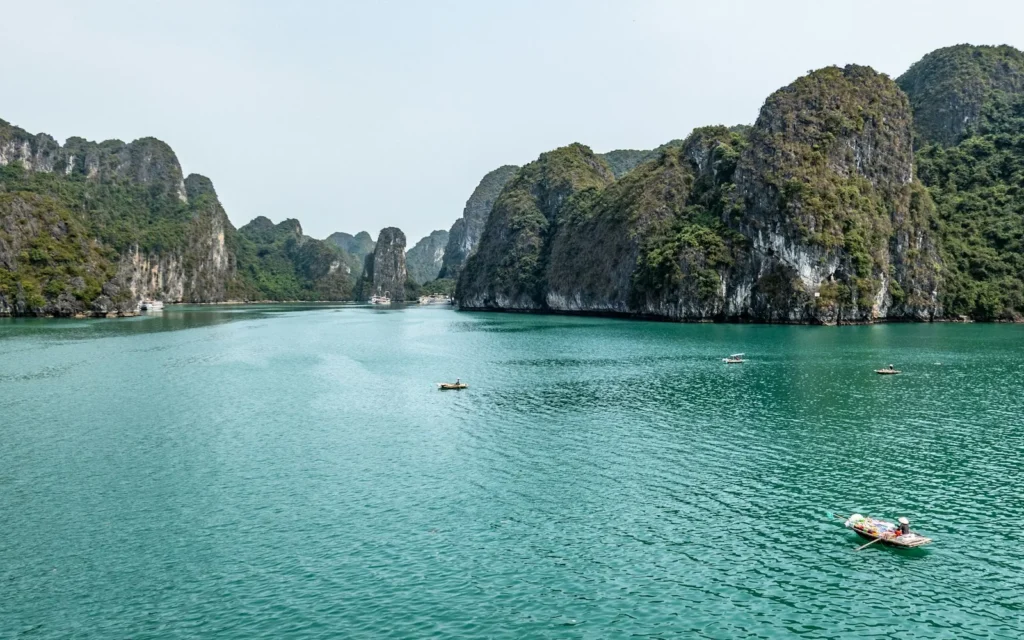
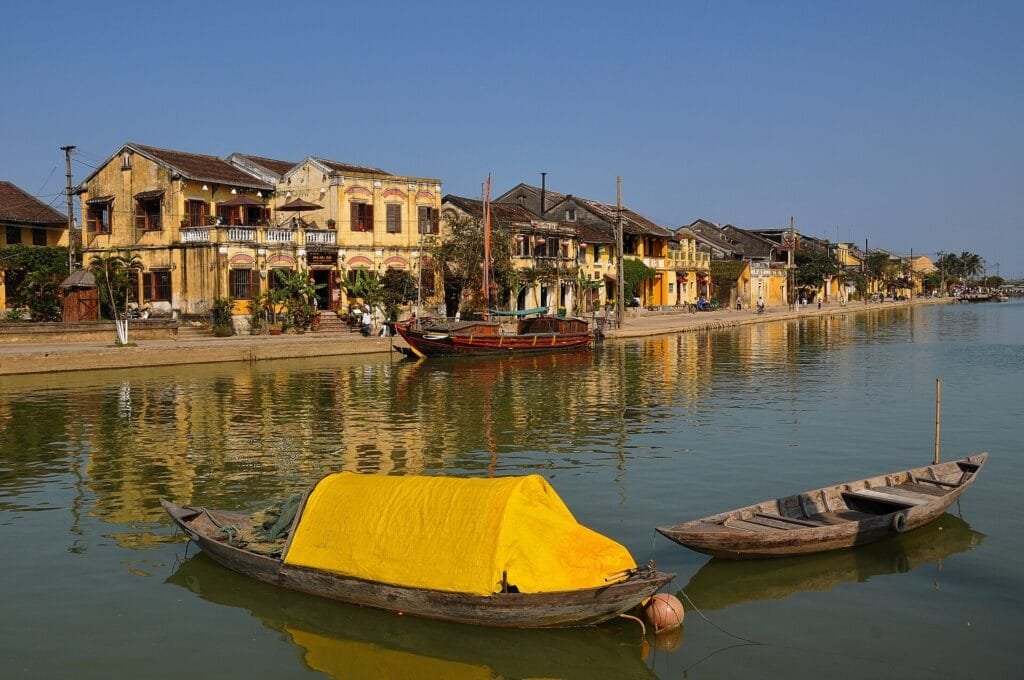
Reasonable places to build confidence: the flat rural lanes around Hoi An and out toward the coast, the quieter roads around Da Lat, and rural stretches in the north-west like the Mai Chau valley — low traffic, low speed, and somewhere to stop. Ride for a couple of hours somewhere forgiving before you commit to a route that requires competence.
The famous routes, and what they actually demand
Vietnam’s celebrated rides are celebrated for good reason, and they are not all equivalent in difficulty. An honest ranking:
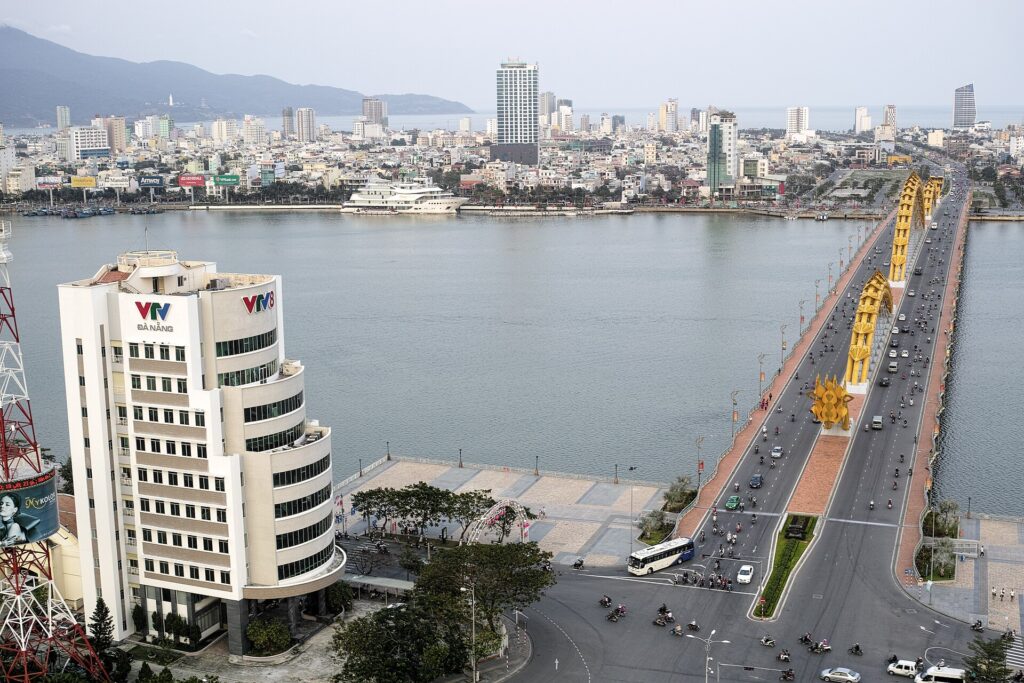
- Hai Van Pass (Hue to Da Nang direction). The most accessible of the famous rides: a proper mountain pass with sea views, but a well-surfaced road with a steady gradient, and much of the heavy traffic now diverted through the tunnel. Achievable for a confident novice on a dry day. This is also the route many people do on the back of a hired rider’s bike, which is a perfectly good choice.
- Da Lat and the central highlands. Cooler, quieter, plenty of good road, and far less traffic than the coast. Underrated and forgiving.
- The Mekong Delta. Flat and slow, with narrow lanes, frequent bridges and canals. Low speed risk, high navigation faff.
- Ha Giang loop. Spectacular and genuinely demanding: sustained mountain riding, exposed drops, variable surface, long distances between anything, and patchy phone coverage. This is not a beginner route, whatever social media suggests. Many riders do it with a local driver, and there is no shame in that — it is often the better trip.
Fuel, breakdowns and the roadside economy
One of the genuine pleasures of riding in Vietnam is how well the country is set up for it. Fuel stations are frequent, and in rural areas you will find small roadside sellers dispensing petrol by the bottle or from a hand pump. Attendants fill the tank for you; check the pump is zeroed before they start, which is ordinary practice anywhere and not an accusation.
Repairs are similarly abundant. Small workshops — often a man, an awning and a compressor — are strung along almost every road, and they fix punctures and basic faults quickly and cheaply. A puncture is an inconvenience measured in tens of minutes, not a trip-ending event. Agree the price before work starts, as you would anywhere.
Two practical points. First, keep the rental shop’s phone number saved and photographed, along with the bike’s registration plate. Second, know roughly where you are; a breakdown on the Ha Giang loop with no signal and no idea of your location is a materially different problem from one outside Hoi An, which is another reason the data and coverage question matters more for riders than for anyone else.
Police stops
Traffic police do stop riders, including foreign ones, and being stopped is not in itself dramatic. Carry your licence, your IDP, the rental paperwork and your passport photocopy, and produce them politely. Wear your helmet, because riding without one is the most common reason to be pulled over in the first place.
If you are riding without a valid licence, a stop can mean a fine and the bike being impounded, and you will also have documented the fact that you were riding unlicensed — which is not helpful if you subsequently need to make any kind of claim. The way to have an easy relationship with traffic police is to be legal and wear a helmet.
If you crash
Decide the sequence now, because you will not be thinking clearly then.
- Get out of the traffic flow first. Off the carriageway, then assess.
- Assess injuries before the bike. The bike is a financial problem and can wait. Head injury, heavy bleeding, or any suspected fracture means medical care immediately, not later.
- Go to a hospital rather than a small clinic for anything significant, and in a city rather than a rural district if you have the choice. Keep every receipt and document — insurers require them.
- Call your insurer’s emergency line early, not after treatment. Many policies require notification before major treatment or evacuation is authorised.
- Photograph the scene, the bike and any other vehicle if you are able to.
- Tell the rental shop promptly. Delay makes the damage conversation worse, not better.
Have your insurer’s 24-hour number saved offline in your phone and written on paper in your wallet. A phone that is broken or dead in a crash is exactly the situation where a paper copy earns its keep.
The alternatives, which are often better
Riding yourself is one option among several, and for a lot of travellers it is not the best one. The alternatives are cheap, and none of them carries the licence or insurance problem.
- Grab bike. App-based motorbike taxis, everywhere, priced in advance. Ideal for short city hops, and you get the experience of the traffic without being responsible for surviving it.
- A hired rider for the day. Someone who knows the roads takes you where you want to go. On the Hai Van Pass this is a genuinely popular way to do the route, and it means you look at the view instead of the road surface.
- Car with driver. Not much more than a rental car in many cases, removes all the risk, and works well for a group or a family.
- Multi-day guided motorbike tours. For the Ha Giang loop and similar, riding pillion with an experienced local driver is the standard way visitors do it, and the honest answer is that it is usually a better trip than riding it yourself on day three of your first motorbike experience.
Choosing one of these is not a failure of nerve. It is the same calculation a sensible person makes about any activity where the downside is disproportionate to the upside.
Frequently asked questions
Do I need a licence to ride a motorbike in Vietnam?
Yes, for anything above 50 cc — which includes essentially every scooter in the rental market. You need a licence with a motorcycle entitlement, plus an International Driving Permit that Vietnam recognises, or a Vietnamese licence.
Is my International Driving Permit valid in Vietnam?
Only if it is issued under the 1968 Vienna Convention. Permits issued under the 1949 Geneva Convention are generally not recognised. Confirm which format your own licensing authority issues before you travel — do not assume, and do not rely on a rental shop.
Will my travel insurance cover a motorbike accident?
Typically only if you were legally entitled to ride that vehicle in Vietnam, and often subject to further conditions on engine capacity and helmet use. Read the full policy wording rather than the summary. Riding unlicensed is the fastest route to a declined claim.
Can I rent a motorbike without a licence?
In practice many shops will rent to you without checking. That tells you nothing about whether it is legal or insured, and the shop bears none of the consequences. The absence of a check is not permission.
Should I leave my passport as a deposit?
No. Offer a cash deposit or a photocopy. Handing over your passport gives the shop leverage in any dispute over damage.
Is the Hai Van Pass safe for a beginner?
It is the most approachable of Vietnam’s famous rides — a well-surfaced pass with a steady gradient and much of the heavy traffic diverted through the tunnel. On a dry day a careful novice can manage it. In rain, reconsider, or ride pillion with a hired driver.
What is the single most useful thing to buy?
A decent helmet. Rental helmets are frequently thin shells with a token strap, and a good one costs very little against the price of a trip.
The short version
Ask the two questions nobody asks: am I legally licensed for this vehicle in this country, and will my insurer pay if I am not. If the answer to the first is no, the answer to the second is almost certainly no as well, and the correct move is to take a Grab bike or hire a rider — both of which are cheap, easy, and give you most of the experience with none of the exposure.
If you are licensed: buy a real helmet, wear closed shoes and sleeves, photograph the bike before you leave, keep your passport in your pocket rather than on the shop counter, yield to everything larger than you, and be predictable rather than assertive. Then go and ride the Hai Van Pass on a dry morning, because it genuinely is as good as people say.
Next: getting around Vietnam compares the other options, money in Vietnam covers deposits and paying for rentals, and Vietnam eSIM and mobile data covers staying reachable on the routes where coverage drops out.
You Might Also Love




Written by
John Morrison is the founder and lead travel writer at Packzup. Over the past decade he has explored destinations across Africa, the Americas, Asia, Europe, the Middle East, and Oceania — always self-funded, never on a press trip.
