
Quick answer: The top digital-nomad bases are Lisbon, Bali (Canggu), Chiang Mai, Mexico City and Medellín — strong wifi, low cost and big communities.
A great nomad city needs reliable fast internet, an affordable cost of living, a visa that works, and other remote workers to meet. These ten deliver.
The 10 best digital-nomad cities
Lisbon, Portugal
Best months: Jun–Aug · 18–28°C days · dry (climate data)

Europe’s nomad capital — great weather, a digital-nomad visa, coworking everywhere and a huge community.
Canggu, Bali
Best months: May–Jul · 24–28°C days · rainy (climate data)
Cafés, coworking, surf and a massive nomad scene at low cost (with a dedicated visa).
Chiang Mai, Thailand
Best months: Nov–Jan · 17–28°C days · dry (climate data)

The original budget nomad hub — cheap, comfortable and very social.
Mexico City
Best months: Dec–Feb · 7–23°C days · dry (climate data)
Fast internet, incredible food, great neighborhoods (Roma, Condesa) and an easy time zone for the US.
Medellín, Colombia
Best months: Dec–Feb · 15–26°C days · some rain (climate data)

Spring-like weather, low cost and a friendly expat scene in El Poblado and Laureles.
Bangkok, Thailand
Best months: Nov–Jan · 22–31°C days · dry (climate data)
Big-city infrastructure, cheap living and excellent flight connections.
Tbilisi, Georgia
A one-year visa-free stay for many nationalities, very low cost and fast wifi.
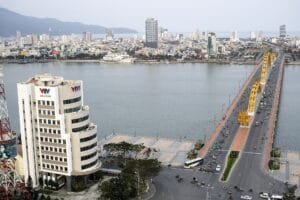
Da Nang, Vietnam
Best months: Nov–Jan · 14–22°C days · some rain (climate data)
Beachside, cheap and increasingly popular with remote workers.
Tenerife & the Canary Islands
Europe’s best winter weather with Spanish nomad-visa access.
Buenos Aires, Argentina
Best months: Sep–Nov · 13–21°C days · some rain (climate data)
European feel, great food and culture, and very affordable for foreign earners.
How to choose
Pick by time zone and visa: Mexico City and Medellín suit US hours; Lisbon, Tbilisi and the Canaries suit Europe; Bali, Chiang Mai and Da Nang are the value champions for Asia-Pacific. Check the dedicated nomad-visa rules before a long stay.
Related travel guides
Plan your trip to these destinations
Every destination here is chosen from independent research — Packzup runs no sponsorships or paid placements.
What each of these cities actually lets you do, in law
Four of the ten have a stay route that can be confirmed from the government that issues it, and for those four the income test, the fee and the family position can all be quoted. The other six are widely described as having one and could not be confirmed from an official source on 5 September 2026, which is a reason to write to the authority rather than a reason to assume the route does not exist.
Lisbon is governed by Portugal’s remote-work residence visa, usually called the D8. The Ministry for Foreign Affairs visa portal asks for a work contract, or an employer declaration confirming the labour link, or a services contract where you are independent, together with three months of income evidence averaging at least four times the minimum guaranteed remuneration. The portal puts the 2026 minimum monthly salary at 920 euros after social security deductions, citing PCM Regulatory Decree 139/2025, so the test is 3,680 euros a month. The national visa fee is 110 euros, with 75 euros to appeal a refusal. Dependants do not add a fee here; they raise the money test instead, on percentages the portal publishes. The visa is obtained before you travel and then converted into a residence permit inside Portugal.
Tenerife and the rest of the Canary Islands are Spain, which surprises people who treat the islands as a separate jurisdiction. The route is the international teleworking visa and residence authorisation created by Ley 28/2022: the visa buys a maximum of one year of entry and residence, the authorisation that follows it runs three years and renews for a further two, and permanent residence comes into reach at five. The statute itself puts no euro figure in the text, but the unit that decides the files does. The Unidad de Grandes Empresas y Colectivos Estratégicos sets the money test at twice the monthly minimum interprofessional salary, which it gives as 1,221 euros, so a single applicant must show 2,442 euros a month as at 5 September 2026, rising by set fractions of the same salary for a partner and for each further dependant. The charge is 73.26 euros a head. Carry the multiple in your head rather than the total, since the total shifts every time that salary is revised.
Bangkok and Chiang Mai both sit under Thailand’s Destination Thailand Visa. The Royal Thai Embassy in London, whose page carried a data update of 31 August 2026, lists three categories: DTV1 for workcation covering digital nomads, remote workers, foreign talent and freelancers; DTV2 for Thai soft-power activities such as Muay Thai, Thai culinary training and medical treatment; and DTV3 for a spouse and children under 20 of a holder. Financial evidence is no less than 500,000 baht, which that mission expresses as 12,000 pounds. The visa runs five years, multiple entries, 180 days per entry, with one extension of up to a further 180 days per entry, and the London fee is 300 pounds. Fees are set by each mission in its own currency, so check the one you will apply to.
Tbilisi needs no application at all, and no fee. The one-year stay sits in an annex to Ordinance No. 255 of the Government of Georgia of 5 June 2015, whose note grants listed nationals entry and stay without visa for one full year. That annex ran to 94 countries at its February 2026 amendment and takes in the United States, the United Kingdom, Canada, Australia and the EU. There is no income test, which makes it the only entry on this list open to someone who cannot evidence a threshold.
For Canggu, Mexico City, Medellín, Da Nang and Buenos Aires, ask the issuing body directly and get the answer in writing: the Directorate General of Immigration for Indonesia, a Mexican consulate or the Instituto Nacional de Migración for Mexico, the Ministry of Foreign Affairs of Colombia for Medellín, the Vietnam Immigration Department for Da Nang, and the Dirección Nacional de Migraciones for Argentina. Every figure on this page was checked on 5 September 2026 and should be re-checked within 30 days of any application.
The step inside the country that catches people out
Getting the visa is rarely the hard part. The failure happens after you land, on a deadline nobody mentions.
Lisbon runs on a hard clock. The Portuguese residency visa is good for four months and two crossings of the border, and inside that window the holder has to secure the residence permit itself from AIMA, at an appointment in person. So the sticker in your passport is not permission to live in the city; it is permission to arrive and convert. Build your first months around the appointment rather than fitting it in, keep the whole document set to hand because you will present it twice, and count your border crossings if you mean to leave and return before the permit is issued.
Tenerife inverts that. The Spanish window opens late instead of closing early: the teleworker residence authorisation cannot be lodged from outside the country at all, and once you are in on the one-year visa it can only be lodged in the final 60 days of that visa, while it is still valid. Too early is rejected; too late and the ladder is gone. Behind it sits the step nobody budgets for, which is Spanish social security registration, compulsory because the work happens on Spanish soil and capable of costing a self-employed holder the whole authorisation, dependants included, if it is left undone.
In Thailand the trap is the shape of the 180 days. The Royal Thai Embassy in London describes the DTV as 180 days per entry with one extension of up to a further 180 days per entry, applied for inside Thailand, after which you leave and re-enter on the same visa. That means a year in Chiang Mai is not one continuous permission but a 180-day block, an extension application with its own paperwork and fee, and then a border crossing. Book the extension well before the stamp expires rather than in its final week, and treat the exit as a planned trip with a cost rather than a surprise.
In Georgia there is no step at all, and that is its own hazard. Nothing registers your arrival with a tax authority, nobody hands you a card, and there is no appointment to make you notice the year passing. The clock still runs, and a second one runs beside it: under Article 34 of the Tax Code an actual stay reaching 183 days across any rolling twelve calendar months ending in a tax year makes you a Georgian tax resident for the whole of that year. Put both dates in your calendar on the day you land, and ask a Georgian consulate in writing whether leaving and returning restarts the immigration year before you build a plan on a border run, because the ordinance text does not settle that question.
Across all four, one habit prevents most problems. Photograph every stamp and every permit on the day you receive it, and keep a dated folder of proof of income and insurance. Almost every refusal that follows a nomad around later comes from being unable to evidence a period they cannot now reconstruct.
Which of these cities makes you a local taxpayer
Three of the four confirmed routes have a published answer, and in two of them the immigration permission and the tax line are set at almost exactly the same number, which is why people cross it without noticing.
Thailand is the sharpest example on this list. The Revenue Department of Thailand treats as a resident any person residing in Thailand for periods aggregating more than 180 days in a tax (calendar) year, and a resident is taxable on Thai-source income and on foreign-source income brought into Thailand. The DTV grants 180 days per entry. One day beyond the stamp, or an extension used in the same calendar year, and you are on the wrong side of a line that the visa page never mentions. Note also that the Thai test runs on the calendar year while the visa runs on entries, so two 180-day entries straddling a January will read very differently from two inside one year.
Spain builds you into the system by design. Because the activity happens on Spanish soil, Article 15 of Royal Legislative Decree 8/2015 makes joining the Spanish social security system compulsory, and Ley 28/2022 then offers a qualifying displaced worker the Non-Resident Income Tax basis instead of the ordinary one, with the prior non-residence period trimmed from ten years down to five. So the Canary Islands route is not an outside-the-system arrangement with a favourable postcode; it is entry into the Spanish system with an election available on top.
Georgia sets a statutory 183-day test in Article 34 of its Tax Code, counted across rolling twelve-month windows, and applies it to a visa-free stay just as readily as to a permit, which is the part the fee-free year hides.
For Portugal the visa portal is silent on tax, so put the question to the Autoridade Tributária e Aduaneira rather than to the immigration authority, and get it in writing before you commit. A visa page will rarely answer a tax question, and the two authorities are not obliged to agree with each other about what you are.
One rule covers all of them. Becoming a taxpayer somewhere new does not end your liability where you came from, because each country applies its own domestic residence test and you can satisfy two at once. Where both claim you and a treaty exists, the treaty tie-breaker decides, starting with where you have a permanent home available to you. Where no treaty exists, there is no tie-breaker at all.
Cost evidence: use the statistics office, not a crowd-sourced average
A monthly figure with no source and no date is not evidence, and for these cities it is often wrong in a specific and predictable way. Two sourced numbers do more work than any average: the national consumer price index, which tells you how fast an old budget is decaying, and the national average wage, which tells you the level the domestic market is priced at.
As of 5 September 2026 the national statistics offices published these. Portugal: annual CPI change estimated at 3.3 per cent in August 2026, from Statistics Portugal, in a flash estimate released on 31 August 2026. Spain: a flash annual CPI rate of 4.3 per cent in August 2026, seven tenths higher than July, with underlying inflation at 2.9 per cent, from the Instituto Nacional de Estadística, released on 28 August 2026. Georgia: annual inflation of 5.6 per cent in August 2026 from the National Statistics Office of Georgia.
Use them like this. First, age the budget. A Lisbon figure copied from a guide written a year ago is understating euro prices by roughly 3 per cent before anything else; a Tbilisi figure by roughly 5.6 per cent; a Tenerife figure by roughly 4.3 per cent. Second, apply the exchange rate on the day rather than the one printed in the guide, and use the central bank’s published rate as a reference point rather than as the rate you will get, because a card and a bureau will both give you something else.
Third, and most important, split the budget in two. Food, transport, haircuts and trades track the local wage. Furnished, short-let, English-listed flats do not: they are priced against foreign demand and can move independently of everything the statistics office measures. That single split explains most of the gap between a published city budget and what people actually spend, and it is worst in exactly the cities that appear on nomad lists.
That leaves the crowd-sourced comparison sites, and the honest description of them is that a visitor typed the number in. None of them is a statistics office, none weights its sample, and a figure lifted from one without recording the site and the day you took it is a rumour with a decimal point.
Why the internet speeds you read for these cities are not evidence
Because almost none of them come from a government. The country and city speed rankings that circulate for all ten of these places are produced by private testing companies from tests their own users chose to run, on their own devices, on their own connections. That is a market signal, and a self-selected one, rather than a measurement of the flat you are about to rent.
Telecoms regulators do publish, but they mostly publish something else. What a national regulator typically issues is a count of subscribers, revenue and traffic broken down by operator and by technology, on a quarterly lag, and often with the detailed tables behind a sign-in. That tells you how many connections exist and who sells them. It does not tell you what your building will do on a Tuesday evening, and in several of these countries the published series runs years behind the present day. Check the regulator for the country you are choosing and look at the date on the series before you quote anything from it.
What actually determines your working day is the building, the provider and the package, in that order. A city where fibre is common still contains blocks that were never wired for it. Ask the landlord, before you sign, which provider the flat is connected to and what the contracted package is, then run a test yourself in the room you would work in, at the hour you would work.
Test for the right number. Video calls fail on upload, and the advertised headline is a download figure, so check the upload separately and check it at 21:00 local time when the building is busy rather than at 10:00 when it is empty. Ask whether the connection is in the landlord’s name, because upgrading or moving a package on someone else’s account is a common and slow stall. And carry a fallback: a local SIM with a data package you have actually tested, so that a fault at the exchange is an inconvenience rather than a missed client call.
One more thing worth checking in each of these cities and rarely mentioned: the power. A connection is only as reliable as the supply behind the router, and a building with frequent short cuts will drop calls no matter what the fibre is rated at. Ask other tenants rather than the agent.
How to choose between them without relying on a ranking
Rank them against your own binding constraint instead, because these cities are not competing on the same axis.
If your constraint is that you cannot meet an income threshold, the answer is Tbilisi. Georgia’s one-year visa-free stay under Ordinance No. 255 has no income test, no fee and no application, and no other city on this list comes close to that. The trade-off is that it leads nowhere: the year is a stay, not a residence right, and it does not accumulate towards anything.
If your constraint is the size of the threshold itself, the confirmed routes are far apart and the cheapest is not where people assume. Spain asks 2,442 euros a month for a single applicant, Portugal 3,680 euros a month averaged over three months, and Thailand asks for a balance rather than an income, 500,000 baht. Someone with savings and modest earnings clears Thailand and fails Portugal. Someone on a good salary with no savings does the reverse.
If your constraint is that you want the year to turn into something, the answer is Lisbon or Tenerife. Both routes are residence routes. Ley 28/2022 gives Tenerife a three-year authorisation, a two-year renewal on top of it, and the permanent-residence door open at the five-year mark. Lisbon’s D8 is a residence visa that converts into a residence permit through AIMA. Both cost more in evidence and in appointments than the Georgian option, and that is the point of them.
If your constraint is that you keep coming back rather than staying, the answer is Bangkok or Chiang Mai. A five-year, multiple-entry DTV with 180 days per entry suits someone who wants a base to return to for half of each year, and suits nobody who wants to be resident. Budget for the extension paperwork and for at least one border crossing a year, and watch the Thai calendar-year tax line while you do it.
If your constraint is family, check the family provision before the income figure, because it varies more. Thailand’s DTV covers a spouse and children under 20 through category DTV3. Tenerife is the standout, because the Spanish route admits a partner, dependent children and dependent parents at 73.26 euros a head and then lets them work in Spain without restriction, which almost no nomad scheme does. Lisbon takes the opposite approach and simply raises the income bar for each person you bring. Some schemes elsewhere exclude family outright, so never assume.
If your constraint is the time zone, that is a scheduling question rather than a legal one, and it is the one place where the cities that could not be confirmed here still deserve a look. Mexico City, Medellín and Buenos Aires exist on this list because of overlap with North American working hours, and Canggu and Da Nang because of overlap with Asia and Australia. Get the current legal route in writing from the relevant immigration authority first, then decide.
Whatever you choose, re-check the rule within 30 days of applying. Thresholds pegged to a minimum wage move in January, mission fees change without announcement, and visa-free country lists are amended by ordinance rather than by press release.
At a glance
| City | Stay route and its legal basis | Longest single stay it allows | Money test and fee | Family | Local tax position | The step people miss |
|---|---|---|---|---|---|---|
| Lisbon | Portugal remote-work residence visa (D8), Ministry for Foreign Affairs visa portal | Residence visa valid 4 months with two entries, then a residence permit issued in Portugal | Four times the 920 EUR 2026 minimum monthly salary, so 3,680 EUR a month averaged over three months; national visa fee 110 EUR, 75 EUR to appeal | No per-head fee. The subsistence bar rises by half the base figure for a second adult and by three tenths of it for a minor or dependent child | Silent on the visa portal. Ask the Autoridade Tributária e Aduaneira | The visa expires in 4 months: the AIMA appointment that converts it into the permit has to happen inside that window |
| Tenerife and the Canary Islands | Spain international teleworking visa and residence authorisation, Ley 28/2022, decided by the Unidad de Grandes Empresas y Colectivos Estratégicos | Visa up to 1 year, then a 3-year authorisation with a 2-year renewal and permanent residence at 5 | Twice the monthly minimum interprofessional salary, that salary being 1,221 EUR, so 2,442 EUR a month; three quarters of the same salary again for a second person and a quarter for each further one; 73.26 EUR a head | Partner, minor and dependent adult children, dependent parents; all may live and work in Spain without restriction | Spanish social security registration is compulsory (Royal Legislative Decree 8/2015, Article 15). A qualifying displaced worker may then elect the Non-Resident Income Tax basis, the prior non-residence period having dropped from ten years to five | Assuming the islands are a separate jurisdiction. They are Spain. The residence authorisation cannot be applied for from abroad and only in the last 60 days of a still-valid visa |
| Bangkok | Thailand Destination Thailand Visa (DTV), Royal Thai Embassy London | 180 days per entry, plus one extension of up to 180 days per entry, within a 5-year multiple-entry visa | Evidence of no less than 500,000 THB, expressed as 12,000 GBP by that mission; fee 300 GBP in London | Category DTV3 covers a spouse and children under 20 of a holder | The Revenue Department of Thailand treats more than 180 days in a tax (calendar) year as residence, taxable on Thai-source income and foreign income brought into Thailand | Applying for the in-country extension too late, then having to exit; and crossing the 180-day tax line with an extension |
| Chiang Mai | Same DTV as Bangkok | Same 180-day cycle | Same evidence and mission fee; each mission sets its own fee in its own currency | Same DTV3 category | Same Thai calendar-year test | Treating a year as continuous permission when it is two 180-day blocks and a border crossing |
| Tbilisi | Visa-free stay under Ordinance of the Government of Georgia No. 255 of 5 June 2015 | One full year, for citizens of the 94 countries in the annex | No income test, no application and no fee | Each traveller qualifies in their own right through the annex; there is no dependant mechanism because there is no application | Tax Code of Georgia, Article 34: an actual stay reaching 183 days across any rolling twelve calendar months that end in the tax year makes you resident for the whole of it | Nothing registers your arrival, so nothing reminds you that the immigration year and the 183-day tax clock are both running |
| Canggu, Bali | Indonesian visa or stay permit | Not confirmed | Not confirmed | Not confirmed | Not confirmed | Could not be confirmed from an official source. Ask the Directorate General of Immigration, Indonesia |
| Mexico City | Mexican temporary residence or visitor entry | Not confirmed | Not confirmed | Not confirmed | Not confirmed | Could not be confirmed from an official source. Ask a Mexican consulate or the Instituto Nacional de Migración |
| Medellín | Colombian visa | Not confirmed | Not confirmed | Not confirmed | Not confirmed | Could not be confirmed from an official source. Ask the Ministry of Foreign Affairs of Colombia |
| Da Nang | Vietnamese e-visa or other entry | Not confirmed | Not confirmed | Not confirmed | Not confirmed | Could not be confirmed from an official source. Ask the Vietnam Immigration Department |
| Buenos Aires | Argentine visa or visitor entry | Not confirmed | Not confirmed | Not confirmed | Not confirmed | Could not be confirmed from an official source. Ask the Dirección Nacional de Migraciones |
Frequently asked questions
Which of these cities can I stay in longest without applying for anything?
Tbilisi, by a wide margin. A note to the annex of Ordinance No. 255 of the Government of Georgia of 5 June 2015 lets nationals of the listed countries enter and remain for a full year without a visa, and that annex stood at 94 countries when it was last amended in February 2026, the United States, the United Kingdom, Canada, Australia and the EU among them. No income test, no fee, no form. What the year does not hand you is a residence permit, or any entitlement to be employed by a Georgian company, or immunity from Georgian tax: Article 34 of the Tax Code makes you resident for a whole tax year once your actual stay reaches 183 days across any rolling twelve calendar months ending in it.
Do the Canary Islands have their own digital nomad visa?
No. Tenerife, Gran Canaria and the rest of the Canary Islands are part of Spain, so the route is the same international teleworking visa and residence authorisation created by Ley 28/2022 that applies to Madrid or Barcelona, and Schengen rules apply in the same way. The law gives a visa good for a year of entry and residence, then an authorisation running three years with a further two on renewal, and permanent residence becomes available once five years are behind you. Qualifying displaced workers may also elect the Non-Resident Income Tax basis. The statute does not put a euro income figure in its text, but the Unidad de Grandes Empresas y Colectivos Estratégicos, which decides the applications, requires 200 per cent of the monthly minimum interprofessional salary and gives that salary as 1,221 euros, so the test on 5 September 2026 is 2,442 euros a month, with a fee of 73.26 euros per initial application. Because the test is a percentage of a salary that is revised, confirm both figures before you plan around the total.
How much do I need to earn for each of these cities?
The four confirmed routes ask for very different things, and two of them do not ask about earnings at all. Spain requires 200 per cent of the monthly minimum interprofessional salary, which at the salary of 1,221 euros given by the Unidad de Grandes Empresas y Colectivos Estratégicos is 2,442 euros a month. Portugal requires four times the minimum guaranteed remuneration, which at the 2026 minimum monthly salary of 920 euros is 3,680 euros a month, and it wants the last three months averaged rather than a snapshot. Thailand asks for a balance rather than an income: evidence of no less than 500,000 baht, which the Royal Thai Embassy in London expresses as 12,000 pounds. Georgia asks for nothing. So a person with savings and modest earnings clears Thailand and fails Portugal, and a person on a good salary with no savings does the reverse. For Canggu, Mexico City, Medellín, Da Nang and Buenos Aires no official threshold could be confirmed on 5 September 2026, so ask the immigration authority named for each.
Can I live in Chiang Mai full time on a Destination Thailand Visa?
Not continuously. The Royal Thai Embassy in London lists the DTV as five years with multiple entries and 180 days per entry, with one extension of up to a further 180 days per entry applied for inside Thailand, after which you leave and re-enter on the same visa. So the maximum unbroken period is 180 days plus an extension, not a year, and the visa is a long licence to keep returning rather than a residence permit. Financial evidence is no less than 500,000 baht, which the London mission expresses as 12,000 pounds, and the London fee is 300 pounds. Each mission sets its own fee in its own currency, so check the one you will use. Watch the tax line while you plan the stay: the Revenue Department of Thailand treats more than 180 days in a tax calendar year as residence, and the visa’s own allowance sits one day short of it.
Is the Lisbon visa applied for in Portugal or before I travel?
Before you travel, and the visa itself is short. Portugal’s remote-work route is a residence visa issued abroad by a Portuguese consulate or by the external service provider that receives applications on its behalf. It carries two entries and four months of validity, and the residence permit that actually lets you live in Lisbon is obtained from AIMA inside that window. The consulate’s own checklist runs to a work contract or an employer declaration of the labour link, or a services contract if you are independent, three months of income evidence averaging four times the minimum guaranteed remuneration, and a document showing where you are fiscally resident. At the 2026 minimum monthly salary of 920 euros that comes to 3,680 euros a month, and the visa costs 110 euros.
Which of these cities makes me a local taxpayer, and when?
Three of the four confirmed routes have a published answer. Thailand’s Revenue Department treats any person residing in Thailand for periods aggregating more than 180 days in a tax calendar year as a resident, taxable on Thai-source income and on foreign-source income brought into Thailand, which sits one day beyond the DTV’s own 180-day allowance per entry. Georgia’s Tax Code fixes residence for a whole tax year once actual stay reaches 183 days in any rolling twelve calendar months closing in that year, and it applies to a visa-free stay exactly as to a permit. Spain puts you inside its system from the start, because registration with Spanish social security is mandatory where the work is performed from Spain, and then allows qualifying displaced workers to elect taxation under the Non-Resident Income Tax. For Portugal the visa portal is silent, so put the question to the Autoridade Tributária e Aduaneira. In every case, becoming a taxpayer somewhere new does not end liability where you came from.
Why is there no monthly cost figure for each city here?
Because the only cost numbers that can be sourced and dated are national rather than city-level, and quoting a city average without a method would be guessing with decimal points. What can be stated is the correction factor. As of 5 September 2026, Statistics Portugal estimated annual CPI change at 3.3 per cent for August 2026 in a flash estimate released on 31 August, the Instituto Nacional de Estadística put Spain’s flash annual rate at 4.3 per cent for August 2026 with underlying inflation at 2.9 per cent, and the National Statistics Office of Georgia reported annual inflation of 5.6 per cent for August 2026. Age any older budget by those rates, apply the exchange rate on the day you are budgeting, and then treat rent as a separate market, because furnished short-let flats aimed at foreigners are not priced against local wages.
Gear that earns its place: best VPN for travel · best travel apps.
You Might Also Love


Before you go: plan what to wear on your trip and sort your mobile data abroad.
