
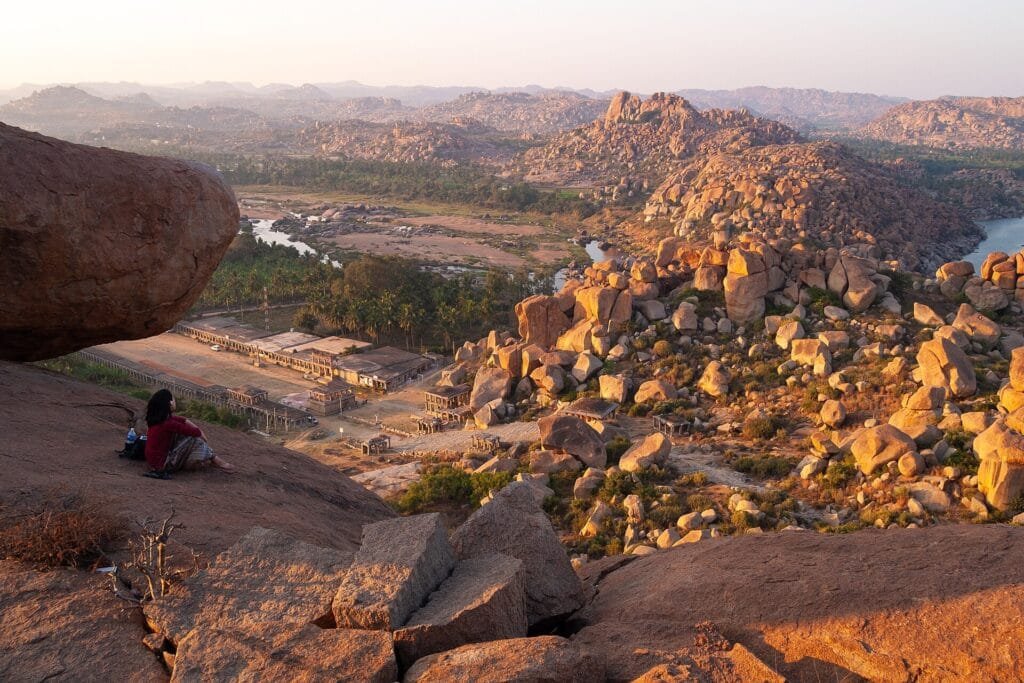
May is the hottest month in India. Delhi averages 38°C and routinely passes 44°C in a heatwave, Rajasthan is at its limit, and the plains are effectively off the table for ordinary sightseeing. But two things make May worth planning around: the monsoon reaches Kerala at the very end of the month, and the Himalaya finally open – the passes to Ladakh clear, and the high valleys become reachable by road.
The heat is at its peak
May is the last month before the monsoon breaks, and it is the hottest of the Indian year across the north and centre. Temperatures above 45°C are recorded in Rajasthan most years, and the Indian Meteorological Department issues heatwave warnings regularly.
Take it seriously. Heat exhaustion and heatstroke are real risks for visitors who are not acclimatised, and the symptoms – headache, nausea, stopping sweating – need immediate shade, fluids and cooling. If you are on the plains in May, sightsee at dawn only, stay indoors through the middle of the day, and do not treat a fort at noon as an option.

Weather by region
- Delhi and the north – about 38°C by day and 24°C at night, with roughly 29 mm of pre-monsoon rain arriving as dust storms and short violent thunderstorms.
- Rajasthan – the hottest, regularly above 42°C and sometimes 45°C.
- Kerala and the south-west – hot, humid and building; the monsoon normally reaches the Kerala coast around 1 June, and the pre-monsoon storms start in late May.
- Goa – out of season, hot and humid, with the first rain at the end of the month.
- The Himalaya – the best of it. Ladakh’s road passes reopen, Himachal and Uttarakhand are warm and clear, and the trekking season begins.
- The north-east – pre-monsoon rain arrives early here; Meghalaya starts its extraordinary wet season.
Ladakh opens
Continue planning your India trip
May is when high-altitude India becomes reachable. The Srinagar–Leh and Manali–Leh highways usually clear of snow between late April and June depending on the winter, and Ladakh’s season runs from then to September.
Two non-negotiables: acclimatise properly – Leh sits at about 3,500 m and altitude sickness is common and occasionally serious, so build in two full rest days before going higher; and check road status before committing, because opening dates move every year. Flying into Leh puts you at altitude instantly, which makes the rest days more important, not less.
The monsoon watch
The south-west monsoon’s normal onset over Kerala is around 1 June, and the IMD issues a forecast for it in mid-May. The last week of May in Kerala and coastal Karnataka is the pre-monsoon build: enormous humidity, dramatic skies and the first storms.
Some people go specifically for this. Kerala’s Ayurvedic tradition holds that the monsoon is the best season for treatment, and the retreat season is built around June to August rather than the dry months.
Where May actually works
- Ladakh, once the passes open – empty, vast and cool.
- Himachal and Uttarakhand – Spiti begins to open, the Valley of Flowers approach opens in June, and the trekking season starts.
- Sikkim and the north-east – before the monsoon settles.
- The Western Ghats – Munnar, Ooty and Coorg, though Indian school holidays fill them.
- Tiger reserves – the best sightings of the year continue, at the price of extreme heat. Most parks close for the monsoon around the end of June.
Prices and crowds
The plains are at their annual floor and almost empty of foreign visitors. The hills are the opposite: Indian school holidays run through May, and Shimla, Manali, Mussoorie, Nainital and Ooty are packed and expensive at weekends. Booking ahead matters in the mountains and nowhere else.
See the cost of travelling India.
What to pack
Loose, light, fully covering cotton, a wide hat, sunglasses, high-factor sunscreen, electrolyte sachets and a refillable bottle. For Ladakh: genuinely warm layers, because nights are cold at altitude even in summer, plus strong sun protection – the UV at 3,500 m is severe. See what to pack for India.
The May 2027 calendar
- Through May – the hottest month of the year across the north and centre; heatwave warnings common.
- Through May – Indian school holidays; hill stations full and expensive.
- Late April to June – the Srinagar–Leh and Manali–Leh highways clear; the Ladakh season opens.
- Mid May – the IMD issues its monsoon onset forecast for Kerala.
- Buddha Purnima, in May – observed at Bodh Gaya, Sarnath and across Buddhist India; the date moves with the lunar calendar.
- Late May – pre-monsoon storms reach Kerala and coastal Karnataka.
- Around 1 June – the normal monsoon onset over Kerala.
Read alongside
- India in April – the heat building and the best tigers.
- India in June – the monsoon arrives.
- Best time to visit India – all twelve months compared.
- Best Ayurvedic retreats in India – and why the monsoon is their season.
- Cost of travelling India – low-season numbers.
- What to pack for India – the hot-season list.
- India travel guide – regions and how to combine them.
Frequently asked
How hot is India in May?
It is the hottest month of the year. Delhi averages about 38°C by day and 24°C at night, and Rajasthan regularly exceeds 42°C, sometimes reaching 45°C. Heatwave warnings are issued frequently.
Is May a bad time to visit India?
For the plains, yes – it is the hardest month of the year. For Ladakh, the Himalaya and the trekking season it is the opening month, and for tiger safaris the sightings are still at their best.
When does the monsoon arrive in India?
The south-west monsoon normally reaches the Kerala coast around 1 June and then advances north over about six weeks. The IMD issues an onset forecast in mid-May, and pre-monsoon storms start in the last week of May.
When does the road to Ladakh open?
The Srinagar–Leh and Manali–Leh highways usually clear between late April and June, depending on the winter snow, and the season runs to September. Check road status before committing, because the dates move every year.
Do I need to worry about altitude in Ladakh?
Yes. Leh is at about 3,500 m and altitude sickness is common. Build in two full rest days before going higher, and take it more seriously if you fly in, because that puts you at altitude immediately.
Are the hill stations busy in May?
Very. Indian school holidays run through the month, so Shimla, Manali, Mussoorie, Nainital and Ooty are full and expensive, especially at weekends. Book ahead in the hills even though the plains are empty.
Is May good for tiger safaris?
The sightings are excellent – the forest is bare and animals concentrate at the remaining water – but the heat is extreme in an open jeep. Most parks then close for the monsoon around the end of June.
Is India cheap in May?
On the plains it is at its annual floor, with Delhi, Agra, Rajasthan and Goa heavily discounted and almost empty of foreign visitors. The hill stations invert that and are at their most expensive.
You Might Also Love

Written by
John Morrison is the founder and lead travel writer at Packzup. Over the past decade he has explored destinations across Africa, the Americas, Asia, Europe, the Middle East, and Oceania — always self-funded, never on a press trip.
