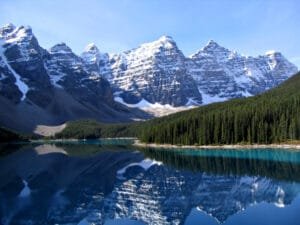
Banff National Park is the crown jewel of the Canadian Rockies — a vast wilderness of turquoise glacial lakes, jagged peaks, ancient glaciers, and wildlife that includes grizzly bears, elk herds, and wolves. Established in 1885 as Canada’s first national park, it draws millions of visitors to Lake Louise, Moraine Lake, and the Icefields Parkway, but the real magic is in the backcountry trails, the hot springs that started it all, and the simple act of standing at a viewpoint watching the scale of the Rockies dwarf everything human. The town of Banff itself is a charming mountain village with excellent restaurants and a surprisingly good craft beer scene.
- Stand at Moraine Lake at Sunrise
- Hike to the Lake Louise Teahouse
- Drive the Icefields Parkway
- Soak in the Banff Upper Hot Springs
- Ride the Banff Gondola to Sulphur Mountain
- Canoe on Lake Louise
- Hike Johnston Canyon to the Ink Pots
- Watch for Wildlife on the Bow Valley Parkway
- Explore the Town of Banff on Foot
- Paddle or Walk at Vermilion Lakes
- Ski at Sunshine Village or Lake Louise
- Stargaze in a Dark Sky Preserve
1. Stand at Moraine Lake at Sunrise
Moraine Lake’s impossible turquoise water backed by the Valley of the Ten Peaks is the most photographed scene in the Canadian Rockies. The Rockpile Trail, a 15-minute scramble up the moraine at the lake’s outlet, delivers the classic viewpoint. The colour comes from glacial rock flour suspended in the meltwater and is most vivid in late June through August. Arrive before 6 AM or take the Parks Canada shuttle — the parking lot fills by 7 AM. Park entry is 11 CAD per person.
2. Hike to the Lake Louise Teahouse
The Plain of Six Glaciers Trail from Lake Louise’s shoreline climbs 365 metres through alpine meadow to a historic teahouse serving fresh-baked scones, soup, and tea powered by helicopter-supplied propane. The round trip is 13.8 kilometres and takes four to five hours. The views of Victoria Glacier and the lake below are among the best in the Rockies. The Lake Agnes Teahouse is a shorter alternative at 7 kilometres round trip. Both are open June to October.
3. Drive the Icefields Parkway
The 232-kilometre highway from Lake Louise to Jasper is one of the world’s most scenic drives, passing glaciers, waterfalls, turquoise lakes, and dozens of peaks above 3,000 metres. Key stops include Peyto Lake (the fox-shaped turquoise lake), the Columbia Icefield, Mistaya Canyon, and the Weeping Wall. Allow a full day with stops. The Glacier Skywalk at the Columbia Icefield extends over a 280-metre cliff edge for 36 CAD. Fill up on fuel at Saskatchewan River Crossing — the only gas for 150 kilometres.
4. Soak in the Banff Upper Hot Springs
These natural hot springs at 1,585 metres on Sulphur Mountain have been drawing visitors since 1884 and sparked the creation of the national park. The outdoor pool holds mineral-rich water at 37-40 degrees Celsius with views across the Bow Valley to Mount Rundle. Entry is 8.48 CAD. Swimsuit and towel rentals available. The springs are most atmospheric in winter when snow falls on your shoulders while you soak in the steaming water.
5. Ride the Banff Gondola to Sulphur Mountain
The eight-minute gondola ride ascends 700 metres to a ridgetop boardwalk at 2,281 metres with 360-degree views of six mountain ranges. The Sanson Peak trail extends along the ridge to a former weather station. The Sky Bistro at the summit serves surprisingly good mountain-view dining. Tickets are 72 CAD for adults. Go late afternoon for golden hour light on the peaks or in winter for a chance to spot the Northern Lights from the boardwalk.
6. Canoe on Lake Louise
Paddling a red canoe across the turquoise water of Lake Louise with the Victoria Glacier towering at the far end is the quintessential Canadian Rockies experience. Canoe rentals at the boathouse cost 145 CAD per hour — steep but the setting is priceless. The lake is ringed by hiking trails and the Fairmont Chateau Lake Louise provides a grand backdrop. Go early morning when the water is glassy and the crowds have not arrived.
7. Hike Johnston Canyon to the Ink Pots
A catwalk trail bolted to the canyon wall leads past two waterfalls — the Lower Falls at 1.1 kilometres and the Upper Falls at 2.7 kilometres — before continuing to the Ink Pots, a cluster of vivid green cold-water springs in an alpine meadow. The round trip to the Ink Pots is 11.6 kilometres. The Lower Falls are spectacular in winter when frozen solid and ice climbers scale the frozen curtain. The catwalks get icy — traction devices help.
8. Watch for Wildlife on the Bow Valley Parkway
Highway 1A between Banff and Lake Louise is the best road for wildlife in the park. Elk graze on the roadside, black bears forage in roadside meadows, and bighorn sheep block traffic near Johnston Canyon. Drive slowly, especially at dawn and dusk. The Moose Meadows pull-off and the Johnston Canyon area are reliable spots. Never approach wildlife — Parks Canada requires 30 metres distance for elk and 100 metres for bears.
9. Explore the Town of Banff on Foot
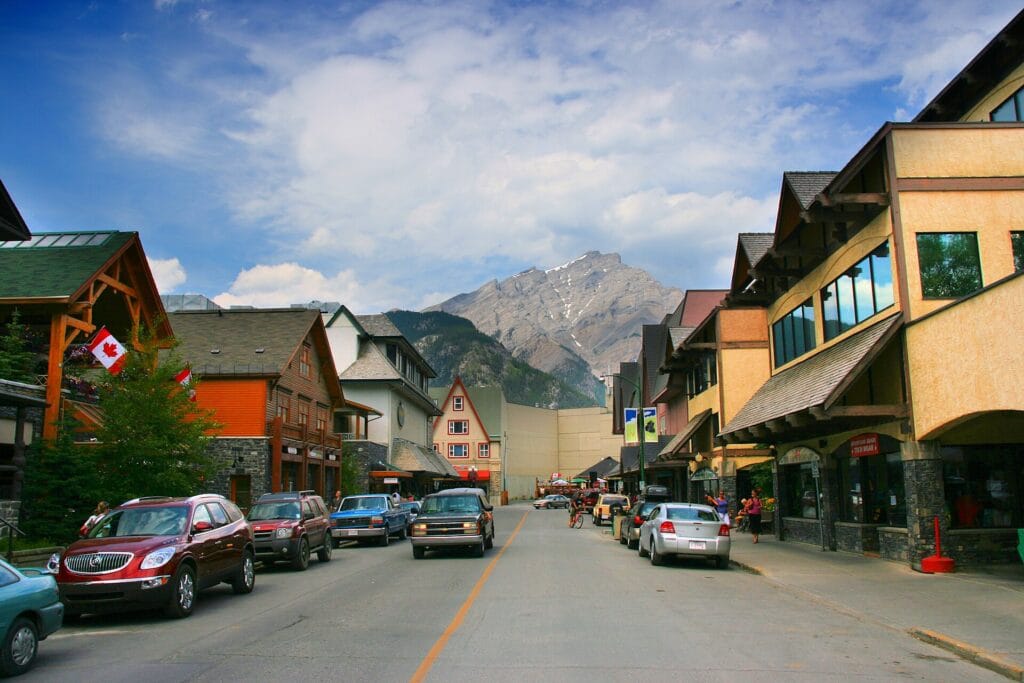
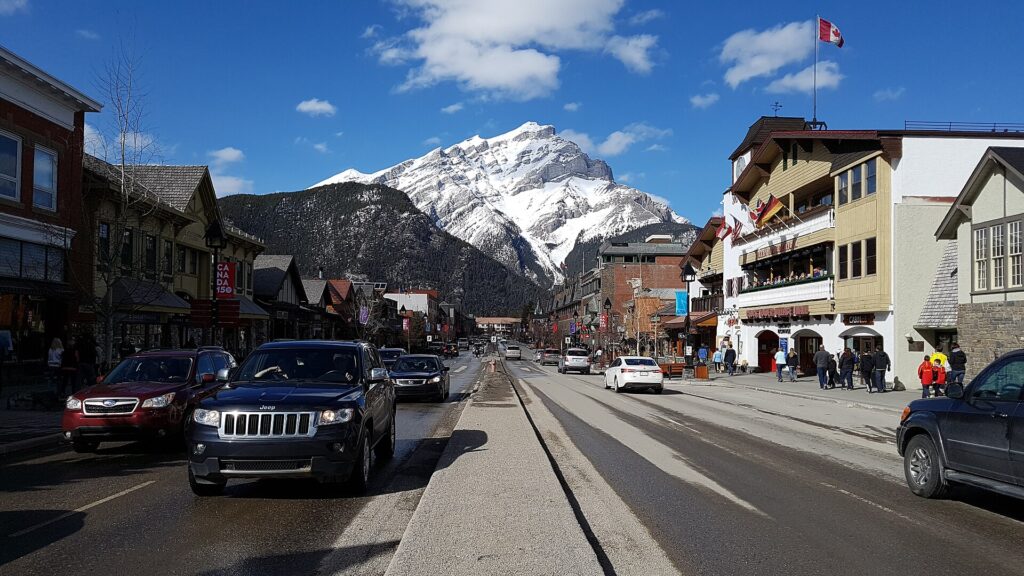
Banff Avenue is a walkable strip of outdoor gear shops, restaurants, and galleries with Mount Norquay and Cascade Mountain as backdrops. The Whyte Museum of the Canadian Rockies covers mountain culture and art. The Banff Centre for Arts and Creativity hosts performances and exhibitions. The Bear Street corridor has the best restaurants — Park Distillery, The Bison, and Farm & Fire. Elk regularly wander through town, especially near the Bow River bridge.
10. Paddle or Walk at Vermilion Lakes
Three shallow lakes west of Banff townsite offer the most accessible canoeing and some of the best wildlife viewing in the park. The still water reflects Mount Rundle perfectly in calm conditions, creating the classic Banff postcard shot. Canoe and kayak rentals are available near the lakes. Sunrise and sunset are the best times for photography and for spotting beavers, osprey, and elk. The lakes are a five-minute drive from downtown Banff.
11. Ski at Sunshine Village or Lake Louise
Banff’s ski resorts receive massive snowfall and offer terrain that competes with any resort in North America. Sunshine Village sits at 2,160 metres with a 1,070-metre vertical and natural snow that lasts into May. Lake Louise Ski Resort is the largest in Canada with 4,200 acres and back-bowl skiing into the Continental Divide. Day passes run 130-170 CAD. The season runs November through May. Midweek skiing avoids the weekend crowds.
12. Stargaze in a Dark Sky Preserve
Banff National Park is a designated Dark Sky Preserve, and on clear nights the Milky Way arcs overhead with a brilliance impossible in most of the developed world. The best spots are Vermilion Lakes, Two Jack Lake, and Lake Minnewanka. The annual Dark Sky Festival in October brings telescopes, talks, and guided stargazing. Winter offers the longest dark hours and a chance of aurora borealis. No special equipment needed — just find a dark pull-off away from town lights.
Practical Tips for Banff
Check our full Banff travel guide for detailed tips on transport, safety, money, and the best time to visit. For food recommendations beyond this list, see our Banff food guide.
Frequently Asked Questions
What are the top things to do in Banff?
The must-do experiences include Stand at Moraine Lake at Sunrise, Hike to the Lake Louise Teahouse, and Ride the Banff Gondola to Sulphur Mountain. Banff also offers incredible food, vibrant neighbourhoods, and easy day trips.
How many days do you need in Banff?
We recommend at least 3 to 4 days to cover the highlights, though a week lets you explore at a relaxed pace and add day trips.
Is Banff safe for tourists?
Banff is generally safe for tourists who take normal precautions. Stay aware of pickpockets in crowded areas and keep valuables secure.