
Last updated August 28, 2026 · Editorial policy
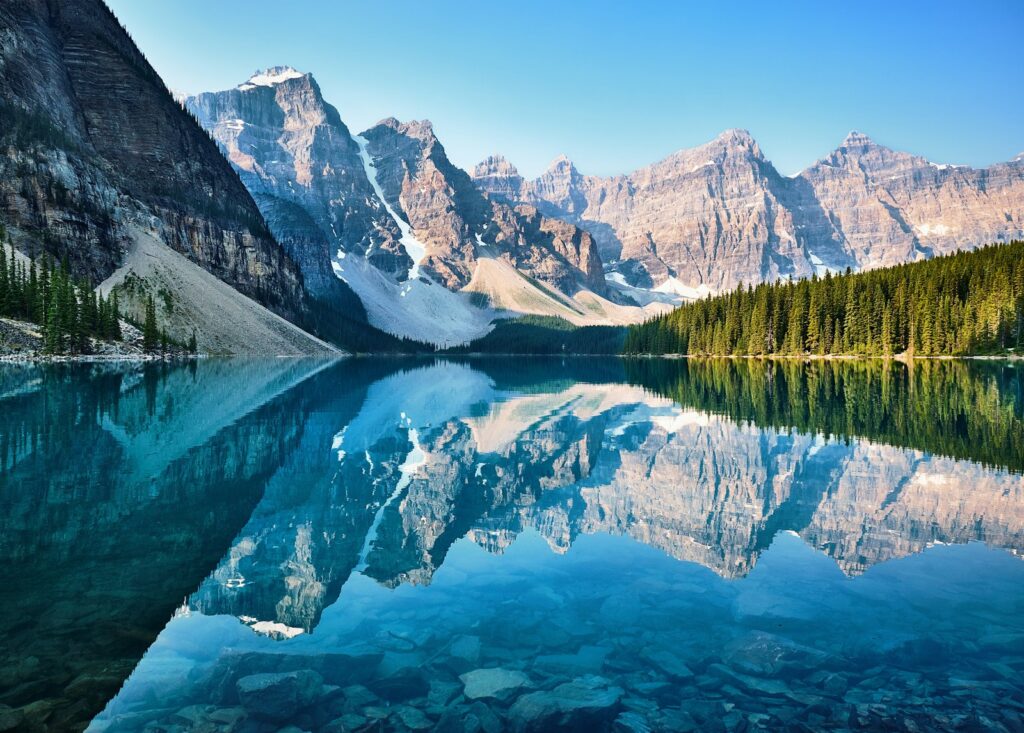
Banff operates differently from most destinations — you are inside a national park, where road access is controlled, parking is limited by design, and the park actively encourages visitors to leave their cars behind. The town of Banff is small and entirely walkable. Roam Transit provides reliable bus service between Banff, Lake Louise, and Canmore. For reaching trailheads, lakes, and remote areas, a car remains essential unless you are staying in the town of Banff and using organised tours. Parks Canada manages road access, and popular spots like Lake Louise and Moraine Lake now require advance shuttle reservations or early arrival.
More: When to visit Banff · Banff travel guide
Transport Options:
1. Walking in Banff Town
The town of Banff is compact and best explored on foot — Banff Avenue, Bear Street, and the main shopping and restaurant areas are all within a 15-minute walk. The Bow River trail and Surprise Corner viewpoint are walkable from the town centre. Elk and deer share the sidewalks — maintain distance. No car needed within town. The walk from downtown to the Banff Upper Hot Springs is about 30 minutes uphill. The Fenlands trail and Vermilion Lakes are easy walks from the edge of town.
2. Roam Public Transit
Roam Transit buses connect Banff, Canmore, and Lake Louise with regular service. Route 1 runs between Banff and Canmore (8.50 CAD). Route 8X is the express to Lake Louise Village (10 CAD). Route 6 runs within Banff town to the Tunnel Mountain campgrounds and hotels. Buses run from early morning to late evening with increased frequency in summer. A day pass costs 5 CAD for Banff local routes. Payment by cash, credit card, or the Token Transit app. Clean, reliable, and avoids the parking nightmare at Lake Louise.
3. Parks Canada Shuttle to Lake Louise and Moraine Lake
Parks Canada operates mandatory reservation shuttles to Lake Louise and Moraine Lake during peak summer season (June-October). Reservations open in spring and sell out fast — book as soon as they go live. The shuttle from the Lake Louise Park & Ride to the lakeshore costs 8 CAD. The Moraine Lake shuttle is the only way to reach Moraine Lake during peak season (private vehicles banned). Check the Parks Canada website for current year schedules and booking dates.
4. Rental Cars
Essential for exploring beyond Banff town — reaching Johnston Canyon, the Icefields Parkway, Lake Minnewanka, and the Columbia Icefield. Rent in Calgary (cheaper, more availability) and drive 90 minutes via the Trans-Canada Highway. A Parks Canada Discovery Pass (75 CAD per vehicle per year, or 11 CAD per day) is required for entry. Parking at popular trailheads fills by 8-9 AM in summer — arrive early or use shuttles. Winter requires winter tires (mandatory October 1 to April 30 on mountain highways). Fuel is more expensive than Calgary.
5. Guided Tours and Shuttles
Numerous operators run day tours from Banff to Columbia Icefield, Lake Louise, Johnston Canyon, and surrounding parks. Brewster Express connects Banff to Jasper along the Icefields Parkway (one of the world’s great drives). SunDog Tours and Pursuit offer hop-on/hop-off options. Prices range from 80-250 CAD for full-day tours. This is a good option for visitors without a car who want to see the Icefields Parkway and beyond. Book at your hotel or through Banff visitor centres.
6. Cycling
Banff has bike paths along the Bow River, to Vermilion Lakes, and on the Legacy Trail connecting Banff to Canmore (26 km, paved, stunning). Bike rentals available at several shops in town from 15-50 CAD/day. The Banff to Canmore Legacy Trail is one of Canada’s best recreational bike paths with mountain views throughout. E-bikes are increasingly available. Mountain biking trails exist but are shared with wildlife — carry bear spray. Not practical for reaching Lake Louise or distant attractions.

Transport Tips for Banff
Book the Parks Canada shuttle to Moraine Lake and Lake Louise as soon as reservations open (usually spring) — they sell out within hours. Buy a Discovery Pass if staying more than 2 days. The Icefields Parkway (Banff to Jasper) is one of the world’s most scenic drives but has no cell service and limited fuel — fill up in Lake Louise. Carry bear spray on all hikes (available at visitor centres). Wildlife jams on the Trans-Canada Highway are common — don’t stop in traffic lanes. Parking in Banff town is free but limited — the parkade on Bear Street is the best option. Check road conditions at 511.alberta.ca in winter.
What is the best way to get around Banff?
The most practical options are Walking in Banff Town and Roam Public Transit. The town of Banff is compact and best explored on foot — Banff Avenue, Bear Street, and the main sho…
Do I need a car in Banff?
Not in town: Banff is walkable and Roam Transit buses reach Lake Louise, Canmore, and Johnston Canyon, with fares payable in the Token Transit app. Moraine Lake bans private vehicles, so book Parks Canada shuttles. A car mainly helps for the Icefields Parkway and early trailhead starts.
Is public transport safe in Banff?
Yes. Roam Transit buses are clean, well run, and safe at all hours. The real issues are practical: summer services to Lake Louise and Moraine Lake fill fast, so reserve ahead, and bus stops get icy in winter.
Related Articles
- Things to Do in Banff: 12 Experiences You Can’t Miss
- Where to Stay in Banff: Best Neighborhoods and Hotels
- Best Time to Visit Banff: Month-by-Month Guide
- Banff Itinerary: A 6-Day Sample Plan and How to Build Your Trip
Frequently Asked Questions
You Might Also Love



Written by
John Morrison is the founder and lead travel writer at Packzup. Over the past decade he has explored destinations across Africa, the Americas, Asia, Europe, the Middle East, and Oceania — always self-funded, never on a press trip.
