
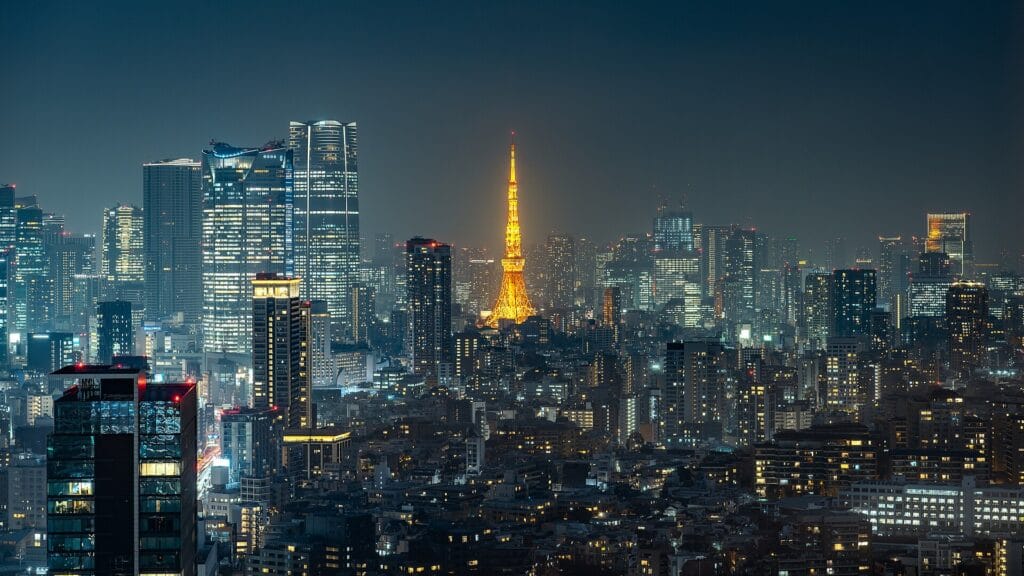
August is the hottest month in Tokyo by a clear margin – highs near 31°C, lows near 24°C, and nights that often stay above 25°C – and it is also the month of the biggest festivals, the most fireworks and the Obon holiday, when the whole country travels at once and Tokyo itself briefly empties. Handled as an evening city it is superb. Handled as a walking-all-day city it is punishing.
The heat, stated honestly
August averages a high of about 31°C and a low of about 24°C, with around 155 mm of rain over roughly nine days. Those are averages; the reality of a Tokyo August is days above 35°C, humidity that makes the number feel higher, and nettaiya – “tropical nights” where the temperature never drops below 25°C, so the city does not cool off between days.
The practical shape of a good August day: out by 07:30, indoors from about 11:00 to 16:00, out again from 17:00 until late. Tokyo makes this easy. Department stores, museums, station concourses, underground shopping cities and every convenience store are aggressively air-conditioned and free to enter. Vending machines are everywhere and cheap. Buy the cooling wipes and the salt candies; they are sold in every konbini in August for a reason.
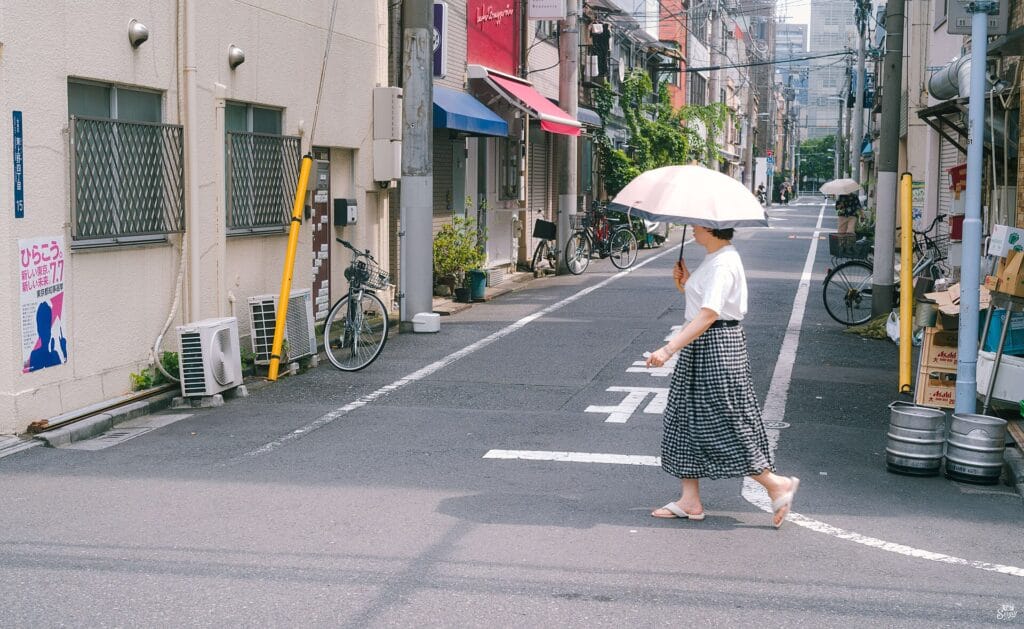
Heatstroke warnings are issued routinely and taken seriously. If the forecast carries a heatstroke alert, treat the middle of the day as unusable rather than as a challenge.
Obon: roughly 13–16 August
Obon is the Buddhist festival for returning ancestral spirits, and in practice it is the largest domestic travel period of the Japanese year alongside New Year. It is not a public holiday – but most companies close for it, and around 13 to 16 August the entire country goes back to its home town.
What that means for you:
- Shinkansen reserved seats and domestic flights sell out weeks ahead, and unreserved cars run at standing-room capacity. If your trip involves moving between cities, book the moment reservations open.
- Some small restaurants and shops in Tokyo close for a few days.
- Tokyo itself gets quieter. The commuter crush eases, the trains have seats, and the city is more comfortable than usual – while every regional destination is at its fullest.
The same logic as Golden Week applies: if your dates land inside Obon, stay in Tokyo and enjoy an unusually relaxed version of it rather than fighting for a seat to Kyoto.
Mountain Day: Wednesday 11 August 2027
Yama no Hi, Japan’s newest public holiday, falls on 11 August – a Wednesday in 2027. Sitting mid-week immediately before Obon, it effectively extends the holiday period: many people bridge from it straight into the Obon week. Expect travel demand to build from that Wednesday onward.
Fireworks and festivals: the peak of the year
August is the heart of hanabi season, and the Tokyo area stages several of Japan’s largest displays – Edogawa, Itabashi, Jingu Gaien and a long list of ward-level events. Each publishes its date in early summer; almost all fall on Saturdays, almost all start around 19:00, and almost all involve a station that becomes a managed one-way crowd afterwards. Arrive early, bring a mat, and plan to walk a station or two rather than joining the first queue.
Two things worth planning around specifically:
- Koenji Awa Odori, usually on the last weekend of August: around ten thousand dancers and something close to a million spectators taking over the streets of Koenji in western Tokyo. It is free, it is enormous, and it is the single best street party in the city.
- Bon Odori – neighbourhood dance evenings held in park and shrine grounds in every ward through the month. Anyone can join the circle, nobody minds that you do not know the steps, and the one at your nearest shrine will be more memorable than any ticketed event.
Typhoons begin
Typhoon season for the Tokyo region runs roughly from August to early October, with September the peak. In August the risk is real but moderate. What a typhoon actually means for a visitor is not danger so much as disruption: planned suspensions of train services announced a day in advance, cancelled domestic flights, and closed attractions.
The workable response is simple. Watch the forecast from three days out, keep one flexible day in the itinerary, and do not schedule a tight airport connection on a day with a named storm approaching. Tokyo’s buildings and drainage handle heavy rain well; its timetables do not pretend to.
Summer food
August has its own menu and most of it is designed to cool you down. Somen and hiyashi chuka – cold noodles – appear on every counter. Kakigori, shaved ice with syrup or condensed milk, is sold everywhere from convenience-store freezers to specialist shops with an hour’s queue. Beer gardens open on department store roofs across the city, which is the most pleasant way to spend a Tokyo evening in August for the price of a couple of drinks. Eel – unagi – is traditionally eaten in midsummer for stamina, and prices reflect it.
Prices and crowds
August is high season. Flights from Europe and North America are at their annual peak, Japanese schools are on holiday all month, and the Obon week compresses everything further. Tokyo hotel rates are high but not as extreme as the regional resort towns, and the city’s own attractions are busier with domestic than international visitors.
If you have any flexibility, the last week of August is noticeably easier than the middle: Obon is over, the worst of the heat starts to break, and rates ease before the autumn. See the Tokyo travel budget for the daily numbers.
Day trips in August
Mount Fuji is climbable – the season runs to early September, with a ¥4,000 fee, a compulsory online reservation and a daily cap on the Yoshida Trail. Otherwise, go up or go to water: Hakone and Nikko are several degrees cooler than the city, Karuizawa is the classic Japanese summer escape for exactly that reason, and the Izu and Boso coasts are what Tokyo does instead of a beach holiday. Day trips from Tokyo has the routes.
The August 2027 calendar
- All month – fireworks festivals across the Tokyo wards, mostly on Saturday evenings; Bon Odori dances in local parks.
- Wednesday 11 August – Mountain Day, a public holiday.
- Roughly 13–16 August – Obon: peak domestic travel, some small businesses closed, Tokyo itself quieter.
- Last weekend of August – Koenji Awa Odori, the city’s largest street dance festival.
- Through August into September – typhoon season; watch the forecast and keep a flexible day.
- Early September – the Mount Fuji climbing season closes.
Read alongside
- Tokyo in July – the end of the rains, Fuji opening, and the Sumida fireworks.
- Tokyo in September – typhoon season, and the month the heat finally breaks.
- Best time to visit Tokyo – all twelve months compared.
- Tokyo travel budget – high-season daily costs.
- Where to stay in Tokyo – air conditioning and a short walk home both matter more now.
- Day trips from Tokyo – where to go to be cooler.
- What to pack for Japan – the summer list.
Frequently asked
Is August a good time to visit Tokyo?
It is the best month for festivals and fireworks and the hardest month for heat. Highs near 31°C, lows near 24°C and high humidity mean the middle of the day is largely unusable outdoors. If you treat it as a morning-and-evening city and use the air conditioning in between, August is very enjoyable; if you plan to walk all day, it is not.
How hot is Tokyo in August?
Highs average about 31°C and lows about 24°C, with roughly 155 mm of rain across nine days. Days above 35°C are common and so are “tropical nights” that stay above 25°C, so the city does not cool down overnight.
What is Obon and when is it in 2027?
Obon is the Buddhist festival for returning ancestral spirits and the largest domestic travel period of the Japanese year. It is not a public holiday, but most companies close for it and the country travels around 13–16 August. Book any intercity train or flight far in advance, and expect Tokyo itself to be quieter than usual.
Is 11 August a holiday in Japan?
Yes – Mountain Day, which falls on a Wednesday in 2027. Sitting just before Obon, it tends to extend the holiday travel period rather than stand alone.
Do typhoons affect Tokyo in August?
They can. The season runs roughly August to early October and peaks in September. The usual effect is disruption rather than danger: trains announce planned suspensions a day ahead and domestic flights are cancelled. Keep one flexible day and avoid tight airport connections when a storm is forecast.
Can you climb Mount Fuji in August?
Yes. The official season runs from 1 July to early September. The Yoshida Trail from the Tokyo side requires an advance online reservation and a ¥4,000 fee, has a daily climber cap, and closes its gate from 14:00 to 03:00 unless you hold a mountain hut booking.
What are the big festivals in Tokyo in August?
Fireworks festivals across the wards on most Saturday evenings, Bon Odori dances in local parks all month, and Koenji Awa Odori on the last weekend – around ten thousand dancers and close to a million spectators, all free.
Is August expensive in Tokyo?
Yes. International flights peak, Japanese schools are on holiday all month, and Obon compresses demand further. The last week of August is the easiest part of the month for both prices and heat.
You Might Also Love



Written by
John Morrison is the founder and lead travel writer at Packzup. Over the past decade he has explored destinations across Africa, the Americas, Asia, Europe, the Middle East, and Oceania — always self-funded, never on a press trip.
