
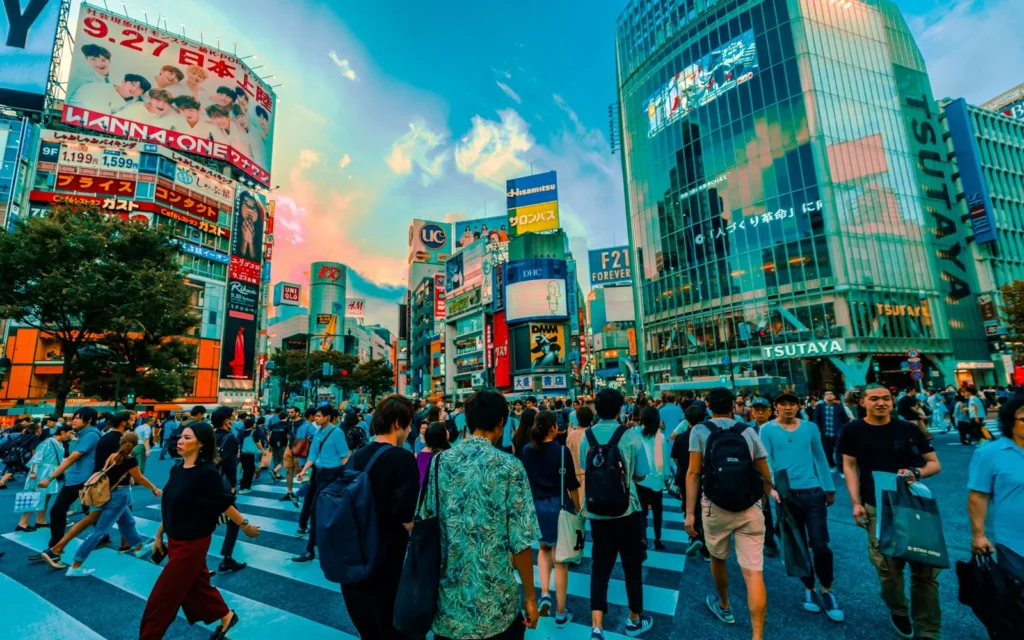
July is the month Tokyo changes gear. The rainy season ends around the 19th, the heat arrives properly – 30°C days, 23°C nights and humidity near its annual peak – and with it comes the summer the city is famous for: fireworks over the Sumida, festivals in every neighbourhood, beer gardens on the rooftops, and the opening of the Mount Fuji climbing season on 1 July.
Two halves, split by the end of the rains
The Kanto rainy season ends on average around 19 July, and the difference either side of that line is the single most useful thing to know about the month. Before it: grey, humid, showery, and quiet. After it: hot, bright, loud, and expensive, as the Japanese school holidays begin and the festival calendar opens.
If you want the summer – the fireworks, the festivals, the mountains – you want the last ten days. If you want lower prices and fewer people and you do not mind the rain, the first fortnight is a very different and much cheaper trip.
Weather: hot, and much wetter than people expect
July averages a high near 30°C and a low near 23°C, with 155 mm of rain across about twelve days and relative humidity around 73 per cent – the highest of the year. Nights do not cool down much: the low twenties with high humidity is a different experience from the same number in a dry climate.
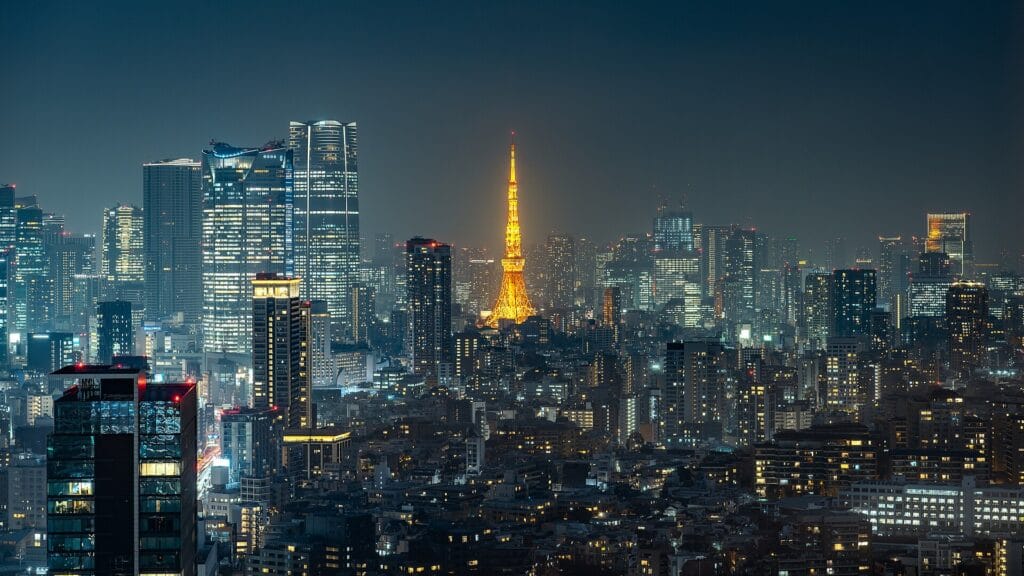
Plan the day around it rather than through it. Out early, indoors through the worst of the afternoon, out again from about 17:00 – which is also when the city is at its best. Convenience stores, department stores, station concourses and museums are all heavily air-conditioned and all free to walk into. Carry water, use the vending machines, and take the salt tablets and cooling sheets seriously; heatstroke warnings are issued routinely and the advice is not decorative.
Sumida River Fireworks: the last Saturday of July
The Sumidagawa Hanabi Taikai is Tokyo’s oldest and largest fireworks festival, held on the last Saturday of July – which in 2027 is 31 July. Around twenty thousand shells are launched from two sites along the river near Asakusa across roughly ninety minutes from about 19:00, and close to a million people come to watch.
The practicalities matter more here than the programme. The riverbank viewing areas fill from the early afternoon. Asakusa, Kuramae and Oshiage stations become one-way systems with police direction. There is no rain date in most years – light rain does not stop it, severe weather cancels it outright. If you want to watch without the crush, the further reaches of the Sumida walk, the Kiyosumi and Ryogoku side streets, and any restaurant with a booking and a window are all better bets than the official viewing zones.
It is not the only one: Tokyo’s hanabi season runs from late July into August, with large displays at Edogawa, Itabashi and Jingu Gaien.
Mount Fuji: the season opens on 1 July
The official Mount Fuji climbing season opens on 1 July for the Yoshida Trail, the route most people from Tokyo use, and runs to early September – 10 September in the 2026 season. The Shizuoka-side trails (Fujinomiya, Gotemba, Subashiri) have opened slightly later, on 10 July.
The rules changed substantially in recent seasons and they are now enforced:
- An entry fee of ¥4,000 per climber.
- An online reservation ahead of the climb, with a daily cap of around 4,000 climbers on the Yoshida Trail.
- A mandatory short safety briefing or video and quiz before you are issued a wristband at the trailhead.
- Gates closed from 14:00 to 03:00 unless you hold a mountain hut reservation – which effectively ends the overnight “bullet climb” without a hut.
Fees, caps and dates are re-set each year and announced in spring, so confirm the current rules on the official prefectural climbing portal before you build a trip around them. And note the obvious: this is a 3,776-metre mountain, not a walk. Fuji is climbable in July and August and dangerous in every other month.
Marine Day: Monday 19 July 2027
Umi no Hi falls on the third Monday of July – 19 July in 2027 – and creates a three-day weekend that marks the unofficial start of the domestic summer. Expect the beaches of Kanagawa and Chiba, and the trains to them, to be full, and expect hotel rates from that weekend onward to sit at summer levels.
Festivals and the summer street
July is the beginning of matsuri season, and most of it is free and local:
- Mitama Matsuri at Yasukuni Shrine in mid-July – some thirty thousand lanterns lit along the approach, one of the more atmospheric evenings in the city.
- The Asakusa hozuki-ichi, the ground-cherry market at Senso-ji on 9 and 10 July, a small, old, genuinely local fair.
- Bon Odori dances in parks and shrine grounds across every ward from mid-July; anyone may join in and most people do.
Summer is also when yukata – the light cotton kimono – comes out for festivals and fireworks. Rental shops near Asakusa do same-day fittings, and it is one of the few tourist-facing traditions that locals are doing alongside you.
Prices and crowds
Rates rise through July: the first two weeks are still shoulder-season, and from about the Marine Day weekend they move to summer levels and stay there through August. Domestic schools break up in late July, which fills family destinations and Tokyo’s own attractions.
The upside for a visitor is that Tokyo in high summer is still less crowded than Kyoto in high summer, and considerably less crowded than Tokyo in cherry-blossom season. The Tokyo travel budget sets out the daily numbers.
What to wear
The lightest breathable clothing you own, plus a layer for interiors that are cooled to 24°C or lower. Shoes that will survive sweat and a sudden downpour. A folding umbrella doubles as a sunshade and half of Tokyo uses it that way. A hand towel – the small folded one everyone carries – is the single most useful thing you can buy on arrival.
The July 2027 calendar
- Thursday 1 July – the Mount Fuji climbing season opens on the Yoshida Trail.
- 9–10 July – the hozuki ground-cherry market at Senso-ji, Asakusa.
- Mid-July – Mitama Matsuri at Yasukuni Shrine; Bon Odori dances begin across the wards.
- Around 19 July – the Kanto rainy season typically ends.
- Monday 19 July – Marine Day, a public holiday and a three-day weekend.
- Late July – Japanese school holidays begin; summer pricing takes hold.
- Saturday 31 July – the Sumida River Fireworks Festival, on the last Saturday of the month.
Read alongside
- Tokyo in June – the rainy season, and the quietest weeks of the summer half.
- Tokyo in August – hotter still, Obon, and the biggest festivals.
- Best time to visit Tokyo – all twelve months compared.
- Tokyo travel budget – what a day actually costs.
- Day trips from Tokyo – including the Fuji Five Lakes.
- Where to stay in Tokyo – air conditioning is not optional in July.
- What to pack for Japan – the summer list.
Frequently asked
Is July a good time to visit Tokyo?
It is the best month for the things Japan does in summer – fireworks, festivals, climbing Fuji – and one of the hardest for walking around a city all day. Around 30°C with 73 per cent humidity is genuinely demanding. Plan mornings and evenings outdoors, afternoons indoors, and July works well.
When does the rainy season end in Tokyo?
On the long-run average, around 19 July for the Kanto region. The Japan Meteorological Agency declares the actual end each year and it can move by a week or more in either direction.
How hot is Tokyo in July?
Highs average about 30°C and lows about 23°C, with roughly 155 mm of rain over twelve days and the year’s highest humidity at around 73 per cent. Nights stay warm.
When are the Sumida River fireworks in 2027?
On the last Saturday of July, which is 31 July in 2027, from about 19:00 for roughly ninety minutes. Viewing areas fill from the early afternoon and the surrounding stations are managed one-way. Organisers confirm the date in spring.
Can you climb Mount Fuji in July?
Yes – the official season opens on 1 July on the Yoshida Trail from the Tokyo side. Expect a ¥4,000 entry fee, a compulsory online reservation with a daily cap, a short safety briefing, and gates closed between 14:00 and 03:00 unless you have booked a mountain hut. Confirm the current year’s rules before travelling.
What is Marine Day?
Umi no Hi, a public holiday on the third Monday of July – 19 July in 2027. It makes a three-day weekend and marks the unofficial start of the domestic summer travel season.
Is Tokyo expensive in July?
The first two weeks are still shoulder-season priced. From about the Marine Day weekend, when Japanese schools break up, rates move to summer levels and stay there through August.
What should I pack for Tokyo in July?
Light breathable clothes, a layer for heavily air-conditioned interiors, shoes that cope with sweat and sudden rain, a folding umbrella that works as a sunshade, and a small hand towel – which you can buy anywhere on arrival and will use constantly.
You Might Also Love


Written by
John Morrison is the founder and lead travel writer at Packzup. Over the past decade he has explored destinations across Africa, the Americas, Asia, Europe, the Middle East, and Oceania — always self-funded, never on a press trip.
