
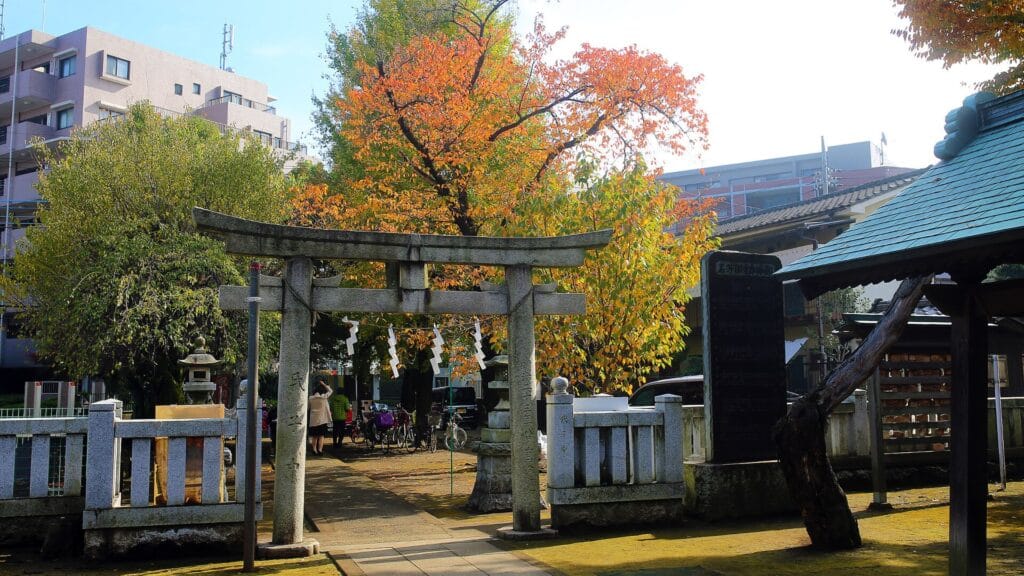
September is the month Tokyo hands back the summer, slowly and with interruptions. It is the wettest month of the year by volume – about 225 mm – because it is the peak of the typhoon season, and the first half is still genuinely hot at around 28°C. The second half is one of the most pleasant stretches of the year, and the whole month carries the autumn sumo tournament, two public holidays and prices that ease off the August peak.
Two different halves
Early September in Tokyo is August with the edge taken off: high twenties, high humidity, and the same morning-and-evening rhythm the summer demands. By the last ten days the nights are cool, the humidity has dropped and walking the city all day becomes comfortable again.
If you can choose within the month, take the second half. It is the difference between planning around the heat and not having to think about it.
Weather: hot, then not – and wet
September averages a high near 27.5°C and a low near 21°C, with 225 mm of rain across about twelve days. That rainfall total is the highest of any Tokyo month, and it is not spread evenly: it arrives in a small number of very heavy events, most of them associated with typhoons or their outer bands.
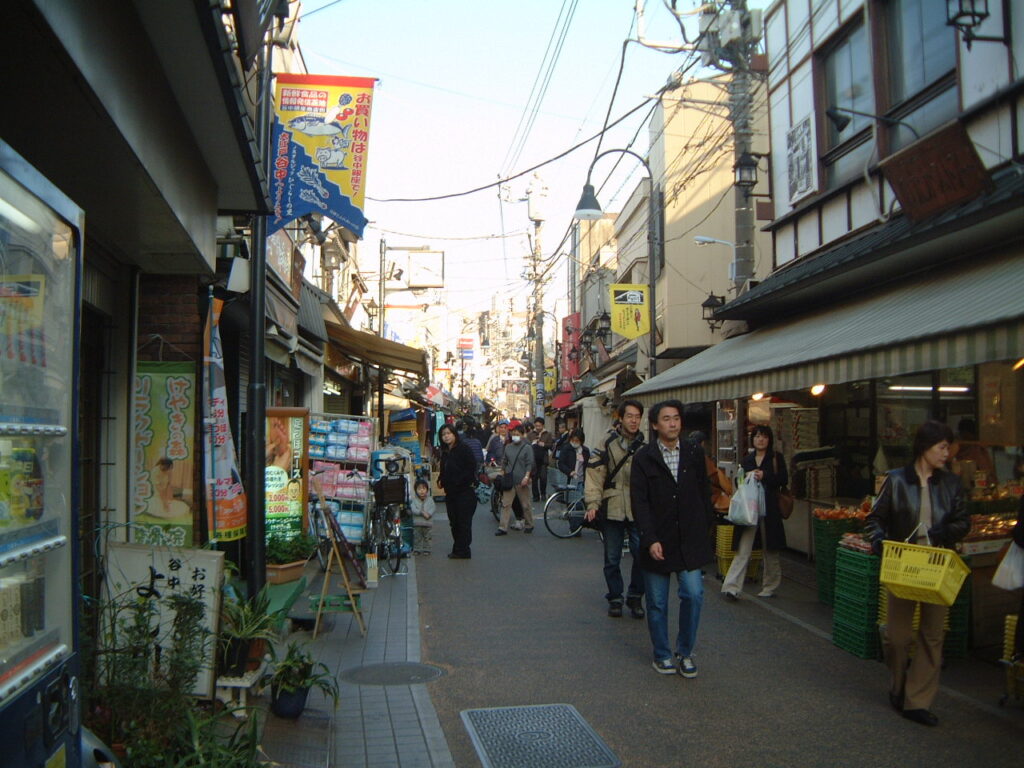
Autumn colour has not arrived. Tokyo’s koyo is a late-November and early-December event; September is green.
Typhoons: what they actually mean
September is the peak month for typhoons affecting the Kanto region. Direct hits on Tokyo are not annual events, but tropical systems passing near enough to disrupt the city are common, and the disruption follows a predictable pattern worth knowing in advance:
- Planned suspensions. Railway operators, including JR East, announce service suspensions roughly 24 hours ahead rather than stopping trains at the last minute. When a keikaku unkyu is announced, the trains will stop, on schedule, whatever the weather looks like out of the window.
- Domestic flights are cancelled early and in bulk. International flights are more resilient but not immune.
- Attractions close – observation decks, gardens, theme parks, boat services – usually announced that morning.
- The city itself copes well. Buildings, drainage and power are built for this. The risk to a visitor is a lost day, not a lost trip.
How to plan for it: watch the forecast from three days out, keep one flexible day, avoid a same-day connection between a domestic flight and an international one, and have an indoor plan ready. Travel insurance that covers weather disruption earns its price in September more than in any other month.
The September sumo tournament: 12–26 September 2027
The Aki Basho runs 12 to 26 September 2027 at the Ryogoku Kokugikan – the last of the three Tokyo tournaments in the year, fifteen days, Sunday to Sunday.
It is also the most weather-proof major event in the month: entirely indoors, and a genuinely good use of a typhoon day if the trains are still running. Advance tickets go on sale about a month ahead; weekday afternoons in the first week are the easiest to get. The top-division bouts start at about 16:00, which is when most visitors arrive.
Two public holidays, and no Silver Week in 2027
- Monday 20 September 2027 – Respect for the Aged Day (Keiro no Hi), the third Monday of September, making a three-day weekend from the 18th.
- Thursday 23 September 2027 – Autumnal Equinox Day (Shubun no Hi).
In some years these two fall close enough together to produce a run of consecutive days off known as Silver Week. 2027 is not one of those years – a Monday and a Thursday with two working days between them – which is good news: domestic travel stays manageable and prices do not spike the way they do in Golden Week or Obon.
The equinox is also ohigan, a period when families visit ancestral graves. It is a quiet, domestic occasion rather than a spectacle, but it explains why cemeteries and flower shops are unusually busy around the 23rd.
What is good in September
The city comes back. The August exodus is over, small restaurants that closed for Obon have reopened, the autumn cultural season starts and the theatres, galleries and department stores begin their new programmes. Late September is one of the better times of year to eat in Tokyo: the summer menus give way to autumn ones, and sanma – Pacific saury, grilled whole with salt – is the seasonal dish everyone talks about.
Gardens are a good bet late in the month, when the humidity drops: the Hama-rikyu and Kiyosumi gardens, the Institute for Nature Study in Meguro, and the Imperial Palace East Gardens are all comfortable again by the last week. So are the long neighbourhood walks – Yanaka, Kagurazaka, Shimokitazawa – that are unpleasant in August.
Prices and crowds
September softens off the August peak. International flights come down from their summer high, Japanese schools go back at the start of the month, and the two public holidays do not combine into a long break in 2027. The last two weeks in particular offer good weather at shoulder-season prices – before the October and November autumn-colour demand arrives.
The one caveat is the typhoon risk, which is real and is the reason September is cheaper than October despite comparable weather in its second half. The Tokyo travel budget sets out what a realistic day costs.
What to wear
Summer clothing for the first two weeks and a light layer for the last two. Something genuinely waterproof, and shoes that dry overnight – September’s rain arrives in quantity rather than in drizzle. A folding umbrella is standard equipment; in strong wind it is useless, which is the one time a light rain jacket is the better answer.
Day trips in September
Hakone, Nikko and Kamakura all work, with the caveat that mountain and coastal areas are the first to be affected by a passing typhoon – cable cars, boat services and some roads suspend early. The Mount Fuji climbing season ends in early September; after it closes, the trails and huts are shut. Late September is a good window for the Fuji Five Lakes, as the air begins to clear and the mountain becomes visible from the city again. Day trips from Tokyo has the routes and travel times.
The September 2027 calendar
- Early September – the Mount Fuji climbing season closes; Japanese schools return.
- Sunday 12 – Sunday 26 September – the Aki Basho grand sumo tournament at Ryogoku Kokugikan.
- Saturday 18 – Monday 20 September – a three-day weekend for Respect for the Aged Day.
- Thursday 23 September – Autumnal Equinox Day, and the ohigan period.
- All month – peak typhoon season for the Kanto region; keep one flexible day.
- Last ten days – humidity drops and the city becomes comfortable to walk again.
Read alongside
- Tokyo in August – the heat, Obon and the festival peak.
- Tokyo in October – the same weather with less typhoon risk.
- Tokyo in November – the autumn colour, and the best month of the second half.
- Best time to visit Tokyo – all twelve months compared.
- Tokyo travel budget – what a day actually costs.
- Where to stay in Tokyo – choosing a base.
- Day trips from Tokyo – and which ones a typhoon closes first.
Frequently asked
Is September a good time to visit Tokyo?
The second half is very good: comfortable temperatures, dropping humidity, shoulder-season prices and no long holiday weekend in 2027. The first half is still hot, and the whole month is the peak of the typhoon season, which is the trade you are making for the lower prices.
How hot is Tokyo in September?
Highs average about 27.5°C and lows about 21°C, with roughly 225 mm of rain across twelve days – the highest monthly rainfall of the year. Early September feels like a slightly softened August; the last ten days feel like autumn.
Do typhoons hit Tokyo in September?
September is the peak month for typhoons affecting the Kanto region. Direct hits are not annual, but systems passing close enough to disrupt trains and flights are common. Railways announce planned suspensions about a day ahead, so you usually get warning; keep one flexible day and avoid tight airport connections.
Is there sumo in Tokyo in September?
Yes – the Aki Basho, 12 to 26 September 2027 at the Ryogoku Kokugikan. Fifteen days, Sunday to Sunday, with the top-division bouts from about 16:00. It is also entirely indoors, which makes it a good typhoon-day plan.
Is there Silver Week in 2027?
No. Respect for the Aged Day falls on Monday 20 September and Autumnal Equinox Day on Thursday 23 September, with two working days between them, so there is no continuous run of holidays. That keeps domestic travel and prices calmer than in Golden Week or Obon.
Is there autumn colour in Tokyo in September?
No. Tokyo’s autumn leaves peak in late November and early December. September is green.
Is September cheaper than August in Tokyo?
Generally yes. International flights come off their summer peak, Japanese schools return at the start of the month, and the September holidays do not combine into a long break in 2027. The typhoon risk is the reason it stays cheaper than October.
Can you climb Mount Fuji in September?
Only in the first part of the month. The official season ends in early September – 10 September in the 2026 season – after which the trails and mountain huts close. Dates are re-set each year, so confirm before travelling.
You Might Also Love


Written by
John Morrison is the founder and lead travel writer at Packzup. Over the past decade he has explored destinations across Africa, the Americas, Asia, Europe, the Middle East, and Oceania — always self-funded, never on a press trip.
