January is the best month to be in southern Vietnam and one of the hardest in the north. Ho Chi Minh City and the Mekong are in the middle of their dry season; Hanoi is cold, grey and drizzling at about 21°C by day and 14°C at night; and Hoi An is emerging from its rainy season. Vietnam runs 1,650 kilometres and has three climates that are never in step – which is the single most useful thing to understand about the country.
Three Vietnams, never aligned
There is no month when the whole country is at its best, and any guide that names one is oversimplifying. In January:
- The south – Ho Chi Minh City, the Mekong Delta, Phu Quoc, Con Dao – is in its dry season, which runs roughly December to April. Warm, sunny, low humidity by local standards. This is the best time of year to be there.
- The centre – Hoi An, Da Nang, Hue, Nha Trang – is coming out of a rainy season that runs September to December. January is improving but can still be grey and wet, particularly in Hue.
- The north – Hanoi, Halong Bay, Ninh Binh, Sapa – is in winter: around 21°C by day and 14°C at night in Hanoi, with the fine persistent drizzle Vietnamese call mua phun. Sapa is genuinely cold and occasionally sees frost or snow.
The practical consequence: a January itinerary should be weighted south. If you must do the whole country, expect to pack for two climates.
Halong Bay in the cold
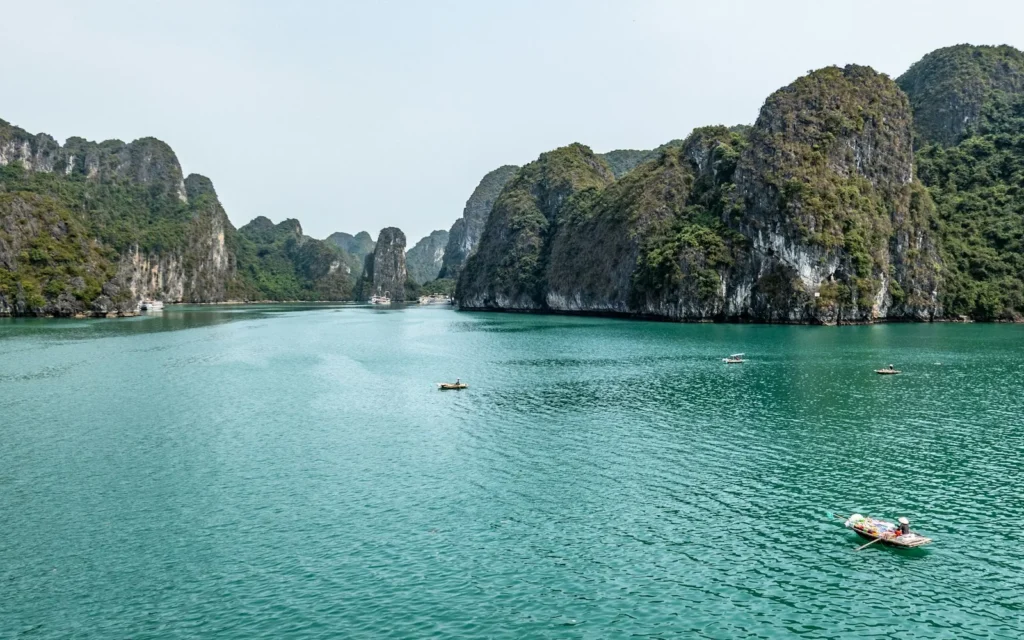
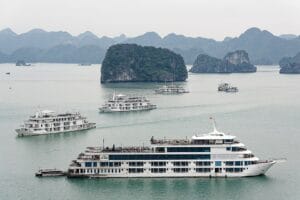
Halong in January is misty, cool and frequently grey. That is not necessarily a loss – karst towers emerging from fog is its own thing, and the bay is much less crowded than in spring or autumn – but it is not the blue-water photograph that sold you the trip. Cruises also cancel in bad weather; build a spare day into any itinerary that depends on an overnight boat.
Tet is coming: 6 February 2027
The single most important planning fact for a January or February trip. Tet, the Vietnamese lunar new year, falls on Saturday 6 February 2027 – the first day of the Year of the Goat. The three most significant days are 6 to 8 February, and the national holiday typically extends to a week or more, with offices, schools and many small businesses closed from around Tet Eve on 5 February.
Note that the official 2027 holiday schedule had not been finalised at the time of writing – the government was weighing two options – so confirm the dates before booking.
What it means in practice, and it starts building in late January:
- Domestic transport sells out weeks ahead. Trains, buses and internal flights fill as the country travels home. Fares rise sharply.
- Many family-run restaurants, shops and some hotels close for several days.
- Prices rise and availability collapses in the week either side.
- The atmosphere is extraordinary if you are in one place and not trying to move: kumquat trees and peach blossom everywhere, flower markets, and a genuine national pause.
The rule is simple: either plan to sit still somewhere good for the Tet week, or avoid the fortnight entirely.
Weather by region
- Hanoi – about 21°C by day, 14°C at night, with roughly 50 mm of rain spread over many days as drizzle rather than downpours. Damp cold; buildings are often unheated.
- Sapa and the far north – several degrees colder, foggy, and cold enough for frost. Trekking is possible but views are a lottery.
- Hoi An and Da Nang – mild, low twenties, improving through the month but with rain still likely.
- Ho Chi Minh City and the Mekong – around 31–32°C, dry and sunny. Peak season.
- Phu Quoc – dry season, the best beach weather in the country right now.
Prices and crowds
January is high season in the south and on the islands, and it is also when European and North American visitors arrive in numbers. The north is quieter and cheaper precisely because the weather is poor. Then Tet distorts everything at the end of the month.
See how much a trip to Vietnam costs for realistic daily numbers.
What to pack
If you are covering the whole country in January you genuinely need two wardrobes: shorts and sun protection for the south, and a warm layer plus a waterproof for Hanoi and Sapa. The north’s damp 14°C feels colder than the number suggests, especially indoors. See the Vietnam packing list.
The January 2027 calendar
- Friday 1 January – New Year’s Day, a public holiday.
- All month – dry season in the south and on Phu Quoc; winter drizzle in the north.
- Late January – the Tet build-up begins; domestic transport and accommodation start filling.
- Saturday 6 February – Tet, the lunar new year; the 2027 holiday schedule was still provisional at the time of writing.
Read alongside
- Vietnam in December – the same split, with the centre still wet.
- Vietnam in February – Tet, and what it does to a trip.
- Best time to visit Vietnam – all twelve months compared.
- How much a trip to Vietnam costs – the numbers.
- Vietnam itinerary – and how to weight it by season.
- Vietnam packing list – the two-climate version.
- Getting around Vietnam – trains, buses and internal flights.
Frequently asked
Is January a good time to visit Vietnam?
For the south – Ho Chi Minh City, the Mekong, Phu Quoc – it is the best month of the year. For the north it is the coldest and greyest, and the centre is only just coming out of its rainy season. Weight a January itinerary southwards.
How cold is Hanoi in January?
About 21°C by day and 14°C at night, with persistent fine drizzle rather than heavy rain. It is damp cold and buildings are often unheated, so it feels colder than the numbers.
When is Tet in 2027?
Saturday 6 February 2027, the first day of the Year of the Goat, with 6 to 8 February the most significant days and a national break typically running a week or more from around 5 February. The official 2027 schedule was still provisional at the time of writing.
Should I avoid Vietnam during Tet?
Avoid travelling during it. Domestic transport sells out weeks ahead, many small businesses close and prices spike. If you can stay in one place, the atmosphere is one of the best things you will see in Vietnam.
Is Halong Bay worth visiting in January?
Yes, with adjusted expectations: misty, cool and grey rather than blue, and far less crowded. Cruises cancel in bad weather, so keep a spare day if your itinerary depends on an overnight boat.
Can you swim in Vietnam in January?
In the south, yes – Phu Quoc and the southern coast are in their dry season. In the centre and north the sea is cool and the weather unreliable.
Does it snow in Vietnam?
Very occasionally in the far north. Sapa and the mountain provinces can see frost and, rarely, snow in January.
Is January expensive in Vietnam?
In the south and on the islands, yes – it is peak season. The north is cheaper because the weather is poor. Tet at the end of the month distorts pricing nationwide.
You Might Also Love


Written by
John Morrison is the founder and lead travel writer at Packzup. Over the past decade he has explored destinations across Africa, the Americas, Asia, Europe, the Middle East, and Oceania — always self-funded, never on a press trip.