
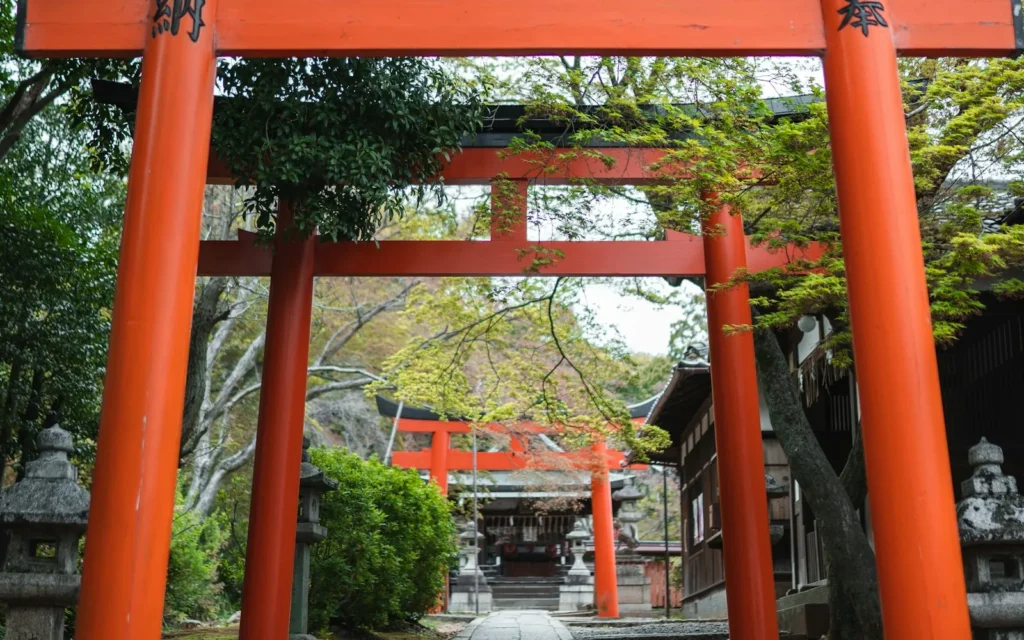
August is the hottest month in Japan and the biggest festival month of the year. Tokyo averages 31°C by day and 24°C at night, Obon runs 13–16 August 2027 and moves the whole country, Awa Odori fills Tokushima with dancers, and there are fireworks somewhere almost every night. It is also the single most difficult month to travel comfortably.
Obon: 13–16 August 2027
Obon is the Buddhist festival of the ancestors, when families return to their home towns to clean graves and welcome the dead back for a few days. It is not a public holiday, but it functions as one, and it is one of the three great domestic travel peaks alongside New Year and Golden Week.
In 2027 the core runs Friday 13 to Monday 16 August, and with Mountain Day on Wednesday 11 August a public holiday, the stretch from about 11 to 16 August is the busiest travel week of the Japanese year.
- Shinkansen reserved seats sell out and unreserved carriages are standing-room for hours.
- Expressways jam and domestic flights price at their annual peak.
- Many small businesses close for several days, as at New Year, though less completely.
- Rural Japan comes alive – village Bon Odori dances, lanterns on rivers, and the Kyoto Gozan no Okuribi bonfires on 16 August, when giant characters are burned onto the hills around the city.
Either book it months ahead and stay in one place, or shift your trip to the last ten days of August, when it clears completely.
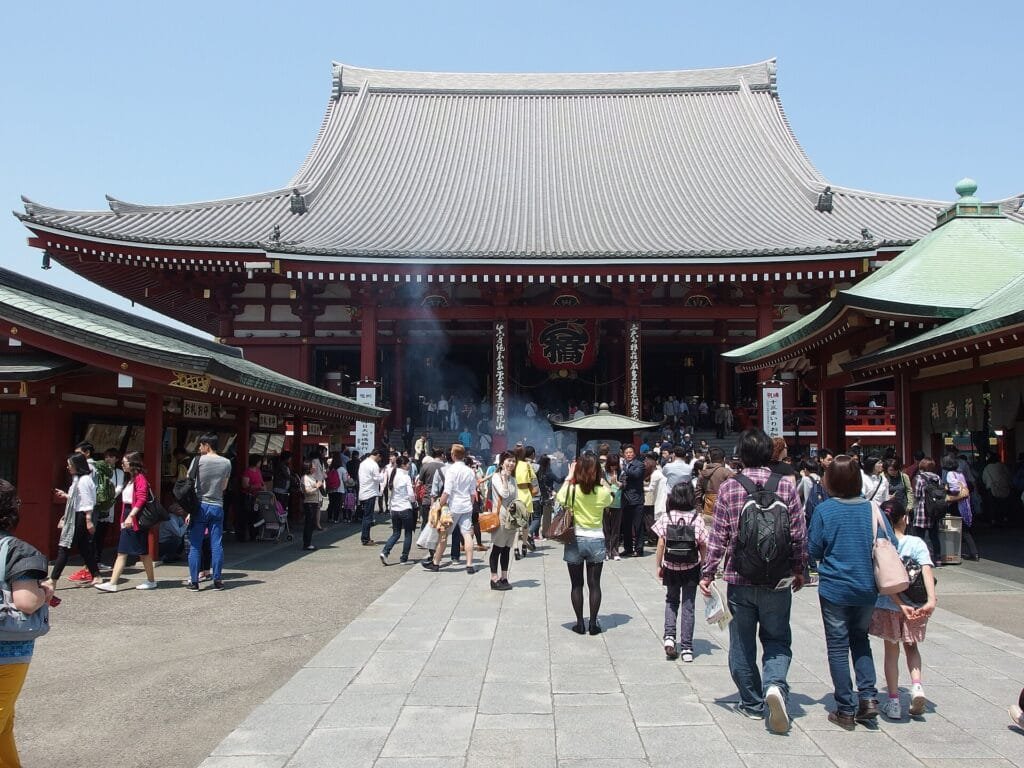
The heat is a genuine constraint
Japanese summers have become severe. Tokyo at 31°C and very high humidity produces regular heatstroke advisories, and Kyoto – sitting in a basin – is worse. Treat it as a planning input, not a detail:
- Sightsee before 10:00 and after 17:00. The famous Kyoto walks are genuinely unpleasant at 14:00.
- Use the middle of the day indoors – museums, department-store basements, covered arcades, underground station cities.
- Drink constantly. Vending machines are everywhere and salt tablets and sports drinks are sold in every convenience store for exactly this reason.
- Consider going north. Hokkaido and the Japan Alps are the standard Japanese answer to August.
Weather by region
- Tokyo – about 31°C by day and 24°C at night, with roughly 155 mm of rain across eight days – hot and bright rather than wet.
- Kyoto and Osaka – hotter and more humid than Tokyo; the hardest cities in the country this month.
- Hokkaido – comfortable, around 26°C, and the best place in Japan in August.
- The Japan Alps – Kamikochi, Norikura and the Tateyama route are cool and at their walking peak; Mount Fuji’s climbing season runs to early September.
- Okinawa – hot and excellent for the sea, with the highest typhoon exposure in the country.
Typhoons
The Japanese typhoon season runs roughly August to October, with the peak risk in late August and September. Okinawa and Kyushu are the most exposed, and a landfalling storm stops shinkansen services, cancels flights and closes attractions for a day or two.
The practical response is not to avoid the month but to build slack: do not schedule the last night of the trip somewhere a storm could strand you, and keep travel insurance that covers weather disruption.
The great August festivals
- Awa Odori, Tokushima – 11–15 August. Japan’s largest traditional dance festival, with thousands of dancers through the streets from the 12th and over a million spectators.
- Nebuta Matsuri, Aomori – early August. Illuminated paper floats of warriors and demons, hauled through the streets at night.
- Sendai Tanabata – early August. The largest star festival in Japan, with enormous streamers filling the arcades.
- Gozan no Okuribi, Kyoto – 16 August. Five giant characters burned onto the hills to send the ancestors home; the close of Obon.
- Fireworks – hundreds of hanabi taikai nationwide through the month.
Prices and crowds
The Obon week is among the most expensive of the Japanese year. Either side of it, August is moderate: foreign visitor numbers are lower than in spring or autumn, and city hotels are affordable once the domestic rush clears after the 17th. The last ten days of August are the best value in the month by a wide margin.
See the best time to visit Japan for the full comparison.
What to pack
Minimal, light, quick-drying clothing; a hand towel, which every Japanese person carries in summer; a fan; strong sunscreen; and a refillable bottle. A yukata can be rented locally if you want to attend a fireworks festival properly dressed. See the Japan packing list.
The August 2027 calendar
- Early August – Nebuta Matsuri in Aomori and Sendai Tanabata.
- Wednesday 11 August – Mountain Day, a public holiday; the Obon travel rush begins.
- 11–15 August – Awa Odori in Tokushima, with street dancing from the 12th.
- Friday 13 – Monday 16 August – Obon; the busiest travel days of the year.
- Monday 16 August – Gozan no Okuribi, the Kyoto bonfires that close Obon.
- From about 17 August – the rush clears and prices fall back.
- Late August – typhoon risk at its seasonal rise; Japanese schools return towards the end of the month.
- Early September – the Mount Fuji climbing season closes.
Read alongside
- Japan in July – Gion Matsuri and the end of the rains.
- Japan in September – typhoon peak, then the best autumn weather.
- Best time to visit Japan – all twelve months compared.
- Tokyo in August – the city-level version of this month.
- Kyoto vs Hokkaido – the decision August makes for you.
- Japan travel guide – regions, rail and how to combine them.
- Japan packing list – the summer version.
Frequently asked
When is Obon in 2027?
The core runs Friday 13 to Monday 16 August 2027. With Mountain Day on Wednesday 11 August, the stretch from about 11 to 16 August is the busiest travel week of the Japanese year, even though Obon itself is not a public holiday.
Should I avoid Japan during Obon?
Travelling during it is difficult: shinkansen seats sell out, expressways jam, flights peak and some businesses close. If your dates are fixed, book months ahead and stay in one place. The last ten days of August are clear and much cheaper.
How hot is Japan in August?
Tokyo averages about 31°C by day and 24°C at night with very high humidity and roughly 155 mm of rain over eight days. Kyoto and Osaka are hotter; Hokkaido sits around 26°C.
Is August typhoon season in Japan?
The season runs roughly August to October, with peak risk in late August and September. Okinawa and Kyushu are most exposed, and a landfall can stop shinkansen services and cancel flights for a day or two.
What are the big festivals in August?
Awa Odori in Tokushima on 11–15 August, Nebuta Matsuri in Aomori and Sendai Tanabata in early August, the Kyoto Gozan no Okuribi bonfires on 16 August, and hundreds of fireworks festivals nationwide.
Where should I go in Japan in August?
North. Hokkaido is around 26°C and comfortable, and the Japan Alps – Kamikochi, Norikura, the Tateyama route – are at their walking best while the cities are at their most punishing.
Is Japan expensive in August?
Only in the Obon week, which is one of the most expensive periods of the year. Either side of it prices are moderate, and the last ten days of the month are the best value in August.
Can you still climb Mount Fuji in August?
Yes – the official season runs to early September. All four trails operate entry systems with fees and daily caps, and an overnight hut booking is effectively required for a sunrise climb.
You Might Also Love


Written by
John Morrison is the founder and lead travel writer at Packzup. Over the past decade he has explored destinations across Africa, the Americas, Asia, Europe, the Middle East, and Oceania — always self-funded, never on a press trip.
