
Last updated September 11, 2026 · Editorial policy
- Cost comparison: what a day actually costs
- Food: street tacos vs tapas crawls
- Beaches & nature: Caribbean glow vs Mediterranean coves
- Cities & culture: CDMX vs the Andalusian heavyweights
- Weather & when to go
- Getting around & safety: the honest logistics
- Nightlife & vibe
- Mexico or Spain: the honest verdict
- FAQ
It is World Cup summer, and Mexico is one of the three hosts. The tournament kicked off at Mexico City’s Estadio Azteca in June, and the country has spent the past five weeks in full football fever. Spain, meanwhile, treats the game as something closer to religion than sport, so both of these nations have had 2026 circled on the calendar for a long time.
But this is a travel comparison, not a football article. I have spent real time in both countries, paid my own way in both, and get asked this exact question constantly: Mexico or Spain? They are both former-empire, food-obsessed, beach-blessed countries that share a language, and yet they deliver completely different trips. Here is the honest breakdown, category by category, with a real verdict at the end instead of a diplomatic shrug.
| Category | Mexico | Spain | Winner |
|---|---|---|---|
| Daily budget | $35-150 | $70-250 | Mexico |
| Food | Street food heaven, deep regional cuisines | Tapas, wine, world-class produce | Tie, lean Mexico |
| Beaches/Nature | Caribbean water, cenotes, canyons | Med coves, Canaries, green north | Mexico |
| Cities & culture | CDMX, colonial towns, pyramids | Layered history, supreme walkability | Spain |
| Weather | Warm somewhere all year | Seasonal, brutal inland summers | Mexico |
| Ease of travel | Great buses, patchy infrastructure | High-speed rail, very easy | Spain |
| Nightlife | Mezcal bars, salsa, beach clubs | Dinner at 10, clubs at 3am | Spain |
| Value for money | Exceptional outside resort zones | Fair, but rising | Mexico |
When to go: Mexico vs Spain
Measured, not guessed — five years of climate normals (WMO 1991–2020, or ERA5 2019–2023 where unavailable). Months are ranked by how close the average high sits to 25°C, penalised by wet days.
Mexico
- Best month
- February
- Then expect
- 25.1°C · 1 wet days
- Next best
- December, November
- Wettest month
- July (27 wet days)
Spain
- Best month
- May
- Then expect
- 25.1°C · 5 wet days
- Next best
- September, June
- Wettest month
- April (11 wet days)
- Different windows — Mexico peaks in February, Spain in May. If your dates are fixed, that is the deciding factor.
- Mexico is the drier bet at its peak — 1 wet days vs 5.
- Biggest split is January — Mexico is 12.5°C warmer that month.
Source: climate normals (WMO 1991–2020, or ERA5 2019–2023 where unavailable) via Open-Meteo, CC BY 4.0 — Packzup Travel Climate Dataset (open data).
Cost comparison: what a day actually costs
Mexico remains one of the best-value major destinations on earth. Backpackers can live well on $35 to $60 a day using family-run guesthouses or hostels, street food, and first-class buses. A comfortable mid-range trip with boutique hotels, restaurant meals, and the odd domestic flight runs $80 to $150 a day. Luxury starts around $250 and climbs fast in Tulum and Los Cabos, where beachfront pricing is fully American.

Spain costs roughly double at every tier. Budget travelers need $70 to $110 a day even with hostel dorms and supermarket picnics. Mid-range is realistically $150 to $250 once you factor in hotel rooms that rarely dip below $100 in season and dinners that run $20 to $35 a head. Luxury sits at $350 to $600 and up, and the Balearics in August will happily take more. The great equalizer is the menu del dia, the fixed-price weekday lunch that still gets you three courses and a drink for $14 to $18 in most towns.
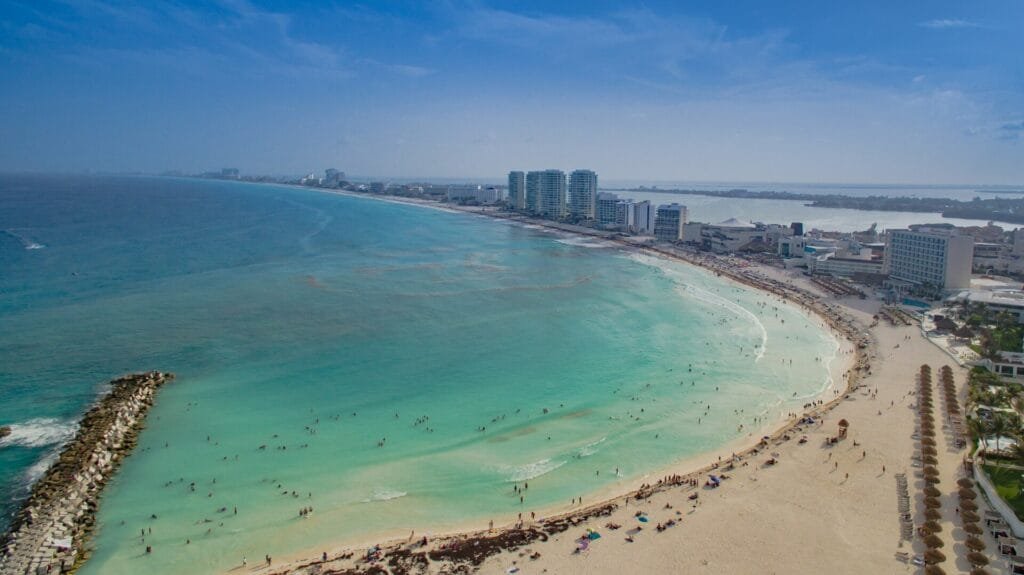
One honest caveat: the gap narrows inside Mexico’s resort bubbles. Cancun’s hotel zone and Tulum’s beach road charge Miami prices for rooms and cocktails. Step anywhere outside those corridors, though, and your dollar goes about twice as far as it does in Spain.
Food: street tacos vs tapas crawls
Forget whatever the word Mexican conjures from takeout menus back home. Mexican food is one of the world’s great cuisines, and it reinvents itself every few hundred miles: tacos al pastor carved off a spinning trompo in Mexico City, smoky moles and tlayudas in Oaxaca, cochinita pibil in the Yucatan. Street tacos cost $1 to $2 and are frequently better than anything in the guidebook restaurants. Mexico City’s high-end dining scene now competes with any capital anywhere, and Mexican food did similar damage to the competition when we compared Colombia vs Mexico.
Spain fights back with a completely different style of eating. Tapas and pintxos turn dinner into a slow social crawl, jamon iberico is worth every euro, and the produce, from Galician seafood to late-summer tomatoes, is absurdly good. San Sebastian holds one of the densest collections of serious restaurants on the planet, and even ordinary neighborhood bars serve food that would headline a menu back home. One honest warning: most paella sold on Barcelona’s tourist drags is sad, reheated stuff. Eat it in Valencia, where it was born, or skip it.
This is the closest category on the board. Mexico wins on street food, chile-driven depth, and sheer value. Spain wins on wine, ham, and the pleasure of grazing for three hours. I lean Mexico by a single taco.
Beaches & nature: Caribbean glow vs Mediterranean coves
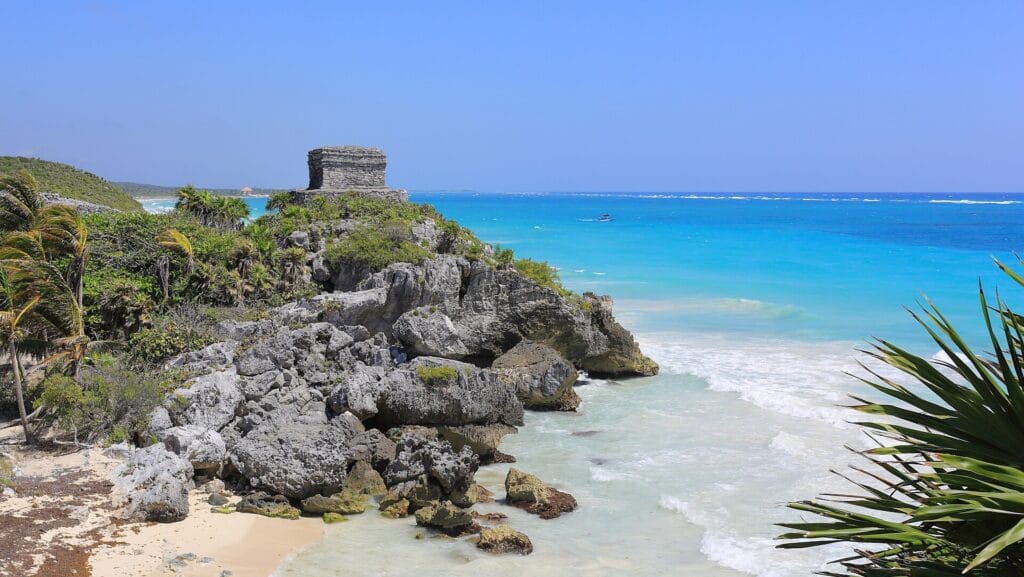
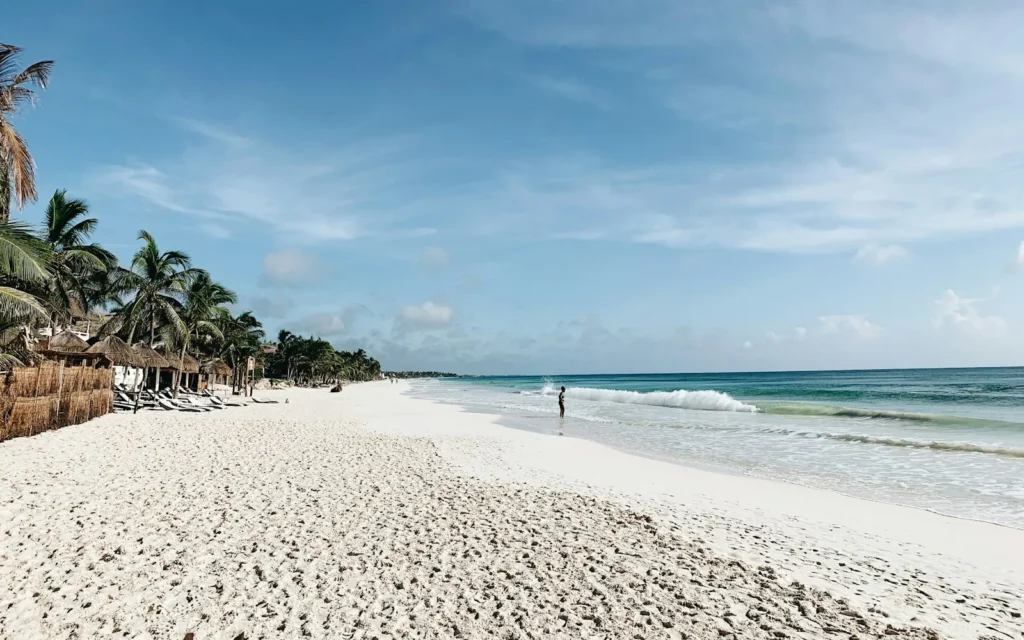
Mexico has two long coastlines that do totally different jobs. The Caribbean side has the flat, unreal turquoise that fills postcards, plus islands like Holbox and Cozumel and a limestone shelf full of swimmable cenotes, the freshwater sinkholes that might be the single coolest natural feature in North America. The Pacific side is wilder: serious surf at Puerto Escondido, mellow bays at Sayulita, whales passing through in winter. Inland you get volcanoes, jungle, and the enormous Copper Canyon. Honest note: sargassum seaweed hits the Riviera Maya in waves, usually worst from spring through summer and varying wildly year to year, so check current reports before booking a big beach splurge.
Spain’s coast is lovely in a different register. The Costa Brava’s pine-backed coves, Cadiz’s long Atlantic strands, and the Balearic calas are genuinely beautiful, and the Canary Islands add volcanic drama plus reliable winter sun. The catch is cooler, calmer water and, in August, towel-to-towel crowds anywhere within reach of a city. Spain’s underrated card is its green north: the Picos de Europa and the Basque coast feel closer to Ireland than to the postcard Mediterranean.
If beaches are the point of the trip, Mexico wins. The water is warmer, the sand is softer, and the cenotes are a bonus Spain simply cannot match.
Cities & culture: CDMX vs the Andalusian heavyweights
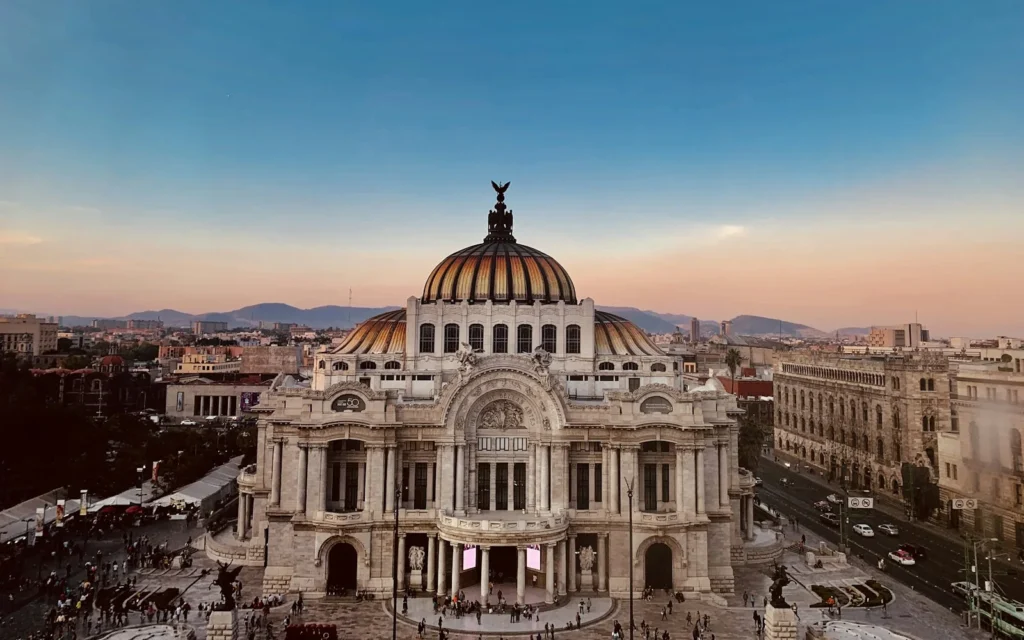
Mexico City is, for my money, one of the three or four most exciting cities in the Americas: world-class museums, the Teotihuacan pyramids an hour away, leafy neighborhoods like Roma and Condesa built for aimless wandering, and food on every corner. If you go, our full list of things to do in Mexico City will fill a week without trying. Beyond the capital, colonial towns like Guanajuato, Oaxaca, and Merida are gorgeous, and the Maya sites of the Yucatan are the kind of thing you remember decades later.
Spain counters with sheer historical density. Two thousand years of Roman, Moorish, and Christian layers sit stacked on top of each other: the Alhambra in Granada, the mosque-cathedral of Cordoba, Seville’s old town, Gaudi’s Barcelona, the Prado in Madrid. Almost every Spanish city keeps a walkable medieval core where the evening paseo is entertainment enough. Within Europe, only one country really rivals it for this category, and we split hairs on that matchup in Italy vs Spain.
Spain takes the category on depth and walkability, but it is closer than Europhiles assume. Mexico City alone is worth the flight.
Weather & when to go
Mexico’s superpower is that somewhere in the country is pleasant every single week of the year. The central highlands, including Mexico City and Oaxaca, sit near spring temperatures year-round. The coasts are hot and at their best from November through April; summer brings humidity, afternoon downpours inland, and hurricane season on the Caribbean side from June to November. It is rarely trip-ruining, but it is real.

Spain is far more seasonal. May, June, September, and October are close to perfect almost everywhere. July and August are the problem months inland: Seville and Cordoba regularly push past 100F, and half of Madrid decamps to the coast. The green north stays mild while the south bakes, and the Canaries carry the winter months.
For a winter escape, Mexico wins outright. For a classic late-spring or early-fall trip, Spain is glorious. Averaged across the whole calendar, Mexico’s flexibility gives it the edge.
Getting around & safety: the honest logistics
For US travelers, both countries are easy on paper. Mexico requires only a valid passport for tourism, with stays permitted up to 180 days, though immigration officers grant what they grant, so keep your entry record and do not assume the maximum. Spain is visa-free under Schengen rules for 90 days in any 180-day window, and the EU’s new ETIAS travel authorization is due to come online, so check the current requirement shortly before you fly rather than assuming nothing has changed.
Once inside the country, Spain is simply easier. The AVE high-speed trains link Madrid to Barcelona or Seville in about two and a half hours, city metros are clean and cheap, and everything more or less runs on time. Mexico has no meaningful passenger rail network for most tourist routes, but its first-class buses, ADO above all, are genuinely excellent, and budget domestic flights are cheap. Renting a car works well in the Yucatan and Baja; I would not drive rural highways at night anywhere in the country.
Safety deserves straight talk. Spain is one of the safest countries in Europe, and your realistic risk is a pickpocket on Las Ramblas or the Madrid metro. Mexico varies enormously by state: the tourist corridors of the Yucatan, Oaxaca, and central Mexico City host millions of visitors without incident, while some states are places tourists simply do not go. Read the State Department’s state-by-state advisories rather than the scary national headline, and apply normal big-city sense. Spain wins the category, but Mexico is far more manageable than cable news suggests.
Nightlife & vibe
Nobody on earth out-lasts the Spanish. Dinner starts at 9:30 or 10, bars fill after midnight, and clubs in Madrid and Barcelona do not peak until 3am. Add terrace culture, cheap vermouth on tap, and Ibiza’s summer circus, and Spain is the strongest pure nightlife country in Europe.
Mexico parties differently. Think mezcal bars and old cantinas in Mexico City, salsa and cumbia dancing, beach clubs on both coasts, and Cancun’s spring-break strip if that is your poison, which, honestly, it is not mine. The cocktail scene in CDMX is world class and costs half of what any European capital charges. Outside the big cities and resorts, nights wind down earlier.
Spain wins on stamina and scale. Mexico wins on price and character per bar stool.
Mexico or Spain: the honest verdict
No cop-outs. Winners by traveler type:
Budget travelers: Mexico. It is not close. The same $60 a day buys comfort in Mexico and bare survival in Spain.
Foodies: Mexico, by a nose. Choose Spain only if wine and long tapas evenings matter more to you than street food and chile-driven cooking. This was the hardest call in the post.
Beach trips: Mexico. Caribbean water plus cenotes beats the Med, unless your specific dream is calm coves and Balearic boat days.
First-time international travelers: Spain. The trains, the safety margin, and the mature tourism infrastructure remove nearly all friction. Mexico rewards a little more travel experience and repays it generously.
If Mexico is winning your bracket and you want to see how it fares against a heavyweight from its own hemisphere, read Argentina vs Mexico. If Spain is your leader and Europe is calling, Spain vs France is the natural next round.
FAQ
Is Mexico or Spain cheaper to visit?
Which is safer, Mexico or Spain?
Which is better for a football-fan trip?
How many days do you need in each country?
Planning the trip? Go deeper with our Mexico Travel guide and best time to visit Spain.
You Might Also Love
More side-by-side comparisons





Written by
John Morrison is the founder and lead travel writer at Packzup. Over the past decade he has explored destinations across Africa, the Americas, Asia, Europe, the Middle East, and Oceania — always self-funded, never on a press trip.
