
Turkey travel guide
Turkey travel guide: Istanbul, Cappadocia, and the route between
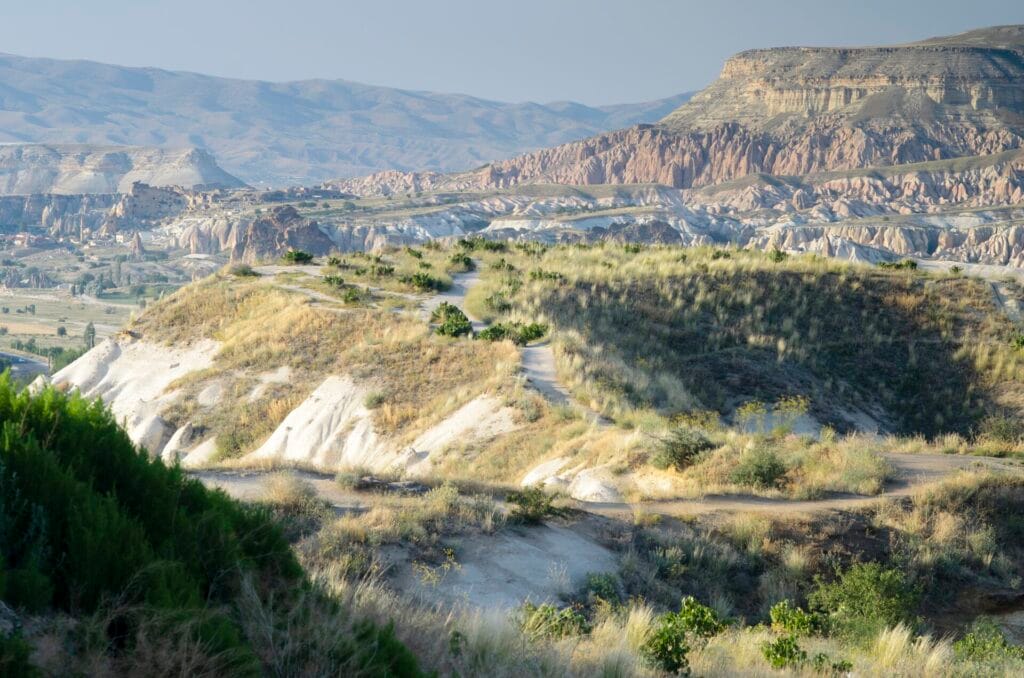
Turkey delivers one of the world's deepest cultural circuits - Istanbul's Byzantine-Ottoman layers and Cappadocia's surreal volcanic landscape make for the perfect 7-10 day trip. Currency volatility keeps it exceptional value.
Destinations we cover in Turkey
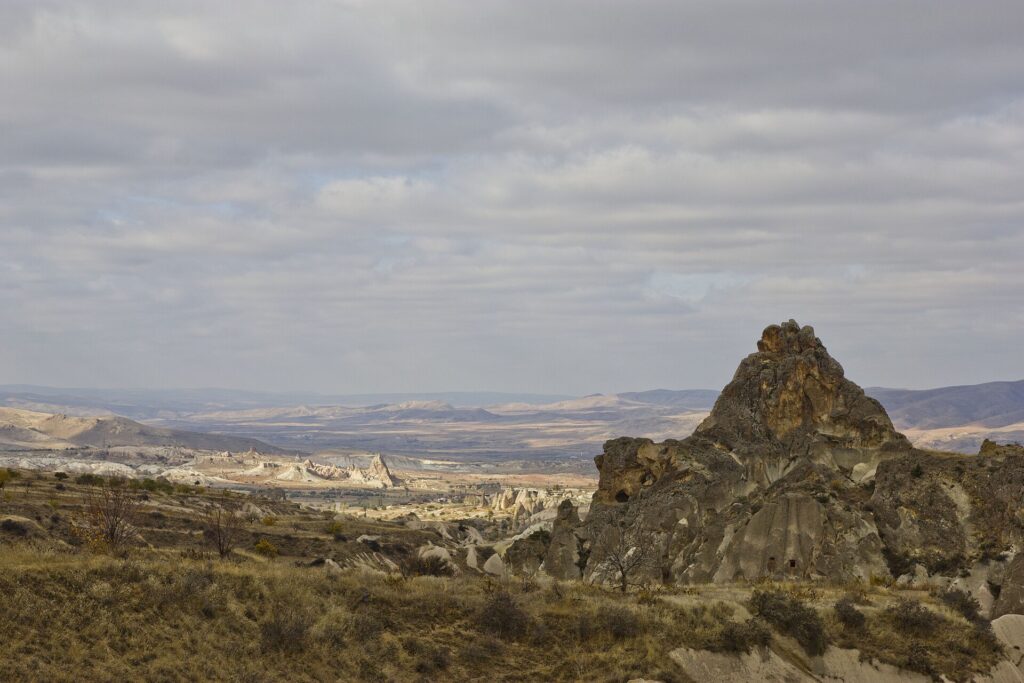
Country overview
Turkey is mediterranean-temperate on the coast, continental inland, arid in central Anatolia (Cappadocia). E-Visa required for most Western travelers (~$50, online, 5 min).
- Language
- Turkish. English common in Istanbul and Cappadocia tourist areas; limited elsewhere.
- Currency
- Turkish Lira (TRY). Use ATMs for best rates; avoid airport currency exchanges.
- Best time to visit
- April-June and September-October are sweet spots. Cappadocia balloon flights highest success rate in these months; Istanbul most comfortable then.
- Trip highlights
- Hagia Sophia + Blue Mosque + Topkapi in Istanbul, balloon flights + cave hotels + Goreme valleys in Cappadocia.
Turkey travel guide
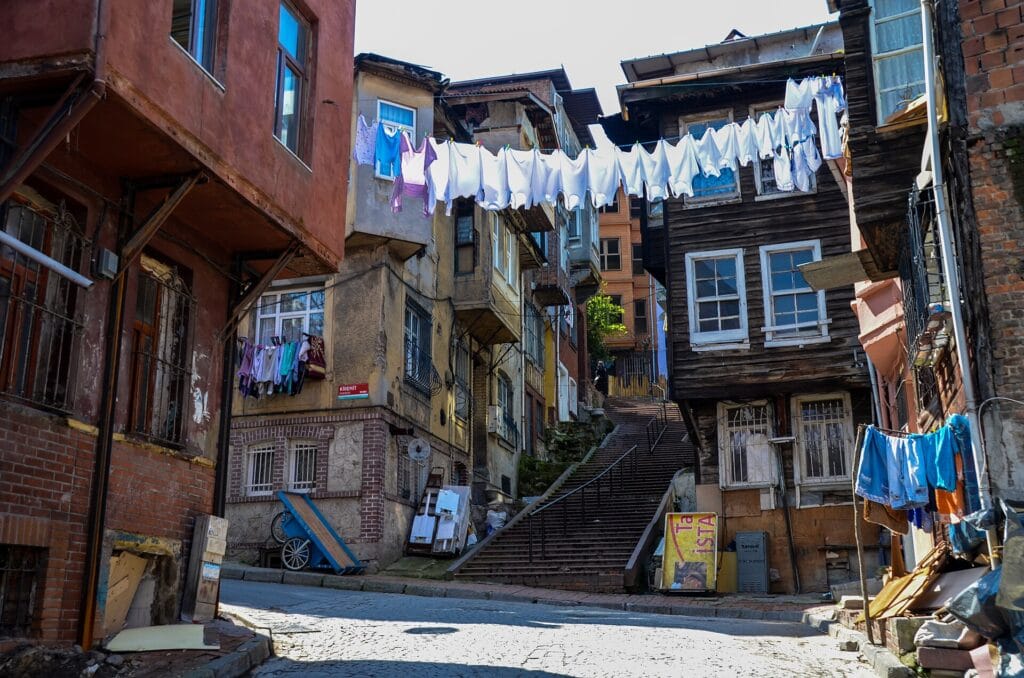
Turkey bridges Europe and Asia, with grand mosques, ancient ruins, surreal landscapes and a stunning coast.
- Istanbul — the Blue Mosque, Hagia Sophia, bazaars and the Bosphorus.
- Cappadocia — hot-air balloons over fairy-chimney valleys.
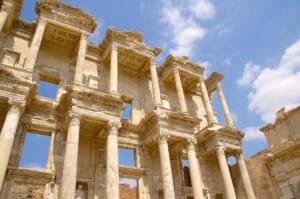
- Ephesus — one of the best-preserved ancient cities.
- The Turquoise Coast — Antalya, Fethiye and gulet cruises.
When to go & tips
Spring (April-May) and autumn (September-October) are ideal. Get an Istanbulkart, dress modestly for mosques, and allow a buffer day for the weather-dependent balloon ride.
Ten days covers Istanbul, Cappadocia, Ephesus and the coast.
Turkey Travel Guide FAQ
What's the best itinerary for Turkey?
Istanbul, Cappadocia, Ephesus and the Turquoise Coast — about 10 days.
When is the best time to visit Turkey?
Spring (April-May) and autumn (September-October) for warm, comfortable weather.
Do you still need a visa for Turkey, and which nationalities stopped needing one?
Most Western passports no longer buy anything. As of 5 September 2026 the Republic of Türkiye Ministry of Foreign Affairs country list shows ordinary passport holders of the United Kingdom, the United States, Canada, Australia and Ireland exempt from a visa for up to 90 days in any 180-day period.
The exemption is for ordinary passports only. That catch is wider than most pages admit. The ministry states that United States and Canadian official passport holders are required to have a visa, that Australian official passport holders must obtain one, that Irish holders of official passports other than diplomatic ones are subject to visa, and that for the United Kingdom diplomatic and official passport holders are subject to visa. If you are travelling on anything issued to you because of your job rather than a normal burgundy or blue book, check your own line on the ministry list before you book.
This is also the fact most likely to be stale elsewhere, because exemptions arrive by Presidential Decision rather than by treaty. Two dated moves sit on the same list: ordinary passport holders of the People's Republic of China became exempt for 90 days in any 180 day period as of 2 January 2026, with Chinese official passport holders exempt for 30 days, and visa issuance at Turkish border gates for holders of Greek Cypriot passports was terminated as of 2 January 2026. Indian ordinary, special and service passport holders still require a visa; only Indian diplomatic passports are exempt, for up to 90 days.
Where a visa is still needed, the ministry names one channel: e-Visas obtained online at www.evisa.gov.tr, which it says takes about three minutes. Type that address yourself rather than clicking a sponsored search result, and check the address bar still reads evisa.gov.tr before entering passport details.
Passport validity is a separate rule and it bites at check-in, not at the border. The UK Foreign, Commonwealth and Development Office states that your passport must have an expiry date at least 150 days after the date you arrive and at least one blank page. That is the 90-day stay plus a 60-day margin, which is why a passport with four months left can be refused for a one-week trip.
How the 90 days in 180 days rule is actually counted
It is a rolling window, not a calendar year and not an allowance per entry. On any day you are in Turkey, count back 180 days from that day, add up every day you were physically present inside that window, and the total must not exceed 90. Arrival and departure days both count.
The consequence people get wrong is that leaving does not reset the clock. A run of short trips exhausts the allowance exactly as one long stay does, and a border hop to Greece, Bulgaria or northern Cyprus buys nothing beyond the days that have aged out of the back of the window. After a 90-day stay the allowance does not return in one lump: days come back one at a time, 180 days after each was used.
Two things follow. Turkey is not in the Schengen area, so if you are combining the two, keep two entirely separate counts. And if you want longer than 90 days, the route is a residence permit rather than a visa run; permits are administered by the Presidency of Migration Management and the current types, fees and evidence lists are published at goc.gov.tr, which is the only authority worth quoting on it.
Which Turkey museum pass covers where, and why so many people buy the wrong one
There is no single Turkish museum pass. The Ministry of Culture and Tourism's ticketing arm, DOSIM, sells one national card and four regional cards at four prices on one schedule, the (III) Sayili Cetvel Museumpass Ucret Tarifesi, marked valid from 01.03.2024 with VAT included. That is still the schedule the ministry published when checked on 5 September 2026. Its heading also settles who it is for: Museumpass Ucretleri (Yabanci Uyruklu Ziyaretciler Icin), the Museumpass fees for foreign-national visitors, which is why the prices are in euros while Turkish citizens and residents use the separate lira-priced MuzeKart. The regional cards are defined by province, not by city and not by sight.
The detail that decides your purchase is that Denizli province is listed inside both the Aegean card and the Mediterranean card, and Denizli is the province holding Hierapolis-Pamukkale. A trip built on Izmir, Ephesus and Pamukkale is covered by Museumpass Ege at 95 euros; a trip built on Antalya, Perge, Aspendos and Pamukkale is covered by Museumpass Akdeniz at 90 euros. Buying the 165 euro national card for either spends double to reach the same ground.
Museumpass Kapadokya, at 65 euros for three days, covers Nevsehir and Aksaray provinces only. It does not stretch to Konya or Kayseri, which are separate provinces on the same driving route.
Then the exclusion list, printed on the ministry's own fee page in one sentence: the card is not valid for the Harem Dairesi or the Aya Irini Aniti inside Topkapi Palace, the Yamacevler terrace houses inside the Ephesus site, the Karanlik Kilise or Dark Church inside the Goreme Open Air Museum, Sedir Island, or the Istanbul Cinema Museum. The Dark Church is the one that stings, because it is what most Cappadocia visitors assume their Cappadocia card opens, and it is ticketed separately at the gate.
The same schedule carries three beach cards that are not museum entry at all: PataraPass at 55 euros, OlymposPass and Phaselis Pass at 60 euros each, sold as ten entries rather than a run of days. DOSIM publishes separate schedules again for combined tickets and for audio guides, so if a site seems missing from the pass, check those before paying full price at the window.
Which Turkish high-speed lines actually run, and where the train is not the answer
Turkey's high-speed network is a spine through Ankara, not a national grid. Yuksek Hizli Tren services run Ankara to Istanbul via Eskisehir, Ankara to Konya, Konya to Istanbul, Konya to Karaman, and Ankara to Sivas via Kirikkale and Yozgat. Izmir, Antalya, Trabzon and Cappadocia are a flight or a coach.
On the flagship line the Ministry of Transport and Infrastructure stated on 10 June 2026 that Ankara to Istanbul currently takes 4 hours 7 minutes and will fall to 3 hours 37 minutes once two works finish. The mechanism is worth knowing, because it explains why the line is slower than the trains are: the ministry says high-speed trains are at present forced to crawl at an average of 55 km/h across about 9.2 km of conventional track, and the 8 km T26 tunnel bypasses that section. The second work, Dogancay Ripaji-2, takes a 23-minute section down to 4 minutes. Treat 4 hours 7 minutes as today's figure and the shorter one as pending.
The Ankara to Sivas arm is the newest and the thinnest: it opened on 26 April 2023 and cut both the distance, from 603 km to 405 km, and the journey, from 12 hours to 2 hours. It calls at Ankara, Kirikkale, Yozgat and Sivas, with Sorgun and Akdagmadeni added on 13 March 2024. At the line's first anniversary in April 2024 the ministry reported it running three services a day in each direction, so a missed train there is not a half-hour problem. Check the current frequency before you rely on it.
Nevsehir has no high-speed station and the Ankara to Izmir line is still described by the ministry as a project, so the workable shape is rail between Istanbul, Ankara and Konya, road into Cappadocia from Kayseri or Nevsehir airport, and air to the coast. Timetables and fares sit on the operator's booking site, ebilet.tcddtasimacilik.gov.tr.
| YHT route | Official journey time | Source and date |
|---|---|---|
| Ankara to Istanbul | 4 hours 7 minutes, falling to 3 hours 37 minutes | Ministry of Transport and Infrastructure, 10 June 2026 |
| Ankara to Eskisehir | Cut from 4 hours to 1 hour 30 minutes | Directorate of Communications, 15 March 2023 |
| Ankara to Konya | 1 hour 45 minutes | Directorate of Communications, 15 March 2023 |
| Konya to Istanbul | 4 hours 30 minutes | Directorate of Communications, 15 March 2023 |
| Konya to Karaman | About 40 minutes | Ministry of Transport and Infrastructure, 7 January 2024 |
| Ankara to Karaman via Konya | 2 hours 40 minutes | Ministry of Transport and Infrastructure, 7 January 2024 |
| Istanbul to Karaman | 6 hours | Ministry of Transport and Infrastructure, 7 January 2024 |
| Ankara to Sivas | 2 hours, cut from 12 hours; 405 km, cut from 603 km | Directorate of Communications, 30 April 2024 |
How to think about lira prices instead of memorising them
Do not carry a lira price in your head for longer than a season. Turkish annual consumer price inflation ran at 31.51 per cent in August 2026 on the Turkish Statistical Institute series published by the Central Bank of the Republic of Türkiye. A lira figure written a year ago describes a different country.
Anchor instead on what is priced in hard currency and therefore stable. Ministry museum and site entry for foreign visitors is set in euros on the DOSIM schedule, so a sightseeing budget built in euros holds its shape across a year. What floats is the local layer: food, taxis, domestic buses, markets. Budget that as a daily allowance you convert on the day, using the indicative exchange rate the Central Bank publishes daily to judge what a bureau or an ATM is really offering.
One habit at the terminal saves real money. If a card machine or an ATM offers to charge you in pounds, euros or dollars rather than lira, decline and pay in lira. Accepting hands the conversion to the terminal's provider at a rate it sets instead of your own bank's.
On the VAT refund, learn the structure rather than a number. Turkey refunds VAT to travellers who are not resident in the country: the shop must be authorised to issue the special invoice, so ask before you buy rather than at the till, you present the goods and the invoice to customs on the way out, and it covers goods rather than services. The minimum invoice amount and the deadline for taking the goods out are set by the Revenue Administration and are not stated here, because the administration's own FAQ paths at gib.gov.tr returned errors when checked on 5 September 2026. Confirm both figures at gib.gov.tr or with the shop's own tax-free operator before you count on a refund.
What the meteorological service numbers say about when to go
The single most useful climate fact for Turkey is that the Mediterranean coast does its raining in winter. On Turkish State Meteorological Service normals for Antalya covering 1930 to 2025, December averages 250.9 mm across 11.91 rainy days and January 225.5 mm across 12.36 days, against 4.7 mm and 0.54 rainy days in July. The annual total is about 1,031 mm and most of it lands between November and March. A winter break on the Turquoise Coast is mild and wet, not dry, and July there averages a maximum of 34.2 C.
Central Anatolia runs the opposite way and is colder than visitors expect. The same service's normals for Nevsehir, the province holding Goreme and Urgup, covering 1959 to 2025, put the January mean at minus 0.1 C with a mean minimum of minus 3.6 C and record an extreme minimum of minus 23.6 C in February. July and August are properly dry, at 2.30 and 1.72 rainy days, with mean maxima of 28.5 C and 28.7 C. The wettest month on the Nevsehir record is May, at 57.9 mm.
Put those together and the shoulder-season advice stops being a slogan: April to early June and September to October are the weeks when Antalya is past its rain and Nevsehir is past its frost, which is why one window suits a coast leg and an inland leg in the same trip. Check the normals for your specific province at mgm.gov.tr; the Black Sea coast has no reliably dry season at all.
Earthquakes, AFAD's own instructions, and the border regions to avoid
Turkey is seismically active across most of its populated area, and the official instruction from AFAD, the Disaster and Emergency Management Presidency, is three words: Cok, Kapan, Tutun, meaning drop, cover, hold on. Get low, protect head and neck, take cover under or beside sturdy furniture, and hold on until the shaking stops.
The parts that contradict instinct are the ones to remember in a hotel room. Do not use lifts, and do not run for the stairs or the exit while the building is moving. Keep clear of windows and of anything unsecured, treat interior doorways as poor shelter unless they are genuinely sturdy, and if you are in bed with nothing heavy above you, AFAD's advice is to stay there rather than cross a dark room. Afterwards: check yourself, then help anyone nearby; shut off the gas, electricity and water valves and put out stoves and heaters; if you smell gas, close the gas valve and open the windows and doors; do not enter damaged buildings; expect aftershocks and repeat the same drill through them; take your emergency kit and leave by a route you worked out in advance, to the neighbourhood assembly point.
The emergency number in Turkey is 112. The FCDO gives 112 for the police and the same number for emergency services generally, including reporting a wildfire. AFAD publishes the current seismic picture on its own earthquake page, and the FCDO notes that a magnitude 6.2 earthquake in the Sea of Marmara in April 2025 was felt strongly in Istanbul, which is the practical reason to read the drill before you need it.
On the border regions the position as of 5 September 2026 is narrow rather than sweeping. The UK Foreign, Commonwealth and Development Office advises against all travel within 10 km of the border with Syria, citing fighting and a heightened risk of terrorism, on advice last updated 22 July 2026, and names no other province. That zone sits far from Istanbul, Cappadocia, the Aegean and the Mediterranean resorts, so it constrains a far-southeast itinerary and nothing else. United States citizens should read the State Department's Turkey advisory directly, because it uses its own province list and its own levels; that page refused automated requests when checked on 5 September 2026, so no level is quoted here. Advisories are revised without notice: check in the week you travel, not the week you book.
At a glance
| Pass | Price (euro, VAT included) | Valid for | Where it works |
|---|---|---|---|
| Museumpass Turkiye | 165.00 | 15 days | More than 300 museums and archaeological sites nationwide |
| Museumpass Istanbul | 105.00 | 5 days | Museums and archaeological sites in Istanbul |
| Museumpass Ege (Aegean) | 95.00 | 7 days | Izmir, Aydin, Mugla and Denizli provinces |
| Museumpass Akdeniz (Mediterranean) | 90.00 | 7 days | Antalya, Mersin, Adana and Denizli provinces |
| Museumpass Kapadokya | 65.00 | 3 days | Nevsehir and Aksaray provinces |
| PataraPass Kart | 55.00 | 10 entries | Patara beaches, not a museum pass |
| OlymposPass Kart | 60.00 | 10 entries | Olympos beaches, not a museum pass |
| Phaselis Pass Kart | 60.00 | 10 entries | Phaselis beaches, not a museum pass |
Frequently asked questions
Do Americans need a visa for Turkey in 2026?
No, not for tourism on an ordinary passport. The Republic of Türkiye Ministry of Foreign Affairs country list, checked on 5 September 2026, states that ordinary passport holders of the United States are exempted from visa up to 90 days in any 180-day period, while official passport holders still need one. The same ordinary-passport exemption is listed for Canada, Australia, the United Kingdom and Ireland, and those countries' official or diplomatic passports are also subject to visa. It comes by Presidential Decision rather than treaty, so re-check before you fly.
Does the 90-day limit in Turkey reset if you leave and come back?
No. It is a rolling 180-day window: count back 180 days from any given day, add up every day you were in Turkey inside it, and the total cannot exceed 90. A short exit to Greece, Bulgaria or northern Cyprus clears nothing; days return one at a time, 180 days after each was used. For longer stays the route is a residence permit from the Presidency of Migration Management at goc.gov.tr.
Which Turkey museum pass covers Pamukkale?
Both the Aegean and the Mediterranean cards, because Pamukkale sits in Denizli province and Denizli is listed inside both. Museumpass Ege at 95 euros covers Izmir, Aydin, Mugla and Denizli for seven days; Museumpass Akdeniz at 90 euros covers Antalya, Mersin, Adana and Denizli for seven days. Prices come from the ministry's DOSIM schedule for foreign-national visitors, marked valid from 1 March 2024, VAT included, and still published on 5 September 2026.
Is the Museum Pass valid at the Dark Church in Goreme?
No. The Ministry of Culture and Tourism's fee page states the card is not valid for the Karanlik Kilise or Dark Church inside the Goreme Open Air Museum, nor for the Harem Dairesi and Aya Irini Aniti at Topkapi Palace, the Yamacevler terrace houses at Ephesus, Sedir Island or the Istanbul Cinema Museum. Budget a separate ticket at the gate.
Can you get to Cappadocia by high-speed train?
No. High-speed services run Ankara to Istanbul via Eskisehir, Ankara to Konya, Konya to Istanbul, Konya to Karaman, and Ankara to Sivas via Kirikkale and Yozgat. Nevsehir has no high-speed station, so Cappadocia means flying into Kayseri or Nevsehir and continuing by road, or an overnight coach.
Is the Turkish coast dry in winter?
No, winter is its wettest season. On Turkish State Meteorological Service normals for Antalya covering 1930 to 2025, December averages 250.9 mm across 11.91 rainy days and January 225.5 mm across 12.36 days, against 4.7 mm in July. For mild and dry, aim at April to early June or September to October.
What is the emergency number in Turkey?
112. The UK Foreign, Commonwealth and Development Office gives 112 for the police and the same number for emergency services generally, including reporting a wildfire. For earthquakes, AFAD's own instruction during shaking is Cok, Kapan, Tutun, meaning drop, cover and hold on: get under or beside sturdy furniture, protect your head and neck, do not use lifts and do not run for the stairs while the building is moving.
Best time to visit Turkey (real climate data)
Best months: May, June, July, August, September, October.
Turkey’s warmest month is August (avg 30°C / 85°F), the coolest is February (low 4°C / 40°F). The wettest is January (100 mm) and the driest is August.
Source: Open-Meteo / WMO climate normals (WMO 1991–2020, or ERA5 2019–2023 where unavailable). See the full month-by-month weather →
You Might Also Love
Before you go: see whether they speak English in Turkey and what to wear, check the tap water, sort your mobile data, and find out if it is a cash or card destination, and brush up on local etiquette.
Compare Turkey with
Still deciding between Turkey and somewhere else?
