
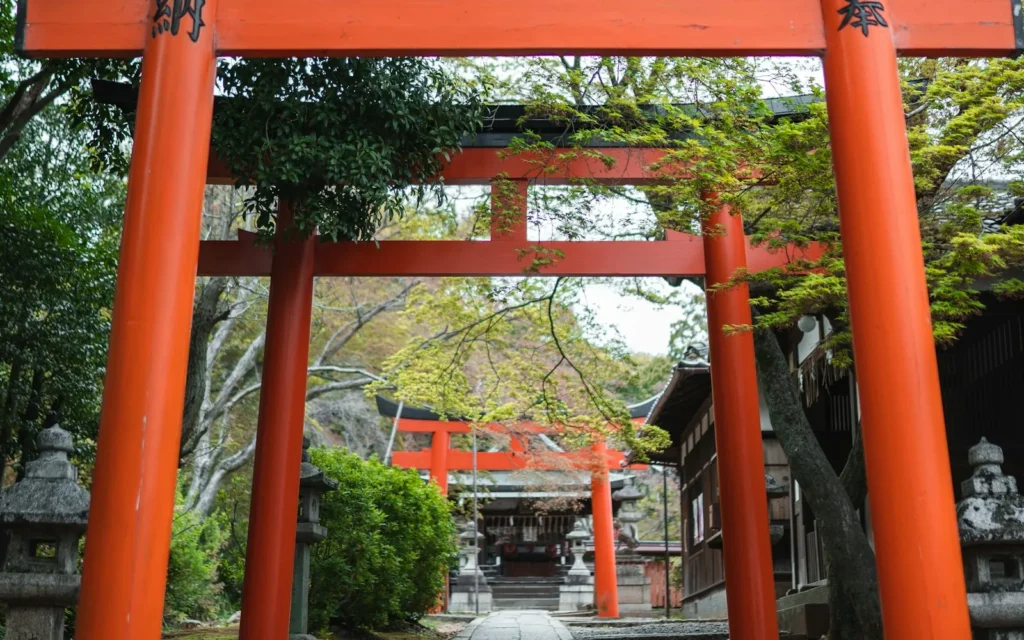
February is Kyoto’s last cold month and one of its most rewarding. The city runs at about 10°C by day and 1°C at night, the temples are still near-empty, Setsubun on Wednesday 3 February 2027 fills the shrines with bean-throwing ceremonies, and the plum blossom opens at Kitano Tenmangu – six weeks before the cherry trees and with a fraction of the crowd.
Setsubun, 3 February
The eve of spring in the old calendar, and Kyoto does it better than anywhere. Roasted soybeans are thrown to drive out demons, with the cry oni wa soto, fuku wa uchi – demons out, fortune in. The city’s major ceremonies are worth planning around:
- Yoshida Shrine – the largest, with hundreds of stalls over several days and a fire ritual burning old amulets on the night of the 3rd.
- Yasaka Shrine – where maiko and geiko perform dances and throw beans to the crowd. It is one of the few occasions you will see them publicly and appropriately.
- Rozan-ji – the demon-chasing ritual, with three costumed demons driven from the hall.
- Heian Shrine and Mibu-dera – both hold substantial ceremonies.
All are free. They are busy but nothing like cherry-blossom busy, and they are genuinely local occasions.
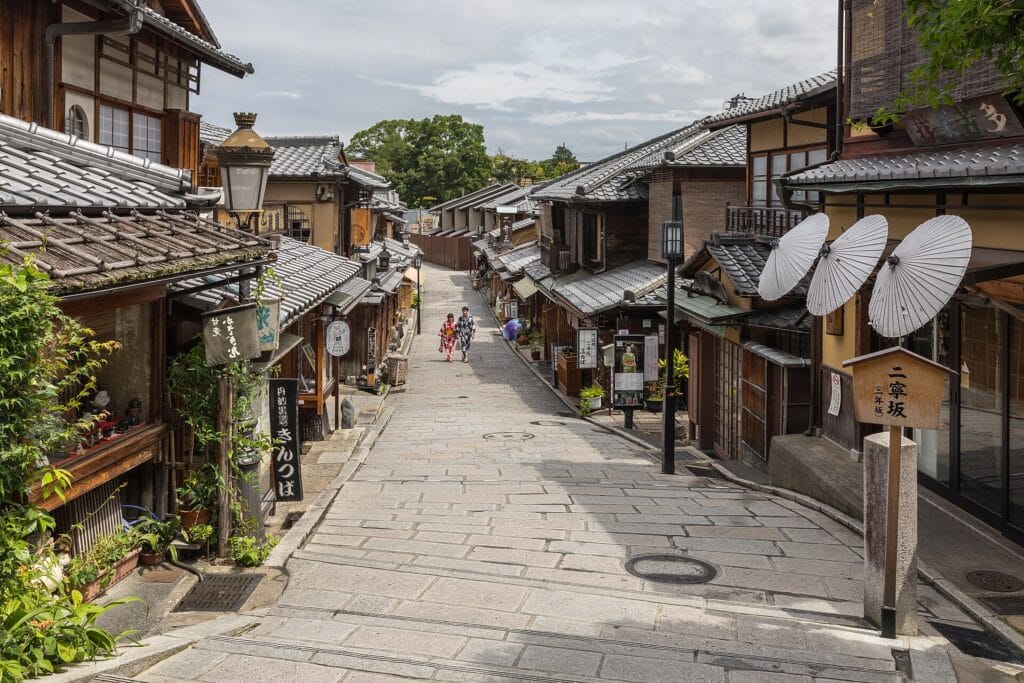
Plum blossom
The cherry trees get the attention, but ume – plum blossom – comes six weeks earlier and smells far better. Kitano Tenmangu has around 1,500 plum trees and holds its Baikasai plum-blossom festival on 25 February, the shrine’s monthly market day, with an outdoor tea ceremony served by geiko and maiko.
Other good plum gardens: the Umenomiya shrine, Nijo Castle’s grove, and Jonangu. Peak bloom is usually late February into early March, weather depending.
Weather
February averages about 10°C by day and 1°C at night, with roughly 68 mm of precipitation. It is marginally milder than January but feels similar, and Kyoto’s basin damp is the thing to dress for. Snow is still possible.
What February is for
- Setsubun, above all – and it is the most accessible chance to see maiko perform.
- Plum blossom, at Kitano Tenmangu and Jonangu.
- Empty temples. Still the case, right up to the end of the month.
- The markets – Toji on the 21st, Kitano Tenmangu on the 25th, which coincides with the plum festival this month.
- Price, which stays near the January floor.
Prices and crowds
Still low season. Accommodation is close to its annual floor, and the difference between a February and an April room in Kyoto is substantial – often several times over. Rates begin lifting from around the last week as the cherry-blossom forecasts are published.
See how many days Kyoto needs.
What to pack
Winter clothing and warm socks – shoes come off constantly at temples and the floors are cold. A waterproof layer, and shoes with grip for possible snow. See the Japan packing list.
The February 2027 calendar
- Wednesday 3 February – Setsubun; ceremonies at Yoshida, Yasaka, Rozan-ji, Heian and Mibu-dera.
- 2–4 February – the Yoshida Shrine stalls and fire ritual run over several days.
- Through February – plum blossom builds at Kitano Tenmangu, Jonangu and Nijo Castle.
- Sunday 21 February – the Toji temple market.
- Thursday 25 February – Baikasai, the Kitano Tenmangu plum festival, with outdoor tea served by geiko and maiko; also the monthly market.
- Through February – temples still near-empty; accommodation near the annual floor.
- Late February – cherry-blossom forecasts published; rates begin to climb.
Read alongside
- Kyoto in January – New Year and the emptiest weeks.
- Kyoto in March – the cherry season beginning.
- Japan in February – the country-level view.
- Best time to visit Japan – all twelve months compared.
- Kyoto travel guide – districts and how to plan them.
- Things to do in Kyoto – the winter list.
- Best photo spots in Kyoto – and when they are actually walkable.
Frequently asked
What is Setsubun in Kyoto?
The eve of spring on 3 February, marked by throwing roasted soybeans to drive out demons. Kyoto’s biggest ceremonies are at Yoshida Shrine, with stalls over several days and a fire ritual, and at Yasaka Shrine, where maiko and geiko perform and throw beans to the crowd.
When is plum blossom in Kyoto?
Late February into early March, six weeks before the cherry trees. Kitano Tenmangu has around 1,500 plum trees and holds its Baikasai festival on 25 February with outdoor tea served by geiko and maiko.
Is February a good time to visit Kyoto?
Yes, if you can take the cold. The temples are still near-empty, accommodation is close to its annual floor, Setsubun is on, and the plum blossom gives you the same aesthetic as sakura without the crowds or the prices.
How cold is Kyoto in February?
About 10°C by day and 1°C at night, with roughly 68 mm of precipitation. It is marginally milder than January and feels much the same; the basin damp is what to dress for.
Can you see maiko in February?
Setsubun at Yasaka Shrine and the Baikasai tea ceremony at Kitano Tenmangu on the 25th are two of the few occasions you can see maiko and geiko publicly and appropriately, at organised events rather than by following them in the street.
Is Kyoto cheaper in February than April?
Dramatically. Kyoto accommodation in cherry-blossom season often runs several times the February rate, and lodging is the main cost of a Kyoto trip.
When should I book for cherry blossom?
Before February, ideally. Forecasts are published in late February and rates climb immediately; by then the best-placed accommodation for late March and early April is usually gone.
Are the temple markets on in February?
Yes – Toji on the 21st and Kitano Tenmangu on the 25th, every month. The February Kitano market coincides with the plum festival, which makes it the better of the two.
You Might Also Love


Written by
John Morrison is the founder and lead travel writer at Packzup. Over the past decade he has explored destinations across Africa, the Americas, Asia, Europe, the Middle East, and Oceania — always self-funded, never on a press trip.
