
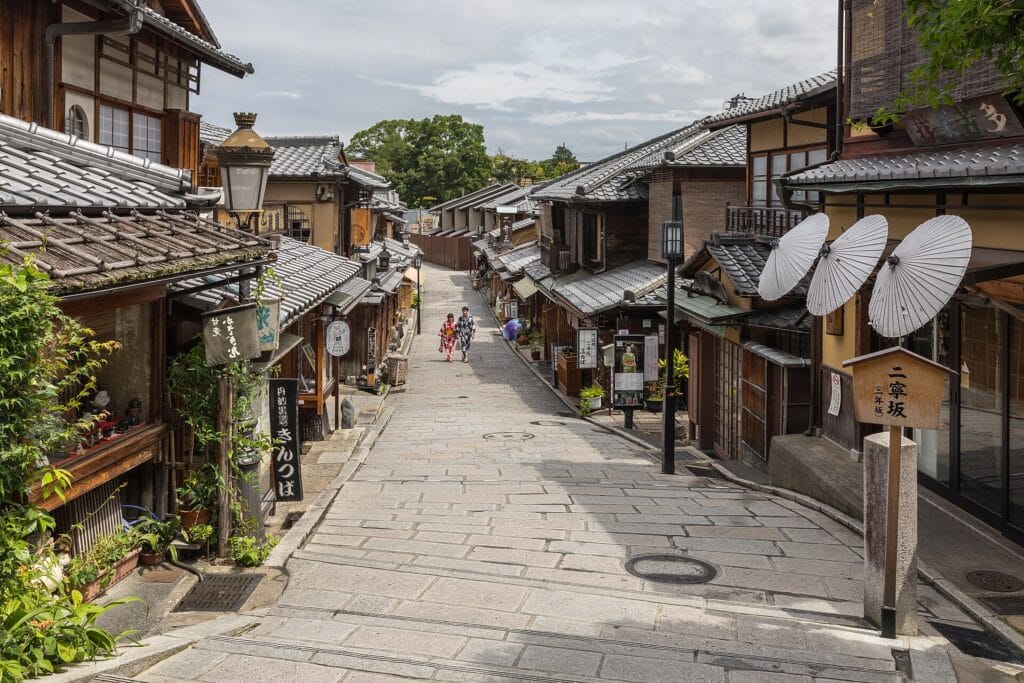
January is the coldest and quietest month in Kyoto, and the one where the city is most itself. It sits at about 9°C by day and 1°C at night with only around 50 mm of precipitation, the temples are empty from about the 8th, and a few times each winter it snows – which is when Kinkaku-ji, the Golden Pavilion under snow, becomes the single most photographed sight in Japan.
New Year in Kyoto
1 January 2027 is a Friday, and the first three days are the busiest of the Kyoto year at the shrines and the quietest everywhere else. Most restaurants, shops and some temples close from about 29 December to 3 January.
- Hatsumode, the first shrine visit, is the event. Fushimi Inari is one of the most visited shrines in all Japan over the New Year period, and the approach is shoulder to shoulder.
- Yasaka Shrine’s okera-mairi on New Year’s Eve: visitors carry home a sacred flame on a lit rope cord, swinging it to keep it burning, and use it to light the first fire of the year.
- From about 4 January the city restarts, and from the 8th it drops into its deepest low season.
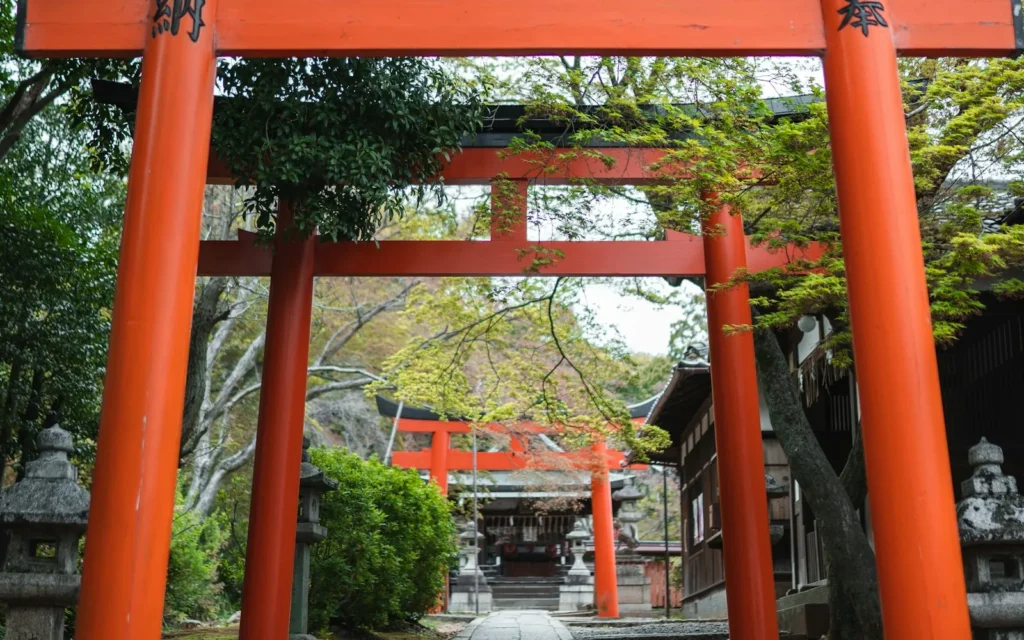
Weather, and the snow question
January averages about 9°C by day and 1°C at night, with roughly 50 mm of precipitation. Kyoto sits in a basin ringed by mountains, which makes it colder in winter and hotter in summer than the coast, and the damp cold gets into unheated temple buildings.
Snow falls a handful of times most winters and rarely settles for long. Kinkaku-ji in snow is the image everyone wants; the practical reality is that it usually melts by early afternoon, so you need to be there at opening on the morning it falls, and it cannot be planned for – only reacted to.
The temple markets
Two of Kyoto’s best things happen on fixed dates every month, and the January editions are the biggest of the year:
- Toji market, the 21st – a huge flea and antiques market in the grounds of Toji temple. The January one, Hatsu-Kobo, is the largest.
- Kitano Tenmangu market, the 25th – antiques, food and plants. The January one, Hatsu-Tenjin, is likewise the biggest.
Both are free, both start early, and both are genuinely local rather than staged.
What January is for
- Temples without crowds. Kiyomizu-dera, Ginkaku-ji, Ryoan-ji and the Philosopher’s Path in January are a different experience from the same places in April.
- Moss and dry gardens. The rock garden at Ryoan-ji and the moss temples read better in winter light and stillness.
- Kaiseki and winter food – this is the season for yudofu hot tofu below Nanzen-ji, and for the shojin ryori temple cuisine.
- Price. After the first week, the cheapest accommodation of the year in a city that is otherwise expensive.
Prices and crowds
The first week is expensive and fully booked. From about 8 January, Kyoto is at its annual low for both rates and visitor numbers – the single best value window in a city where accommodation is the main cost.
See how to budget a trip if you are combining destinations, and how many days Kyoto needs.
Respecting Gion
Worth knowing before you arrive, in any month. Following years of visitors chasing and cornering geiko and maiko for photographs, the Gion district’s residents’ council closed its designated private alleys to tourists and posted signs warning of a ¥10,000 fine for entering them or for photographing geiko and maiko without consent.
Hanamikoji Street and the clearly marked public roads remain open. Stay on them, do not photograph anyone without permission, and do not follow or stop a maiko on her way to work.
What to pack
A proper winter coat, layers and warm socks – you will take your shoes off repeatedly at temples and the floors are cold. Kyoto’s damp cold is sharper than the numbers suggest. Add shoes with grip if snow is forecast. See the Japan packing list.
The January 2027 calendar
- Friday 1 January – Ganjitsu; hatsumode at Fushimi Inari and Yasaka; most restaurants and shops closed.
- 1–3 January – shrines packed, the rest of the city shut.
- From 4 January – Kyoto restarts.
- From about 8 January – the cheapest and emptiest weeks of the year.
- Monday 11 January – Coming of Age Day; kimono and hakama at the shrines.
- Thursday 21 January – Hatsu-Kobo, the biggest Toji market of the year.
- Monday 25 January – Hatsu-Tenjin at Kitano Tenmangu.
Read alongside
- Kyoto in February – plum blossom and the last of the cold.
- Best time to visit Japan – all twelve months compared.
- Japan in January – the country-level view.
- Kyoto travel guide – districts and how to plan them.
- Things to do in Kyoto – the winter list.
- Kyoto food guide – yudofu and kaiseki season.
- How many days in Kyoto – and how to use them.
Frequently asked
Is January a good time to visit Kyoto?
After the first week, it is the best value of the year – the temples are empty, accommodation is at its cheapest, and the gardens read beautifully in winter light. It is cold, and the New Year period closes much of the city.
How cold is Kyoto in January?
About 9°C by day and 1°C at night. Kyoto sits in a mountain basin, so it is colder in winter than the coast, and the damp gets into unheated temple buildings.
Does it snow in Kyoto?
A few times most winters, and it rarely settles past early afternoon. Snow on Kinkaku-ji is the famous image, but it cannot be planned – you have to be there at opening on the morning it falls.
What is closed over New Year?
Most restaurants, many shops and some temples from about 29 December to 3 January. Shrines are the exception and are at their busiest of the year for hatsumode.
What are the Kyoto temple markets?
Toji holds a large flea and antiques market on the 21st of every month and Kitano Tenmangu on the 25th. The January editions – Hatsu-Kobo and Hatsu-Tenjin – are the biggest of the year. Both are free.
Can you photograph geisha in Gion?
Not without consent, and not in the designated private alleys, which are closed to tourists with signs warning of a ¥10,000 fine. Hanamikoji Street and marked public roads are open. Never follow or stop a maiko.
Is Kyoto cheap in January?
From about the 8th, it is at its annual low for accommodation – which matters, because lodging is the main cost of a Kyoto trip. The first week is the opposite.
Are the temples open in winter?
Almost all of them, on normal hours. A few close for a short New Year period, and some sub-temples have limited winter opening, so check individual sites rather than assuming.
You Might Also Love


Written by
John Morrison is the founder and lead travel writer at Packzup. Over the past decade he has explored destinations across Africa, the Americas, Asia, Europe, the Middle East, and Oceania — always self-funded, never on a press trip.
