
Last updated September 11, 2026 · Editorial policy
Brazil vs Colombia: traveler quick facts
Quick facts: Brazil runs about $100-180/day mid-range (Moderate) vs Colombia at about $45-90/day (Budget-friendly). Colombia is roughly 52% cheaper per day mid-range.
| Traveler factor | Brazil | Colombia |
|---|---|---|
| Daily cost (mid-range) | $100-180 (Moderate) | $45-90 (Budget-friendly) |
| Tourist tax | No specific tourist tax | No specific tourist tax |
| Tipping | Service charge included | Optional / appreciated |
| Plug & voltage | N, C | 127V/220V | A, B | 110V |
| Adapter needed from US | Yes | No |
Compiled from Packzup's Travel Cost Index, Tourist Tax Index, Tipping Index and Power Plug Index — updated 2026. Costs are per person, mid-range, excluding flights.
It’s July 2026, and the World Cup rolling across the USA, Canada, and Mexico has half the planet glued to a screen. Few places take the tournament more personally than Brazil and Colombia, two countries where football sits somewhere between religion and family, and both have spent the summer soaking up the global spotlight.
But this isn’t a football article. It’s a travel comparison, written after paying my own way through both countries and coming home with opinions. Brazil and Colombia get lumped together under “South America” constantly, and it does both a disservice: they speak different languages, run on different budgets, and reward completely different kinds of trips. Here’s the honest, category-by-category breakdown so you can decide which one deserves your vacation days.
| Category | Brazil | Colombia | Winner |
|---|---|---|---|
| Daily budget | $35-55 budget, $80-130 mid-range | $30-45 budget, $60-100 mid-range | Colombia |
| Food | Churrasco, feijoada, moqueca, açaí | Bandeja paisa, arepas, world-class fruit and coffee | Brazil |
| Beaches / nature | Amazon, Pantanal, Iguazu, 4,000+ miles of coast | Caribbean and Pacific coasts, Tayrona, Cocora Valley | Brazil |
| Cities & culture | Rio, São Paulo, Salvador | Medellín, Cartagena, Bogotá | Tie |
| Weather | Seasonal, hot humid summers | Altitude-based, spring-like all year | Colombia |
| Ease of travel | Huge distances, e-visa for US citizens | Compact, visa-free for US citizens | Colombia |
| Nightlife | Samba, Carnival, São Paulo clubs | Salsa in Cali, Medellín reggaeton | Brazil |
| Value for money | Good | Excellent | Colombia |
When to go: Brazil vs Colombia
Measured, not guessed — five years of climate normals (WMO 1991–2020, or ERA5 2019–2023 where unavailable). Months are ranked by how close the average high sits to 25°C, penalised by wet days.
Brazil
- Best month
- July
- Then expect
- 24.8°C · 7 wet days
- Next best
- June, May
- Wettest month
- February (16 wet days)
Colombia
- Best month
- January
- Then expect
- 25.5°C · 16 wet days
- Next best
- July, August
- Wettest month
- March (28 wet days)
- Different windows — Brazil peaks in July, Colombia in January. If your dates are fixed, that is the deciding factor.
- Brazil is the drier bet at its peak — 7 wet days vs 16.
- Biggest split is January — Brazil is 4.3°C warmer that month.
Source: climate normals (WMO 1991–2020, or ERA5 2019–2023 where unavailable) via Open-Meteo, CC BY 4.0 — Packzup Travel Climate Dataset (open data).
Cost comparison: what you’ll actually spend
Colombia is the cheaper country, and it isn’t particularly close. On the ground, my money went roughly 25 to 30 percent further there than in Brazil, and the gap widens fast if your Brazil plans include Rio in high season.

Realistic daily budgets for Colombia: backpackers can live well on $30 to $45 a day with hostel dorms, set-menu lunches, and buses. Mid-range travelers should plan on $60 to $100 for private rooms in good neighborhoods, restaurant dinners, and the odd domestic flight. Luxury starts around $150 to $250 a day, and at that level you’re sleeping in genuinely beautiful boutique hotels inside Cartagena’s walled city or on converted coffee fincas.
Brazil runs higher across the board: $35 to $55 a day for budget travelers, $80 to $130 mid-range, and $200 to $350 and up for luxury. Rio and São Paulo can feel close to US prices at nicer restaurants and hotels, while the Northeast is noticeably cheaper. Two things nuke Brazilian budgets in a hurry: Carnival week, when accommodation prices multiply, and Fernando de Noronha, the island that seems to bill you by the breath.
Colombia’s value is a running theme in our comparisons; it held its own on price even against famously cheap Peru in our Peru vs Colombia matchup.
Food: Brazil has the deeper bench
Brazilian food is one of the world’s most underrated cuisines. Churrascarias where waiters circle with skewers of picanha, por-kilo lunch buffets that make weekday eating cheap and excellent, feijoada on Saturdays, pão de queijo for breakfast, moqueca (coconut seafood stew) in Bahia, and açaí eaten in its actual homeland rather than a smoothie-bar imitation. The regional variety is enormous because the country is enormous, and you could eat for a month without repeating yourself.
Colombian food is heartier and simpler, and I’ll be honest: it can get repetitive after a couple of weeks. Bandeja paisa is a glorious gut bomb, ajiaco (Bogotá’s chicken and potato soup) is proper comfort food, and street empanadas rarely miss. Where Colombia flattens almost everyone is fruit and coffee. Fresh juices made from lulo, guanábana, and maracuyá justify the flight on their own, and drinking coffee on the farm that grew it in the Zona Cafetera is a genuine bucket-list morning.
Winner: Brazil for the overall eating trip. Colombia if your priorities are coffee, fruit, and $4 set lunches.
Beaches & nature: two different scales
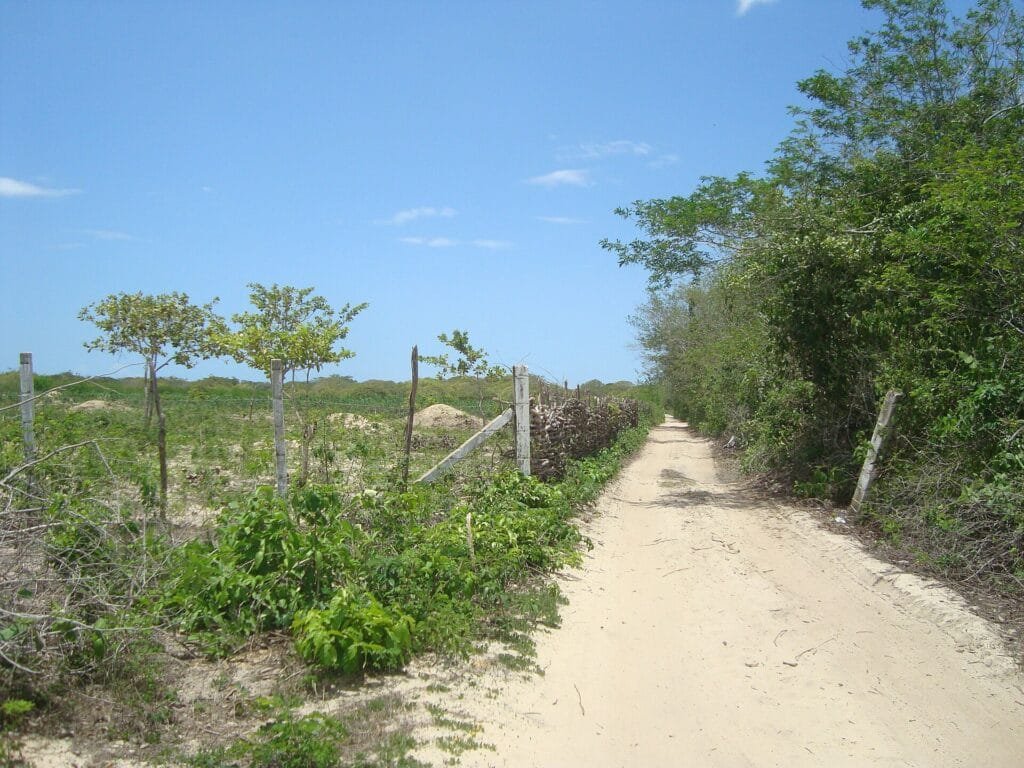
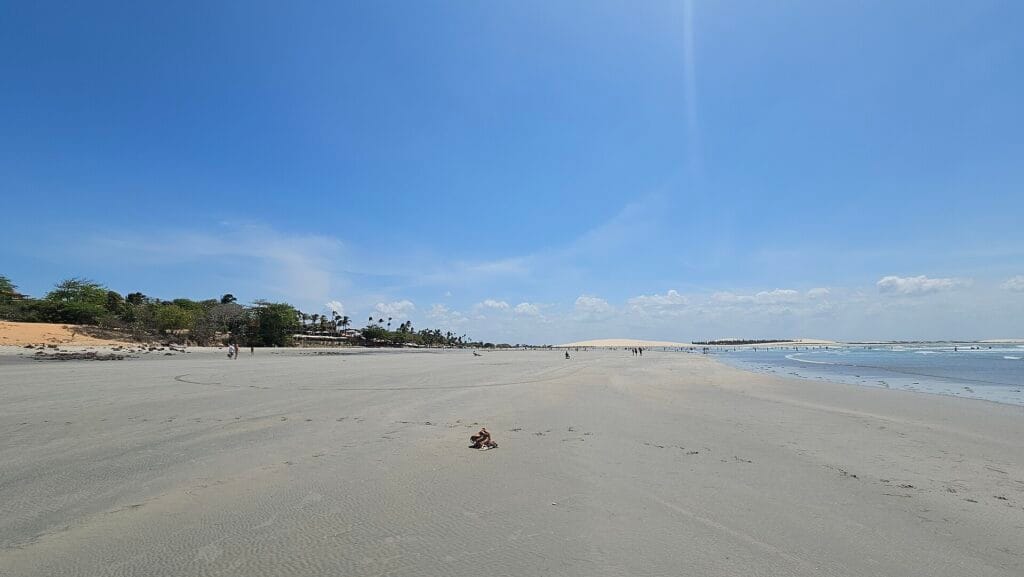
Brazil plays this category at a scale nowhere else in South America can match. There are more than 4,000 miles of coastline and the hits keep coming: Ipanema and Copacabana for city-beach culture, Jericoacoara’s dunes and lagoons, Bahia’s endless sandy coast, and Fernando de Noronha if your budget stretches. Inland it gets absurd: the Amazon out of Manaus, jaguar country in the Pantanal, the mesas and waterfalls of Chapada Diamantina, and Iguazu Falls, which still reduces grown adults to giggling. Iguazu sits right on the Argentine border, and plenty of travelers pair it with a loop through our things to do in Argentina picks.
Colombia counters with variety per square mile. It’s the only South American country with both Caribbean and Pacific coastlines. Tayrona National Park, where jungle drops straight onto near-empty beaches, is some of the best coastal scenery on the Caribbean, and the Rosario Islands rescue Cartagena, whose city beaches are honestly forgettable. Right now, from July through October, humpback whales gather off the Pacific coast, one of the continent’s most underrated wildlife spectacles. Add the 200-foot wax palms of the Cocora Valley and the green folds of coffee country, and Colombia holds its own.
Winner: Brazil on sheer scale and iconic sights. Colombia if you want beaches, jungle, and mountains within a short flight of each other.
Cities & culture
Rio de Janeiro has the most spectacular natural setting of any big city on earth, full stop: granite peaks, rainforest, and beaches woven straight into the urban fabric. São Paulo is the food-and-arts heavyweight, Salvador is the soul of Afro-Brazilian culture with drum troupes rehearsing in the streets, and colonial towns like Ouro Preto feel like film sets.
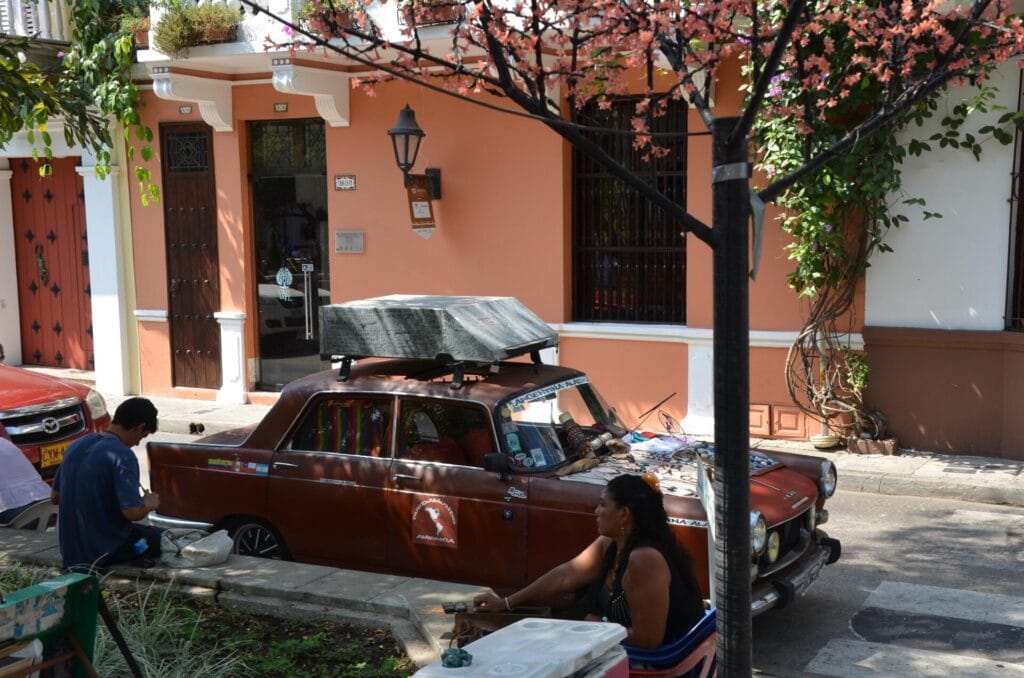
Colombia’s cities are easier to actually live in as a visitor. Medellín’s transformation story is real; ride the metro cable cars over the comunas and you’ll understand why locals are so proud of the place. Cartagena’s walled old town is the prettiest colonial center on the Caribbean, Bogotá has serious museums (the Gold Museum is worth two hours of anyone’s time) plus a great street-art scene, and coffee-region pueblos like Salento are charm, concentrated.
Winner: tie. Brazil’s cities are grander, Colombia’s are friendlier and simpler to navigate, and Spanish is far easier to fake your way through than Portuguese.
Weather & when to go
Brazil is seasonal. December through March is summer: hot, humid, crowded, and expensive around Carnival, but it’s also when beach life peaks. The Amazon runs wetter from roughly December to May. June through August, in other words right now, is mild and dry along most of the coast, though the far south can get genuinely cold. The Northeast stays warm and reliable pretty much year-round.

Colombia doesn’t do seasons; it does altitude. Cartagena and the coast are hot and sticky 365 days a year. Medellín sits at a spring-like low-70s Fahrenheit forever, which is a big part of why everyone falls for it. Bogotá, at 8,600 feet, is cool, gray, and sweater weather most of the time. The drier windows run roughly December to March and July to August.
Winner: Colombia. Being able to book any month of the year and know roughly what you’ll get is worth a lot.
Getting around & safety
This is where the two trips diverge most. Brazil is continental. Rio to the Amazon is a four-hour flight; Rio to Jericoacoara means a flight plus a long transfer. You will fly domestically (Azul, GOL, and LATAM cover the country well) and you should budget for it. Long-distance buses exist, but the distances make them brutal. Outside the tourist track almost nobody speaks English, and Portuguese is harder to improvise than Spanish.

Colombia is compact by comparison. Domestic flights are short and cheap, and while mountain roads make bus travel slow (Bogotá to Medellín is about nine winding hours by road versus one by air), you can cover the highlights in two weeks without exhausting yourself.
Visa reality for US passport holders: Brazil brought back its visa requirement in April 2025. You need an e-visa before boarding, applied for online, roughly $81, valid for ten years. It isn’t difficult, but processing can take a couple of weeks, so don’t leave it until the last minute. Colombia requires no visa for stays up to 90 days; you fill out the free Check-Mig form online before your flight and get stamped in on arrival.
On safety, both countries are fine for travelers who pay attention, and both will punish carelessness. Phone snatching is the main event in Rio, Bogotá, and Medellín alike, so keep it out of your hand on the street. Use ride-hailing apps at night instead of flagging cabs, take nothing valuable to the beach in Rio, and treat local advice about which blocks to skip as gospel. I never felt unsafe in either country while following those rules, but I met travelers in both who lost phones by ignoring them. If logistics and nerves weigh heavily in your decision, Colombia’s compactness helps, something that also came up in our Colombia vs Mexico comparison.
Nightlife & vibe
Brazil at night is spectacle. Samba spills out of the bars of Rio’s Lapa district, São Paulo’s club scene ranks among the best on the planet, beach kiosks blur the line between afternoon and evening, and Carnival, whether you do Rio’s parades or Salvador’s street version, is simply the biggest party on earth.
Colombia at night is participation. Cali takes salsa seriously enough that dance schools run classes for travelers before the clubs open. Medellín’s Provenza and Parque Lleras area runs late on reggaeton and crossover, Bogotá’s scene is more underground and arguably cooler, and the difference from most countries is that everyone actually dances; nobody stands around judging the room over a drink. Barranquilla’s Carnival each February is one of the biggest on earth after Rio’s, and far easier to attend.
Winner: Brazil by a nose for variety and scale, but nights out in Colombia are cheaper, friendlier, and easier to stumble into by accident.
Brazil or Colombia: the honest verdict
Budget travelers: Colombia. Every dollar goes further, set lunches keep food costs tiny, and the hostel scene from Medellín to the coffee region is excellent.
Foodies: Brazil. The regional depth, the churrasco, Bahian cooking, and por-kilo culture beat Colombia’s comfort food, with sincere apologies to the world’s best fruit juice.
Beach and nature travelers: Brazil, provided you have three weeks and a budget for internal flights. With only ten days, Colombia’s Caribbean coast delivers more per day of effort.
First-timers to South America: Colombia. No visa paperwork for Americans, shorter flights from the US, an easier language, and compact geography make it the gentler on-ramp to the continent.
Compressed to one sentence: with one to two weeks and a normal budget, go to Colombia; with three-plus weeks or deeper pockets, Brazil rewards you like almost nowhere else. And if Brazil has you weighing the rest of the continent, our Argentina vs Brazil comparison covers the other great regional rivalry.
FAQ
Which is cheaper, Brazil or Colombia?
Which is better for a football-fan trip?
Do US citizens need a visa for Brazil or Colombia?
Can you visit Brazil and Colombia in one trip?
Planning the trip? Go deeper with best time to visit Brazil and best time to visit Colombia.
You Might Also Love
More side-by-side comparisons





Written by
John Morrison is the founder and lead travel writer at Packzup. Over the past decade he has explored destinations across Africa, the Americas, Asia, Europe, the Middle East, and Oceania — always self-funded, never on a press trip.
