

Last updated September 12, 2026 · Editorial policy
Timing makes or breaks a trip. Go in the right month and you get sunshine, lower prices and thinner crowds; get it wrong and you hit monsoon, peak heat or peak prices. This hub pulls together Packzup’s month-by-month weather guides and best-time-to-visit advice for destinations worldwide — so you book the perfect window.
Weather by month
- Santorini weather by month
- Maldives weather by month
- Phuket weather by month
- Amalfi Coast weather by month
- Dubai weather by month
- Iceland weather by month
- Bali weather by month
Best time to visit, by country
- Best time to visit Bali
- Best time to visit Greece
- Best time to visit Japan
- Best time to visit Thailand
- Best time to visit Peru
- Best time to visit Dubai
- Best time to visit Netherlands
- Best time to visit Germany
- Best time to visit Croatia
- Best time to visit Vietnam
- Best time to visit India
- Best time to visit Mexico
- Best time to visit Morocco
- Best time to visit Egypt
- Best time to visit Iceland
- Best time to visit Norway
- Best time to visit Sweden
- Best time to visit Sri Lanka
- Best time to visit Switzerland
- Best time to visit Cambodia
- Best time to visit Indonesia
Seasonal picks
Quick rules of thumb
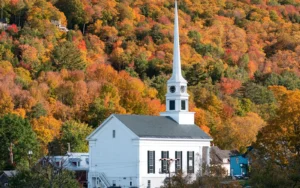
Shoulder season (spring and autumn) is the sweet spot for most of Europe and the Mediterranean — warm, cheaper and quieter. Southeast Asia and the Maldives are best in their dry seasons (roughly November–April). For autumn colour aim at Japan and New England in October–November; for winter sun, head to the tropics or the southern hemisphere.
Plan the rest of your trip
Once you’ve picked your month, use our Travel Cost Index to budget it, browse travel itineraries for a day-by-day plan, and check travel comparisons if you’re still deciding where to go.
How to read a climate average without being misled
Monthly averages are the standard way weather is summarised and they hide exactly the things that ruin trips. An average temperature is the midpoint of a day that may swing twenty degrees between dawn and afternoon, which is why a desert listed at a pleasant 22 can be near freezing at sunrise and above 35 by two o’clock. Look for average high and low separately, not the mean.
Rainfall is worse. A monthly total in millimetres says nothing about how it falls: 150 millimetres delivered as a one-hour afternoon storm on ten days is a completely different holiday from the same total as continuous drizzle over twenty-five. The more useful figure is rain days alongside the total. And humidity is frequently the variable that actually decides comfort — 32 degrees at low humidity is pleasant and at high humidity is not, which is why a dry-season desert and a wet-season coast with identical temperatures feel nothing alike. Finally, averages are calculated over decades and recent years have run consistently warmer than the long-run figures in many regions, so treat an older average as a floor rather than a forecast.
What shoulder season actually buys you
The shoulder months — the weeks immediately before and after peak season — are the default recommendation in almost every destination guide, and the reason is a genuine mismatch between when conditions are good and when people travel. Demand follows school holidays and cultural convention rather than weather, so there is usually a window where the conditions are nearly peak and the pricing is not.
What you gain is concrete: lower flight and accommodation prices, availability at places that are booked out in peak, shorter queues at the major sites, and staff with time to talk to you. What you risk is equally concrete and worth weighing. Some infrastructure operates on a season rather than on the weather — mountain lifts, seasonal ferries, island restaurants, park shuttles and high-altitude roads have fixed opening dates, and a beautiful week in the shoulder can find half of them shut. Weather variance is higher at the margins. And in a few places the shoulder is shoulder precisely because it is the transition into or out of a monsoon or cyclone season. Check what is open, not only what the temperature will be.
When the calendar beats the climate
For some trips the weather is not the deciding variable at all, and treating it as one produces the wrong month. Four categories override it. Wildlife runs on migration, breeding and dry-season concentration — the Serengeti river crossings, Churchill’s polar bears, whale seasons and turtle nesting all have windows that have nothing to do with what is comfortable. Natural phenomena are narrower still: the aurora needs dark skies and so is a winter proposition regardless of temperature, and blossom, wildflower and foliage seasons last days to weeks.
Events cut both ways. Carnival, Golden Week, Ramadan, Diwali, Oktoberfest and a major sporting fixture will each transform a destination and fill it, which is a reason to go or a reason to avoid the dates entirely — but never a thing to discover after booking. Several move year to year against the Gregorian calendar, so check the specific dates for your year. And closures are the fourth: much of southern Europe effectively shuts in August, Chinese New Year closes a great deal of East Asia for a week or more, and many northern-hemisphere seasonal destinations close entirely between November and March. The best month is the one where the thing you came for is happening and the doors are open.
Frequently asked questions
When is the cheapest time to travel?
How do I pick the best month?
Timing around closures? the public holiday calendar.
📚 Explore all our roundups: Best Travel Lists & Guides
More ways to explore
- Ancient wonders must visit
- Best road trips in the world
- Cheap eats around world 25 cities
- Cheapest destinations to visit
- Cheapest places to travel usa
- Cities best experienced slowly
- Great ocean road australia road trip
- Luxury travel without luxury prices
- Most adventurous destinations
- Most affordable european cities
- Most beautiful places in the world
- Most beautiful train journeys world
- Most photogenic destinations
- Most underrated destinations
- Natural wonders of the world
- Pacific coast highway road trip
- Photogenic asia
- Quiet cities after dark
- Ring road iceland road trip
- Route 66 road trip
You Might Also Love




Written by
John Morrison is the founder and lead travel writer at Packzup. Over the past decade he has explored destinations across Africa, the Americas, Asia, Europe, the Middle East, and Oceania — always self-funded, never on a press trip.
